

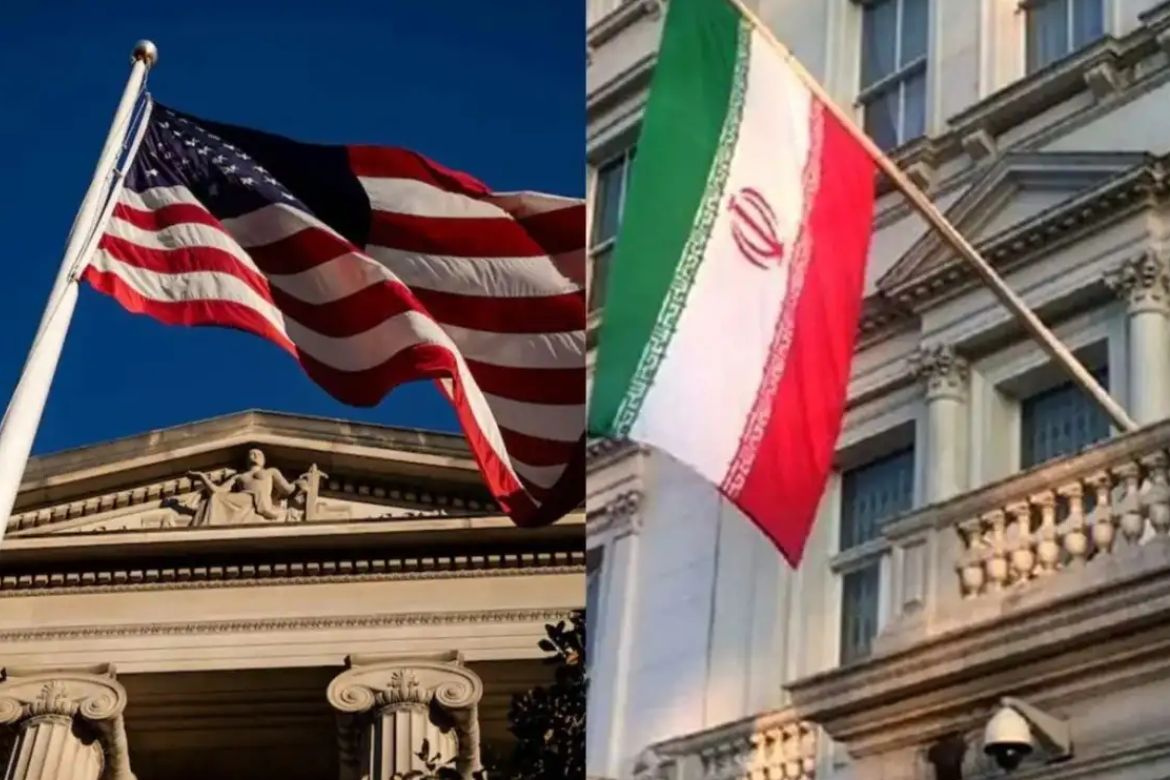
“There never was a good war or a bad peace,” wrote Benjamin Franklin in 1783. It’s a comforting idea—but in today’s Middle East, it no longer holds true. As Washington and Tehran move toward a historic agreement in Switzerland, the region finds itself facing a more complex reality: not all peace is equal.
For the Gulf, the real question is not whether this deal will end the war—but whether it will prevent the next one.
Relief Within Reach
After months of tension, the outline of the proposed agreement offers clear hope. It promises an immediate end to hostilities, a halt to the violence spilling across Lebanon, and the reopening of the Strait of Hormuz—one of the world’s most critical energy corridors. Sanctions relief for Iran and renewed negotiations over its nuclear programme are also on the table.
For Gulf nations, these developments matter deeply. The recent conflict was not distant—it was felt in the form of missile alerts, economic uncertainty, and disrupted oil markets. A return to stability, even in its earliest form, is undeniably welcome.
But relief should not be mistaken for resolution.
A Familiar Pattern of Fragile Peace
The region has seen similar moments before. Agreements announced with optimism have often failed to deliver lasting calm. Just months ago, a truce meant to reduce tensions instead allowed a “low-intensity war” to continue—redefined, rather than resolved.
Missile strikes persisted. Regional tensions simmered. Military actions continued under different justifications.
This raises a critical concern: will this new deal simply repackage conflict under the label of peace?
A ceasefire that lacks enforcement, clarity, or commitment risks becoming fragile from the outset. And a fragile peace is often just a delayed confrontation.
What the Deal Leaves Out
Perhaps the biggest concern, especially from a Gulf perspective, lies in what the agreement does not fully address.
While nuclear negotiations and maritime security dominate discussions, Iran’s wider regional influence appears to receive far less attention. Its network of allied groups across Iraq, Syria, Lebanon, and Yemen has long been a central source of instability.
Ignoring this dimension risks creating an incomplete peace.
If sanctions are lifted and financial resources are restored without clear conditions on regional behavior, the deal may unintentionally strengthen the very forces that have driven conflict for years.
Balancing Power and Perception
Another challenge lies in ensuring that the agreement is seen as fair. Early indications suggest that while some actors will face restrictions, others may retain military flexibility. This perceived imbalance could weaken trust in the agreement before it even takes full effect.
For Gulf nations, peace must be consistent and credible. Agreements that appear selective or one-sided rarely hold over time.
The Difference That Matters
At its core, the distinction is simple:
- A bad peace pauses violence but leaves its causes untouched
- A good peace addresses the roots of conflict and reduces the chance of its return
A bad peace is temporary, fragile, and often misleading.
A good peace is durable, balanced, and forward-looking.
The current deal has the potential to become either.
A Defining Moment
Leaders in Washington have suggested this agreement could shape the Middle East for decades. That may be true—but its impact will depend entirely on what happens next.
The coming weeks of negotiations are not just procedural—they are decisive. They will determine whether this agreement becomes a foundation for stability or merely a pause before renewed tension.
Conclusion: Peace Must Be Built Carefully
The Gulf region stands to benefit greatly from a genuine and lasting peace. But it has also learned—through experience—that not all agreements deliver what they promise.
Ending the war is important. Preventing the next one is essential.
A deal that prioritises speed over substance risks repeating past mistakes. A deal that confronts deeper realities, however difficult, offers a path toward true stability.
In the end, the success of this moment will not be measured by the signing of an agreement—but by what follows after it.
