

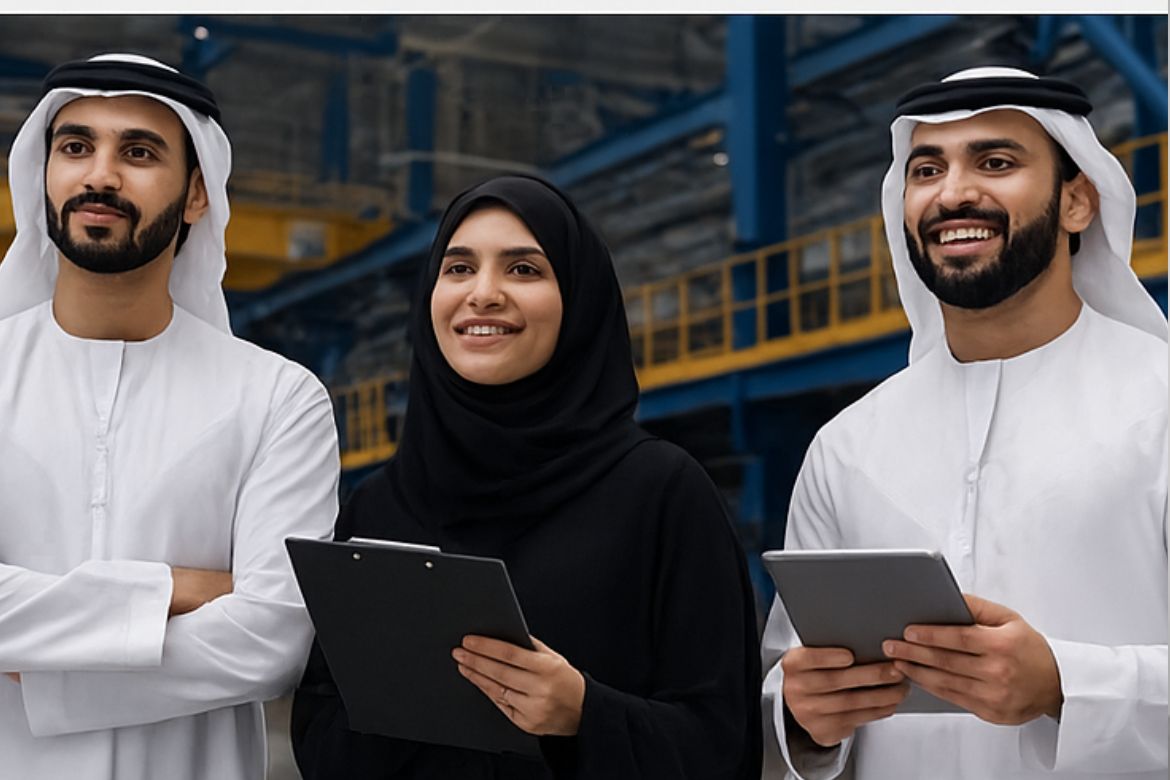
The UAE’s industrial sector is entering a new era—one defined not just by technological advancement, but by a growing wave of Emirati talent stepping into roles once overlooked.
Across industries, from energy and manufacturing to artificial intelligence (AI) and digital operations, Emiratis are embracing careers that offer innovation, global exposure, and long-term growth. At the same time, companies are moving beyond mandatory Emiratisation targets, signalling a deeper commitment to building a sustainable, future-ready workforce.
Beyond Compliance: Companies Step Up Hiring
Industrial companies are no longer viewing Emiratisation as a box-ticking exercise. Instead, many are actively surpassing their quotas, driven by both business needs and confidence in local talent.
At a major careers exhibition in Abu Dhabi, several employers confirmed they had already exceeded their hiring targets and were continuing recruitment efforts.
One standout example is energy technology company SLB, which achieved more than the required 10% Emiratisation rate even before it became mandatory.
The company’s commitment goes further—it plans to hire over 90 Emiratis this year, with dozens of roles being filled through industry recruitment platforms. Positions span high-demand areas such as AI, digital technology, remote operations, and energy systems.
This approach reflects a larger shift across the sector: companies are no longer hiring to meet quotas—they are hiring to build capability.
AI, Engineering, and the New Career Magnet
A defining feature of this shift is the surge in demand for tech-driven roles.
Industrial employers are increasingly seeking candidates in:
- Artificial intelligence and data-driven functions
- Engineering (civil, electrical, systems)
- Digital and remote operations
- Logistics, supply chain, and safety management
Among these, AI and digital technologies stand out as particularly attractive to young Emiratis entering the workforce.
Construction and engineering firms are also expanding their Emirati workforce, offering roles across multiple disciplines—demonstrating the sector’s diversity and adaptability.
A Shift in Mindset Among Emirati Youth
Perhaps the most significant change is happening at the individual level.
More Emiratis today are actively choosing private-sector careers, recognising the opportunities they present for learning, growth, and innovation.
This marks a shift away from traditional preferences for public-sector jobs, toward more dynamic and competitive career paths.
Young professionals are increasingly drawn to environments that:
- Offer exposure to cutting-edge technologies
- Provide structured development and training
- Enable international experience
- Encourage innovation and adaptability
“It’s a Whole World” — Redefining Industry
For many, the biggest change is how industrial careers are perceived.
What was once associated with factory-based roles is now understood as a vast, interconnected ecosystem. Industry today includes not just production, but also engineering, research, technology development, business operations, and more.
As one young Emirati professional described it, the industrial sector is “a whole world”—far broader and more dynamic than traditional stereotypes suggest.
Her own journey—from studying engineering to working on advanced systems and undergoing international training—illustrates how industry careers now offer global exposure and access to world-class expertise.
Skills That Matter: Adaptability and AI Literacy
As industries transform, so do the skills required to succeed.
Employers are increasingly prioritising:
- Adaptability in fast-changing environments
- Familiarity with AI and digital systems
- Practical problem-solving abilities
- Willingness to learn continuously
The gap between academic learning and workplace reality means that candidates who can evolve alongside technology are in the highest demand.
From Quotas to Capability Building
Government-driven Emiratisation policies have laid the foundation for this progress, requiring companies to steadily increase the number of Emiratis in skilled roles.
But the narrative is now shifting. The real challenge for employers is no longer meeting hiring targets—it is finding and retaining the right talent to support the UAE’s rapidly expanding industrial ambitions.
Companies are increasingly investing in training, development, and long-term career pathways for Emiratis, recognising them as critical to future growth.
The UAE’s industrial sector is no longer just building infrastructure—it is building people.
As Emiratis step into roles in AI, engineering, and advanced industry, they are not only contributing to the nation’s economic diversification but also redefining what career success looks like.
The rise in interest, combined with companies exceeding hiring quotas, signals a powerful shift—one where ambition meets opportunity, and where industry becomes a key pillar of national identity and growth.
What was once seen as a narrow career path has now opened into something far greater—a whole world of possibility.
