

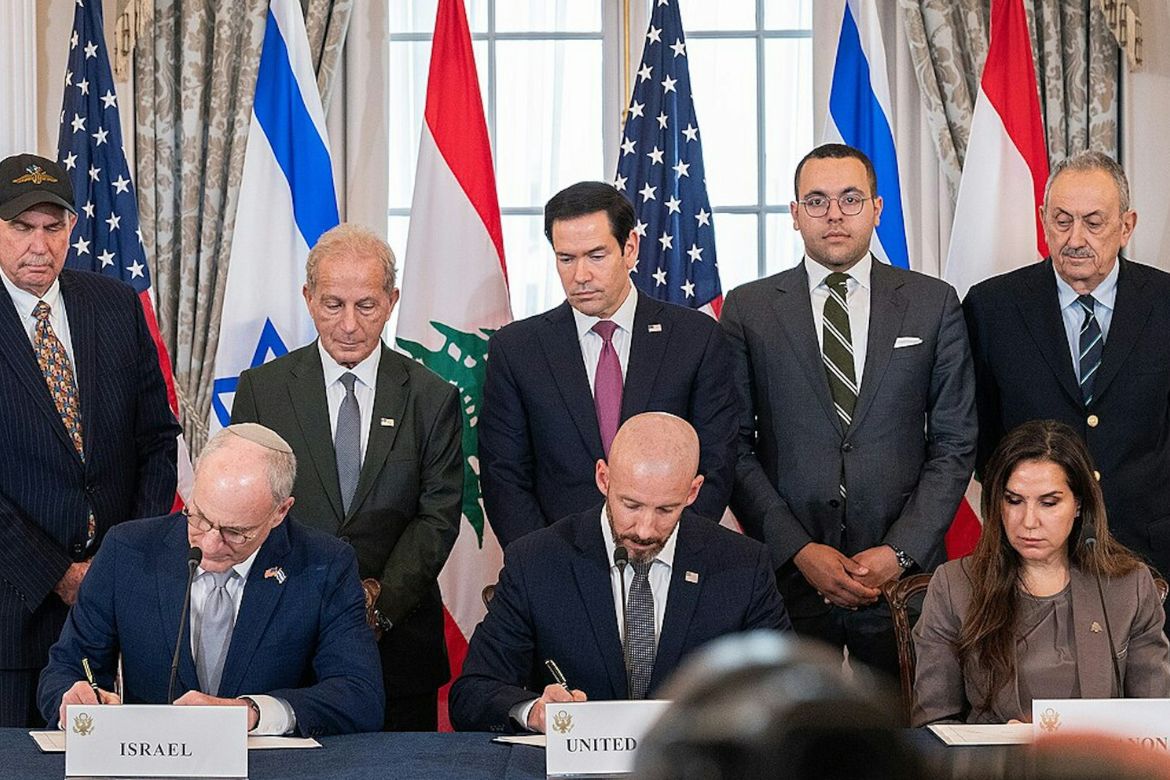
The Middle East finds itself navigating another dangerous moment as violence on the Israel-Lebanon border threatens to overshadow diplomatic efforts aimed at reducing regional tensions.
The killing of two Israeli reserve soldiers in southern Lebanon has injected fresh uncertainty into ongoing US-mediated talks in Rome, even as Iran and Oman move closer to a draft agreement on the Strait of Hormuz, the world’s most critical energy transit route.
Israeli military authorities confirmed the deaths of Major Harel Birenstock, 34, and Chief Master Sgt Tamir Vaknin, 33, during operations in southern Lebanon. Reports indicate the soldiers were killed when an explosive device detonated inside a building in the Majdal Zoun area, while four other reservists suffered serious injuries.
In response, Israel launched a series of strikes across southern Lebanon, accusing Hezbollah of violating ceasefire arrangements. Lebanese health officials reported at least one fatality and multiple injuries following the Israeli attacks, underscoring the fragile nature of the security situation despite ongoing diplomatic engagement.
Rome Talks Under Pressure
The incident comes at a sensitive stage in negotiations between Israel and Lebanon. US officials described discussions in Rome as productive, with both sides reportedly moving closer to expanding security arrangements designed to prevent renewed conflict along the border.
However, every escalation risks undermining efforts to preserve the ceasefire framework agreed upon earlier this year. Diplomatic sources warn that sustained violence could complicate broader regional initiatives involving Iran and its allies.
Hormuz Agreement Moves Forward
Meanwhile, attention remains fixed on the Strait of Hormuz, where Iran and Oman are reportedly finalising a new maritime arrangement intended to restore shipping confidence and support a wider de-escalation process.
Washington has reiterated that Hormuz remains an international waterway and that no country holds authority over commercial transit through the strategic passage.
Yet shipping data suggests confidence has not fully returned. Vessel traffic through both the Strait of Hormuz and Bab Al Mandeb remains significantly below pre-conflict averages, reflecting persistent concerns among global maritime operators. Reports of Houthi missile attacks on Saudi-linked shipping have further heightened risks.
Iran’s Internal Questions Persist
Adding another layer of uncertainty, Iranian President Masoud Pezeshkian acknowledged that communication with Supreme Leader Mojtaba Khamenei remains “very difficult”, fuelling ongoing speculation over the leader’s condition and visibility during a crucial period for Iran’s foreign policy. While Tehran has remained tight-lipped on the issue, questions surrounding the country’s leadership continue to attract international attention.
Regional Diplomacy Gains Support
Pakistan has publicly backed Oman’s mediation efforts, praising Muscat’s long-standing role in promoting stability and dialogue across the Gulf. The endorsement highlights growing regional support for diplomatic solutions as governments seek to prevent a wider confrontation.
Washington Faces Military Readiness Questions
At the same time, reports of tensions between President Donald Trump and Defence Secretary Pete Hegseth over US munitions stockpiles have drawn attention in Washington. Although both the White House and Pentagon denied claims of a dispute, the reports reflect broader concerns about military readiness amid extended regional operations.
The deaths of two Israeli soldiers in Lebanon are a reminder that even as diplomats work behind closed doors, realities on the ground can rapidly alter the regional landscape. With talks underway in Rome, negotiations continuing over Hormuz, and shipping routes still vulnerable to disruption, the coming days will be critical in determining whether diplomacy can outpace escalation.
