

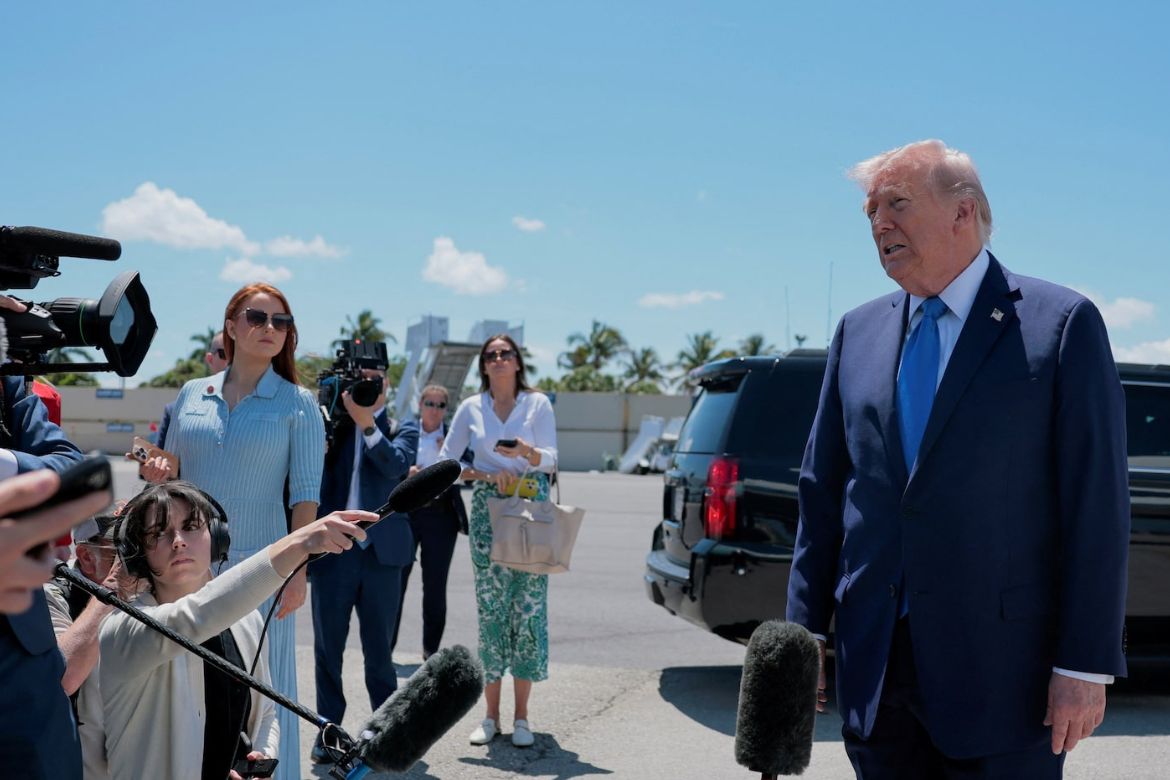
US President Donald Trump has rejected Iran’s latest proposal aimed at easing the ongoing conflict, with US officials confirming the plan fails to address Tehran’s nuclear programme — a non-negotiable priority for Washington, according to Reuters.
The proposal was discussed during a White House briefing on Monday, but details remain limited. However, sources cited by CNN suggest the administration is unlikely to accept any framework that postpones nuclear negotiations.
Hormuz Crisis Intensifies
The Strait of Hormuz has emerged as the focal point of the crisis. While Iran’s proposal reportedly includes measures to ease shipping disruptions, US officials argue that reopening the waterway without firm nuclear commitments could undermine Washington’s negotiating position.
For Gulf nations, the implications are immediate. The Strait remains a lifeline for global oil shipments, and continued disruption is fuelling uncertainty in energy markets and trade flows.
At the United Nations Security Council, multiple countries — including the United Arab Emirates and Bahrain — urged swift action to restore maritime traffic.
UN Secretary-General António Guterres warned that thousands of seafarers remain stranded, calling for the immediate protection of navigation rights and uninterrupted trade.
Regional Fallout Grows
Beyond the Gulf, tensions continue to spread. In southern Lebanon, renewed clashes between Israeli forces and Hezbollah have been reported despite an existing ceasefire, underscoring the fragile security environment.
Meanwhile, Iran is deepening diplomatic engagement with Russia. Foreign Minister Abbas Araghchi described recent talks in Moscow as a sign of strengthening strategic alignment during a period of heightened regional uncertainty.
No Clear Path Forward
The core disagreement remains unchanged. The US insists on addressing Iran’s nuclear programme upfront, while Tehran continues to advocate for a phased de-escalation approach.
With both sides holding firm, the chances of a near-term breakthrough appear slim. Analysts warn that prolonged uncertainty could further strain global markets and deepen instability across the Middle East.
As diplomacy stalls, the Strait of Hormuz has become the defining fault line of this crisis. For Gulf nations, the urgency is clear — ensuring stability in energy flows while navigating an increasingly complex geopolitical landscape.
