

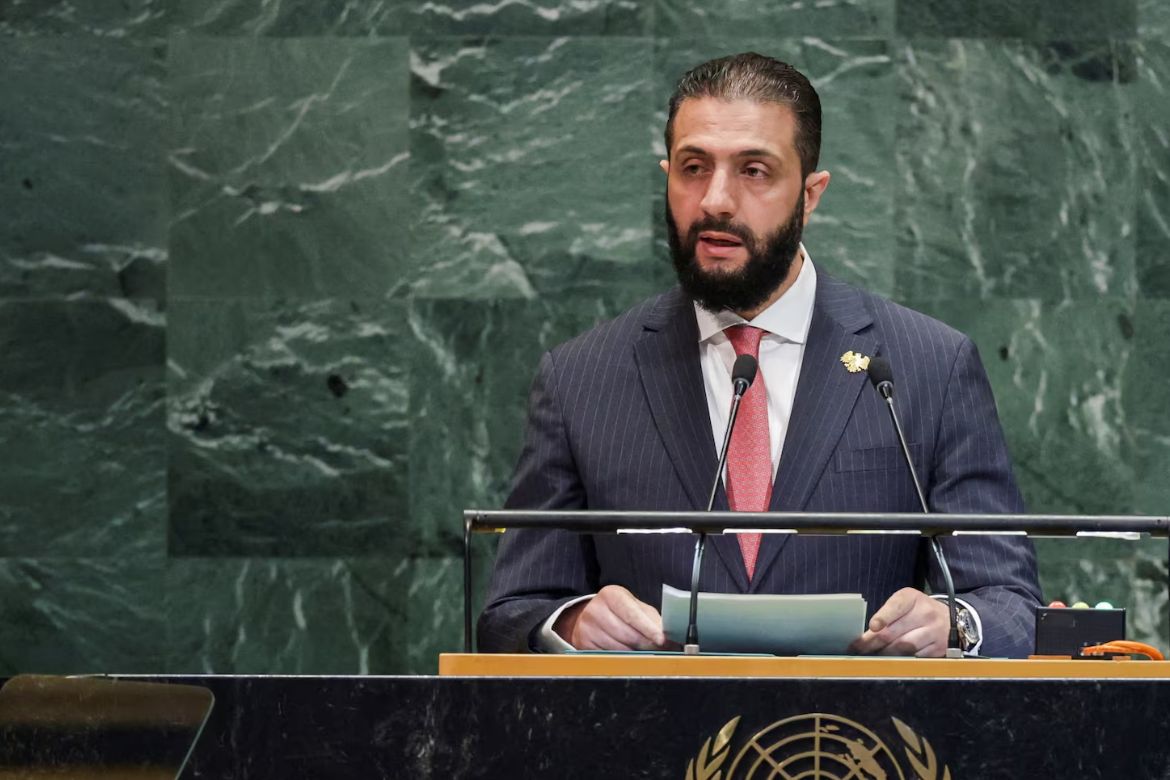
China has moved to strengthen its political footprint in the Middle East once again, pledging firm support for Damascus at a moment when Syria’s new leadership is seeking legitimacy, reconstruction partners, and a pathway back into the global community.
Following talks in Beijing on Monday, Chinese Foreign Minister Wang Yi assured Syria that Beijing fully backs its pursuit of peace, stability and international reintegration — a message that resonates strongly across the Gulf, where regional governments are watching Syria’s diplomatic reboot with cautious optimism.
Beijing’s foreign ministry said China supports Syria in “achieving peace at an early date” and in aligning security, development, and reconstruction efforts. The message is significant: China is positioning itself as a stabilising partner in a region where the GCC continues to prioritize security cooperation and the rebuilding of war-affected states.
Wang Yi also stressed that China will support Damascus in crafting “a nation-rebuilding plan that aligns with the will of the people” — a notable shift toward political dialogue and inclusive reconstruction, themes that Gulf states have repeatedly emphasized as prerequisites for Syria’s return to the Arab fold.
A High-Stakes Visit for Damascus
Syrian Foreign Minister Asaad Al Shibani began his official visit to China on Sunday. According to SANA, the talks focused on strengthening bilateral relations and expanding economic and developmental cooperation. With Syria and China marking 70 years of diplomatic ties next year, Damascus is clearly hoping to bring Beijing into its long-term reconstruction strategy.
“This visit marks an important step in advancing our partnership,” Al Shibani said, highlighting China’s potential role in Syria’s recovery. For Gulf observers, the timing is strategic: as Arab states cautiously re-engage with Damascus, China’s involvement adds another powerful stakeholder to Syria’s post-conflict landscape.
Syria’s New Diplomacy — and Beijing’s Caution
Syria is actively trying to rehabilitate its international image after decades of isolation under Bashar Al Assad. While China was once one of Assad’s steadiest partners, Beijing is now adopting a more measured approach toward Syria’s new leadership.
One key concern: the alleged integration of Uighur fighters from the Turkistan Islamic Party (TIP) into Syria’s security and defence forces.
This issue has complicated Beijing’s outreach. However, Damascus moved swiftly on Monday to deny an AFP report claiming that Syria intended to hand over Uighur foreign fighters to China. The Foreign Ministry dismissed the claims as baseless.
China’s Security Narrative
China’s ambassador to the UN, Fu Cong, has consistently warned the Security Council about the continued presence of “foreign terrorist fighters” in Syria — an issue Beijing considers directly tied to its domestic security. He linked these fighters to deadly attacks in Syria’s coastal regions in March and in Sweida in July.
For Gulf audiences, this messaging underscores China’s evolving role: no longer just an economic giant, Beijing is now positioning itself as a global security stakeholder — including in the Middle East, where its interests increasingly intersect with regional stability.
China Breaks with Consensus at the UN
Beijing’s caution was on display recently when it became the only UN Security Council member to abstain from voting on a resolution to lift sanctions on Syria’s President Ahmad Al Shara. The US-backed measure targeted figures associated with terrorist groups. Washington had lobbied heavily for its adoption as part of a broader strategy to ease restrictions on Syria and encourage political openness.
The vote came just before Al Shara’s historic visit to the White House — the first by a Syrian head of state since independence. His meeting with President Donald Trump underscored Syria’s efforts to rebuild ties not only with regional powers but also with global heavyweights.
Soon after the meeting, the US State Department announced an extension of the partial suspension of Caesar Act sanctions for another 180 days — signalling cautious American engagement while maintaining pressure for reforms.
China’s renewed engagement with Damascus marks an important geopolitical moment:
- GCC states have already begun reestablishing channels with Syria.
- China’s involvement brings additional weight and investment potential.
- The Uighur fighter controversy highlights ongoing security sensitivities.
- Syria’s re-entry into international diplomacy is accelerating — but not without friction.
For Gulf policymakers, the key question now is how China’s influence will shape Syria’s reconstruction, political evolution, and regional relationships in the years ahead.
