

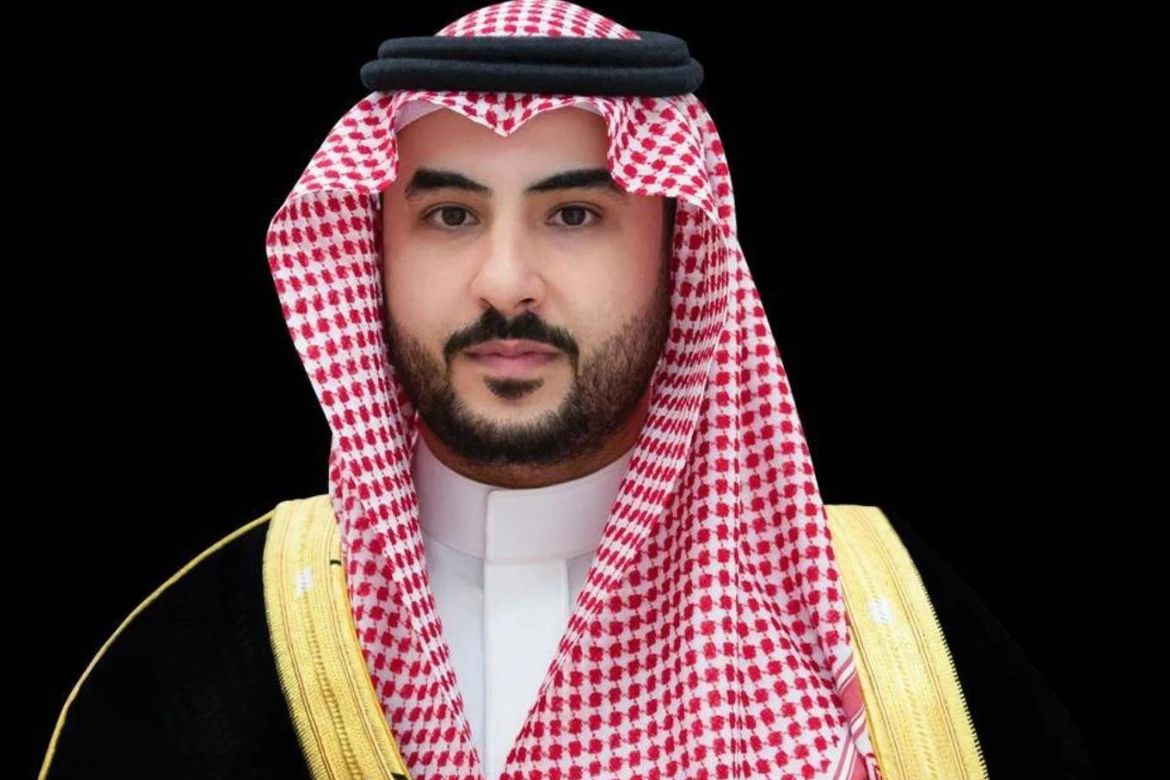
In a move that underscores the strengthening Saudi–US partnership, Defence Minister Prince Khalid bin Salman met senior American officials at the White House on Tuesday, just days before Crown Prince Mohammed bin Salman’s highly anticipated visit to Washington.
According to the Saudi Press Agency (SPA), Prince Khalid’s meetings brought together some of the most influential figures in US foreign policy — Secretary of State Marco Rubio, Defence Secretary Pete Hegseth, and Special Envoy to the Middle East Steve Witkoff — for talks focused on strategic co-operation, security, and regional stability.
The discussions delved into ways to further bolster Saudi–US relations while addressing the latest regional and international developments.
“Met with @SecRubio, @SecWar, and @SEPeaceMissions. We reviewed the Saudi–US relations and explored ways to bolster our strategic cooperation. We also addressed regional and international developments,” Prince Khalid shared on X (formerly Twitter).
Building the Next Chapter of Saudi–US Relations
The White House meeting coincided with Crown Prince Mohammed’s approval of a new judicial co-operation agreement between the Saudi Ministry of Justice and the US Department of Justice — a sign that the partnership now extends beyond traditional defence and energy ties.
Reports indicate that US President Donald Trump will host the Crown Prince at the White House on November 18, marking their first official meeting in Washington since Trump’s second term began. The leaders last met in Riyadh in May, during Trump’s Gulf tour, which reaffirmed Washington’s renewed focus on strategic engagement with the region.
The upcoming visit is expected to finalise a long-discussed US–Saudi security pact, similar in design to the defence agreement recently signed with Qatar. The accord could reshape the region’s security architecture — with Riyadh emerging as a key partner in ensuring Gulf stability and countering emerging threats.
Beyond security, discussions are set to explore expanded cooperation in artificial intelligence, clean energy, and infrastructure — signalling a diversification of the bilateral agenda aligned with Saudi Vision 2030.
A Modern Partnership Built on Innovation
Saudi Ambassador to the United States Princess Reema bint Bandar, who joined the Defence Minister in Washington, described the current phase of Saudi–US ties as “the strongest in decades.”
“While our relationship in the past was grounded in energy and defence, today it’s built on technology, innovation, and investment in the future,” she said during a recent business forum in Miami.
Her remarks reflect a wider shift in how Riyadh engages globally — as a technological hub, innovation partner, and regional powerbroker, not merely an oil exporter.
Regional Diplomacy in Focus
Prince Mohammed’s visit comes at a pivotal moment. A fragile ceasefire in Gaza has opened a window for renewed dialogue on regional peace — and potentially, Saudi–Israeli normalisation.
The Trump administration continues to push for an expanded version of the Abraham Accords, which previously established diplomatic ties between Israel and the UAE, Bahrain, Morocco, and Sudan. Reports suggest that Kazakhstan may soon join the framework, further broadening its geopolitical impact.
However, Riyadh has maintained a clear stance: any formal relations with Israel depend on progress toward the creation of a Palestinian state — a condition that continues to define its approach to regional diplomacy.
Prince Khalid’s Washington meetings are not just diplomatic protocol — they mark a strategic reset in how Saudi Arabia positions itself within the evolving US foreign policy framework.
For the Gulf region, this signifies:
- A broader partnership built on security, AI, energy transition, and economic diversification.
- A shift in balance, as Saudi Arabia moves from being a defence client to a co-architect of regional security.
- A new diplomatic tone, where Riyadh uses innovation and investment as tools of influence.
As the world watches the Crown Prince’s upcoming visit, all eyes will be on Washington — where the next chapter of the Saudi–US alliance may officially begin.
