

US President Donald Trump has declared that the United States no longer needs a deal with Iran, raising fresh questions about the future of diplomatic efforts to prevent another escalation in the Middle East.
In a post on his Truth Social platform on Thursday, November 12, Trump said Washington no longer required an agreement with Tehran.
“Those days have long since passed,” he stated.
Trump also announced that Vice President JD Vance would redirect his attention towards alleged corruption and crime in Democratic-led US states, rather than continuing to focus on diplomatic negotiations with Iran.
“We’ve got their money, hundreds of billions of dollars, and we’ve got their Strait,” Trump said, referring to Iran and the strategically important Strait of Hormuz.
His comments come amid growing uncertainty over the future of negotiations, following reports that Vance had been considering face-to-face discussions with Iran’s senior security official, Mohsen Rezaei.
JD Vance’s Diplomatic Role Raises Questions
Before Trump’s latest announcement, JD Vance had emerged as a leading figure in Washington’s diplomatic efforts to engage Tehran.
According to a report by The Wall Street Journal published on November 12, Vance had been considering a meeting with Rezaei, with Doha reportedly being discussed as a possible venue.
Trump had previously authorised Vance to pursue renewed negotiations.
However, the President’s latest comments have raised questions about whether Washington intends to continue pursuing direct diplomatic engagement or adopt a more confrontational strategy.
The White House’s next steps will be closely watched by regional governments concerned about the consequences of another military confrontation.
Strait of Hormuz Faces Growing Maritime Security Threats
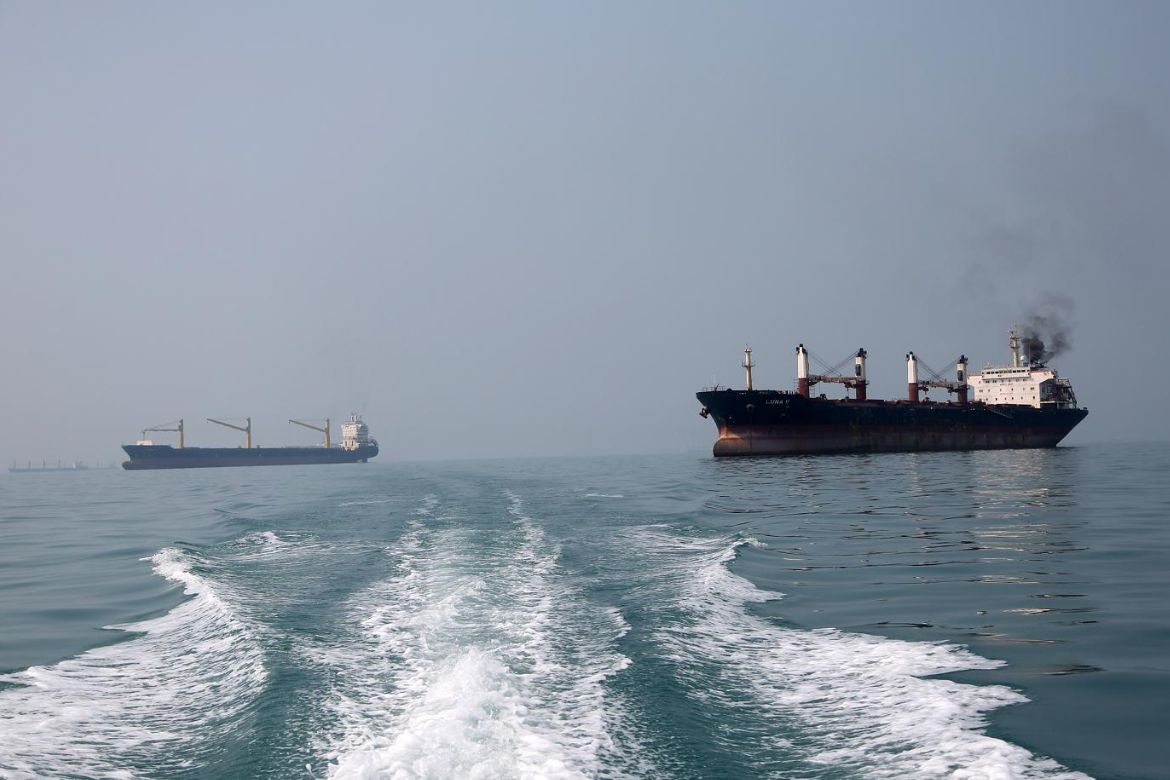
The Strait of Hormuz has become one of the most critical flashpoints in the ongoing regional crisis.
Iran’s Islamic Revolutionary Guard Corps Navy claimed that two supertankers carrying more than four million barrels of oil were engulfed in explosions while passing through the waterway.
According to the IRGC-affiliated Sepah News channel, the vessels had allegedly ignored warnings that the southern route through the strait was unauthorised and unsafe.
The claim had not been independently verified at the time of reporting.
Separately, the UK Maritime Trade Operations agency reported that a tanker travelling eastbound in the Arabian Gulf had been struck by an unidentified projectile. Several casualties were reported, with injured crew members taken ashore for medical treatment.
British maritime security firm Ambrey also reported that a merchant vessel was struck approximately 26 kilometres north-west of Ras Al Khaimah while leaving the Strait of Hormuz. The incident reportedly caused a fire in the ship’s engine room, although no injuries or environmental damage were reported.
These developments have increased concerns about the safety of international commercial shipping and the potential disruption of global energy supplies.
Oman Reviews Environmental Risks After Tanker Incident
Oman is also assessing the potential environmental consequences of maritime incidents in its territorial waters.
The country’s National Committee for Emergency Management reviewed the situation involving an oil tanker that ran aground near Al Qibliya Island off Musandam Governorate.
Officials discussed progress in handling the vessel’s cargo, monitoring possible environmental pollution and coordinating responses to marine contamination.
Oman did not identify the vessel or disclose the circumstances surrounding the incident.
The developments are particularly concerning for Gulf countries because oil spills and maritime accidents could threaten coastal ecosystems, fisheries and important economic activities.
Saudi Arabia Strengthens Security Amid Houthi Threats
Saudi Arabia is facing additional security concerns as the wider US-Iran conflict continues to affect the regional security environment.
Yemen’s Houthi movement claimed responsibility for attacks targeting two Saudi oil-related facilities, including a pumping station along the East-West oil pipeline and the Yanbu oil installation on the Red Sea coast.
The group said one attack involved a drone, although further details about the second incident were not immediately provided.
Saudi Arabia’s air defences have also intercepted missiles launched towards the Riyadh region, according to Saudi-led coalition statements.
In another development, Saudi authorities reported that debris from two intercepted ballistic missiles fell in the Makkah region. No casualties were reported.
The growing threats have encouraged Riyadh to strengthen defence cooperation with regional and international partners.
Recent developments include military cooperation with Egypt, Syria, Turkey and Pakistan, alongside security support involving France, Greece and the United States.
The evolving security partnerships underline Saudi Arabia’s efforts to protect strategic infrastructure, airports, energy facilities and critical transport routes.
UK and Qatar Warn Against Renewed Conflict
International concerns over the possibility of renewed fighting are growing.
British Prime Minister Andy Burnham and Qatar’s Emir, Sheikh Tamim bin Hamad Al Thani, have warned that a return to conflict in the Middle East would have profound consequences and benefit no one.
During a telephone conversation on Thursday, the two leaders agreed to work closely with the United States and regional partners to find a diplomatic solution and help reopen the Strait of Hormuz.
The British Prime Minister also acknowledged Qatar’s efforts to support regional de-escalation.
Qatar’s involvement remains significant given its diplomatic relationships and strategic position in the Gulf.
Pakistan and Turkey Push for Dialogue
Despite the increasingly difficult diplomatic environment, regional leaders continue to call for negotiations.
Pakistan Prime Minister Shehbaz Sharif and Turkish President Recep Tayyip Erdogan discussed the importance of dialogue and de-escalation during the COP31 Leaders’ Summit in Antalya, Turkey.
Sharif highlighted the efforts of regional countries, particularly members of the Makkah Accord, to promote diplomatic engagement.
Erdogan welcomed Pakistan’s mediation efforts, including its role in facilitating the Islamabad agreement between Iran and the United States.
Both leaders stressed that all parties must honour their commitments under the agreement to secure lasting peace.
Separately, Erdogan and Iranian President Masoud Pezeshkian called for greater regional cooperation to prevent further escalation and maintain stability.
These diplomatic initiatives demonstrate that regional governments continue to see negotiations as essential to avoiding a wider conflict.
Trump Says Iranian Regime Remaining in Power Would Be a Defeat
Trump has also made strong remarks about Iran’s political future.
In an interview with US media, he said he would consider it a defeat if Iran’s current leadership remained in power at the end of his presidential term.
He also indicated that he would not hesitate to use military force against Iran again if he believed circumstances required it.
His comments have intensified concerns about the possibility of renewed military action and the future direction of US policy towards Tehran.
Iranian security official Mohsen Rezaei has separately warned that US military bases involved in any future attack on Iran could become targets, potentially extending beyond the Middle East into Europe.
What Does This Mean for the Gulf Region?
Trump’s declaration that Washington no longer needs an agreement with Iran comes at a particularly sensitive moment for the Gulf.
The region faces several interconnected challenges, including maritime security threats, attacks on energy infrastructure, missile and drone threats, environmental risks and uncertainty over international diplomatic efforts.
For the UAE, Saudi Arabia, Qatar, Oman, Bahrain and Kuwait, the stability of the Strait of Hormuz remains especially important.
Any prolonged disruption to shipping could affect oil exports, energy prices, insurance costs, international trade and supply chains.
The situation also highlights the importance of regional diplomatic cooperation, particularly efforts by Qatar, Turkey and Pakistan to prevent further escalation.
What Happens Next?
The immediate future of US-Iran relations remains uncertain.
Trump’s latest remarks suggest a tougher negotiating position, while the continuing maritime incidents and security warnings underline the risks of renewed confrontation.
At the same time, regional governments continue to push for diplomatic engagement and the implementation of existing commitments.
Whether Washington returns to negotiations or adopts a more aggressive approach towards Tehran will be a major factor shaping the next phase of the crisis.
For the Gulf region, the priority remains clear: protecting regional security, safeguarding maritime trade and preventing a conflict that could have far-reaching consequences for the global economy.
