

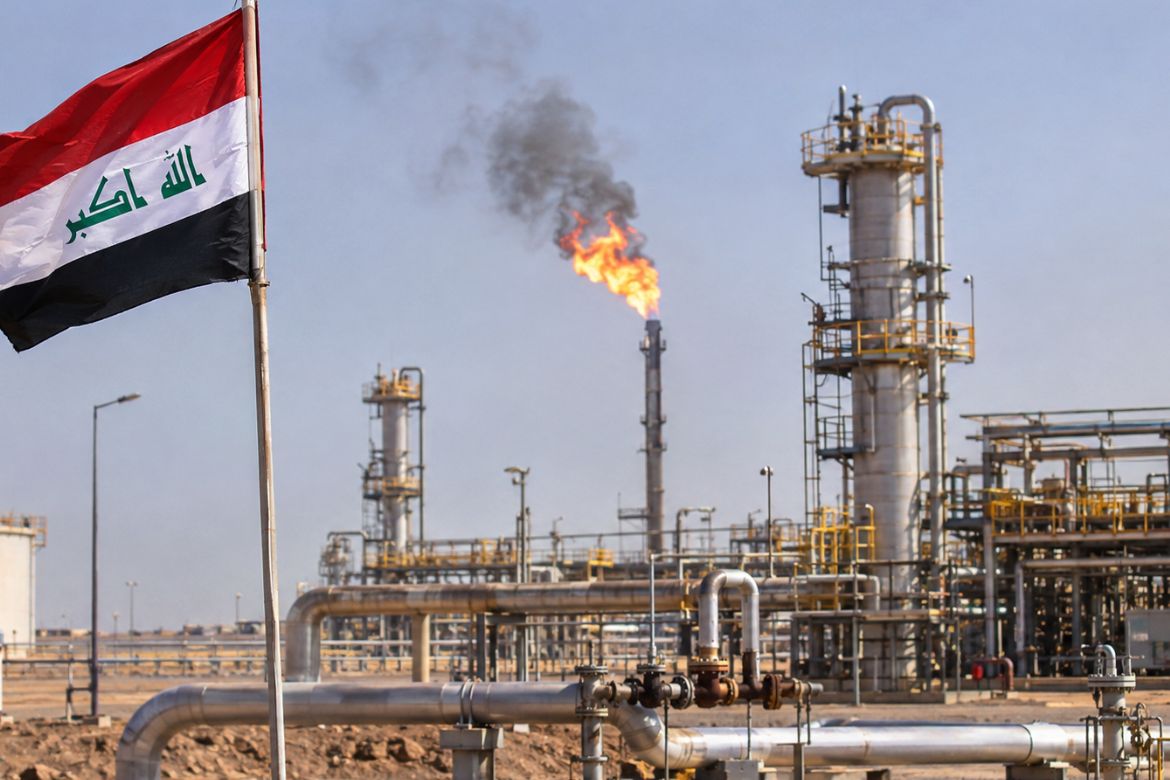
Iraq’s oil revenue from crude exports rose to $8.8 billion in October, according to the country’s Oil Ministry, marking a significant recovery in export performance as Baghdad prepares to seek an increase in its production allocation from the Organisation of the Petroleum Exporting Countries (OPEC).
The announcement comes ahead of Sunday’s OPEC meeting, where Iraq intends to formally request a higher production ceiling.
According to the Iraqi News Agency, citing Oil Minister Basim Khudair, exports by Iraq, OPEC’s second-largest producer, have recovered to approximately 3.6 million barrels per day (bpd), compared with just 200,000 bpd when the current government took office in May.
Mr Khudair described October’s revenue performance as a significant achievement, noting that the figure had not even been reached before the crisis triggered by the Iran war.
He also highlighted the importance of increased exports in securing sufficient petroleum product supplies to meet domestic demand.
Fuel Oil and Other Petroleum Exports Generate Additional Revenue
Beyond crude oil, Iraq has recorded strong performance in exports of fuel oil, sulphur and naphtha.
According to Mr Khudair, exports of these products reached unprecedented levels, generating more than $4.5 billion in revenue.
The expansion of petroleum product exports is part of Iraq’s broader strategy to maximise earnings from its energy resources and strengthen government revenue.
Higher export volumes have also helped the country maintain domestic supplies of petroleum products while supporting its position in international energy markets.
Strait of Hormuz Remains a Key Export Route
The majority of Iraq’s oil exports continue to pass through the strategically important Strait of Hormuz, one of the world’s most critical maritime energy transportation routes.
However, Iraq also relies on alternative transportation channels to maintain export operations.
These include crude oil shipments by road to Syria and transportation through the approximately 960-kilometre Kirkuk-Ceyhan pipeline, which connects northern Iraq with Turkey.
The availability of alternative export routes remains particularly important amid geopolitical tensions and disruptions affecting energy supplies across the Middle East.
Baghdad Takes Control of Oilfields in Kurdistan Region
The latest revenue announcement follows a significant political and administrative development involving Iraq’s oil sector.
Baghdad recently ordered the Oil Ministry to take control of oilfields in the Kurdistan region, triggering protests in Erbil.
On Wednesday, Iraq’s Federal Supreme Court supported the federal government’s deployment of troops to the region’s borders.
The developments highlight continuing tensions between the federal government and the Kurdistan Regional Government over authority, oil production and resource management.
The Oil Ministry did not provide a regional breakdown of October’s oil revenues, leaving the individual contributions of federal and Kurdistan-region production unclear.
Iraq Targets 10 Million Barrels Per Day by 2032
Iraq is also pursuing ambitious plans to expand its oil production capacity over the coming years.
Earlier in November, Prime Minister Ali Al Zaidi outlined targets to increase production to seven million barrels per day by 2030 and potentially reach 10 million barrels per day by 2032.
The longer-term target includes approximately one million barrels per day from the Kurdistan region.
To support these ambitions, the government is engaging with international energy companies and seeking additional investment in the country’s oilfields.
Mr Khudair confirmed that discussions were continuing to increase production and exports while advancing existing and potential oil contracts.
The ministry has also asked companies operating in Iraq to submit ambitious development plans for the energy sector.
Among the international companies involved in discussions are ExxonMobil, Chevron and ConocoPhillips, with potential investments being considered across several oilfields.
These partnerships could help Iraq improve production efficiency, attract international capital and strengthen its long-term position in the global energy industry.
Iraq to Formally Request Higher OPEC Production Quota
A central part of Baghdad’s current energy strategy is its effort to secure a higher production allocation within OPEC.
Mr Khudair reiterated that Iraq would formally request an increase in its production ceiling at Sunday’s meeting.
Last week, he pointed to Iraq’s unique economic and operating circumstances compared with other Middle Eastern countries as justification for a higher quota.
Iraq currently has an OPEC+ production allocation of approximately 4.431 million barrels per day.
The government believes that its growing production capabilities, investment commitments and economic requirements should be considered when determining future production limits.
However, any increase will require agreement among OPEC+ members, making the upcoming discussions important for Iraq’s energy ambitions.
OPEC+ Likely to Maintain Production Targets
Iraq’s request comes at a time when OPEC+ is navigating disagreements over production capacity and future output allocations.
According to a Reuters report published on Thursday, the alliance is likely to maintain its existing production targets for at least the first quarter of 2027, as disagreements over members’ production capacity continue.
At an earlier meeting this month, the smaller OPEC+ group agreed to maintain December’s production targets at September’s required levels, amid continuing disruptions to global energy supplies caused by the Middle East conflict.
The combined December production targets for the seven OPEC+ members covered by the agreement amount to approximately 31 million barrels per day.
The allocations include:
- Saudi Arabia: 10.478 million barrels per day.
- Russia: 9.949 million barrels per day.
- Iraq: 4.431 million barrels per day.
Saudi Arabia and Russia remain the two largest contributors under these production allocations, followed by Iraq.
The continuing disagreements over production capacity could complicate Baghdad’s efforts to secure a higher quota, particularly as the alliance seeks to balance individual member ambitions with overall market stability.
Iraq Rules Out Increases in Domestic Fuel Prices
Despite its efforts to generate additional state revenue from oil exports, the Iraqi government has indicated that it has no plans to increase domestic prices for petrol, diesel or kerosene.
Mr Khudair said the government intends to maintain existing regulated prices to support consumers while implementing a new economic model aimed at generating additional government revenue.
“They will remain at their official, regulated prices,” he said.
The decision is significant for Iraqi households and businesses that depend heavily on affordable fuel for transportation, electricity generation and everyday economic activities.
Maintaining stable domestic fuel prices could also help limit additional financial pressure on consumers during a period of regional economic uncertainty.
What Iraq’s Oil Strategy Means for Global Energy Markets
Iraq’s improving export performance and its request for a higher OPEC quota could have implications for international oil markets.
As one of the world’s major oil producers, any substantial increase in Iraqi production could influence global supply levels, competition among exporters and future crude oil price movements.
The country’s ambitions to reach 10 million barrels per day by 2032 also demonstrate its intention to strengthen its position in the global energy industry.
However, achieving these targets will depend on several factors, including international investment, infrastructure development, export capacity, political stability and cooperation among OPEC+ members.
The continuing importance of the Strait of Hormuz further highlights Iraq’s exposure to geopolitical developments and disruptions affecting regional shipping routes.
Outlook: A Defining Period for Iraq’s Oil Industry
Iraq’s $8.8 billion oil revenue achievement in October represents an important milestone for its energy sector as the country works to restore exports and expand production.
Its planned request for a higher OPEC quota, negotiations with major international energy companies and ambitious production targets underline Baghdad’s determination to maximise its oil resources.
At the same time, developments in the Kurdistan region, regional security concerns and disagreements within OPEC+ present challenges that could influence the country’s future energy strategy.
Sunday’s OPEC meeting will therefore be an important opportunity for Iraq to present its case for a higher production ceiling.
Whether Baghdad secures the additional allocation it seeks will depend on the wider decisions of OPEC+ and the alliance’s assessment of global oil supply and demand.
For Iraq, the broader objective remains clear: turn its substantial oil resources into sustainable government revenue, greater economic stability and a stronger position in the international energy market.
