

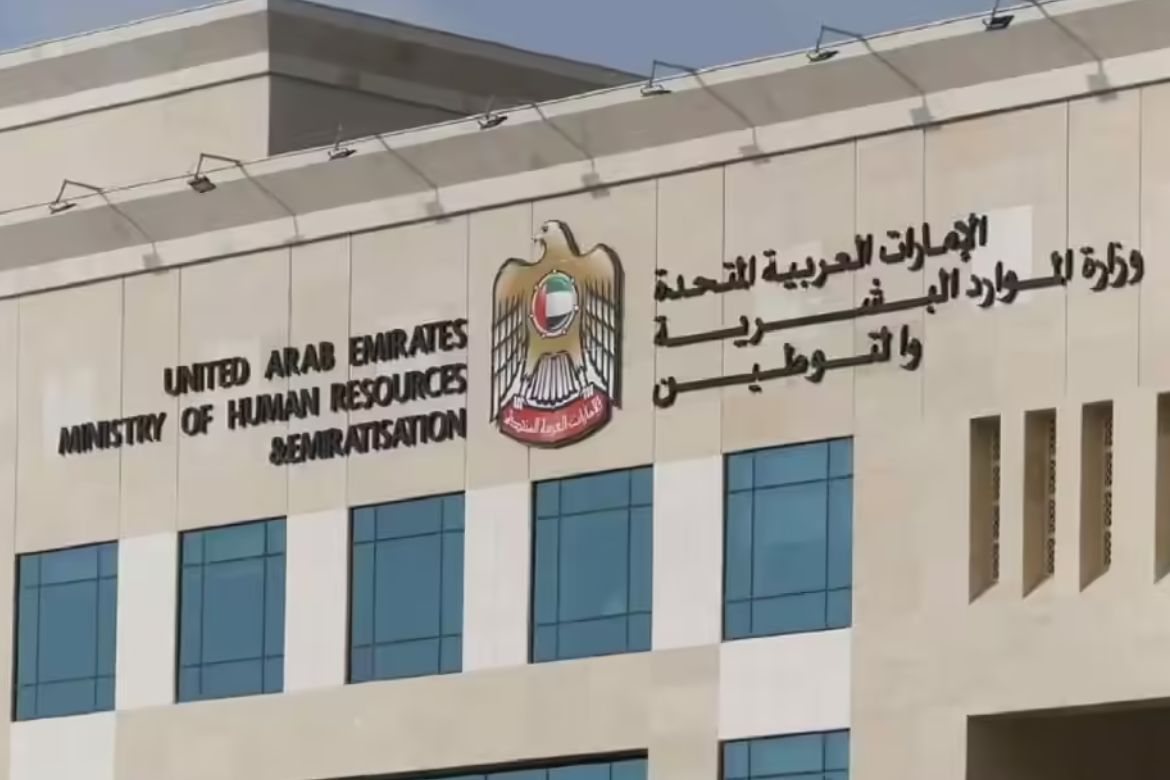
As the June 30 deadline approaches, the Ministry of Human Resources and Emiratisation (MoHRE) has issued a firm reminder to private sector companies to meet their Emiratisation targets for the first half of 2026, warning that attempts to bypass rules through “fake Emiratisation” schemes will face strict action.
The directive applies to private companies employing 50 or more workers, who are required to increase the number of Emirati professionals in skilled roles by 1% during the first half of the year. A further 1% increase is mandated in the second half, bringing the total annual Emiratisation growth requirement to 2% by the end of 2026.
Push for Genuine Workforce Integration
MoHRE has urged companies yet to meet their targets to utilise the Nafis platform, a national initiative designed to connect employers with a diverse pool of qualified Emirati jobseekers across various sectors and specialisations.
Authorities emphasised that Emiratisation is not merely a compliance exercise but a strategic national priority aimed at strengthening UAE participation in the private sector and advancing long-term economic competitiveness.
The ministry also reaffirmed the importance of strong public-private collaboration, noting that partnerships with businesses play a key role in achieving sustainable improvements in employment opportunities for UAE nationals.
Incentives for High-Performing Companies
Companies that demonstrate strong commitment to Emiratisation will continue to receive incentives from the government.
These include:
- Membership in the Emiratisation Partners Club
- Up to 80% discounts on MoHRE service fees
- Priority access to government procurement projects [gulftoday.ae]
Such benefits are intended to reward organisations that embed Emiratisation into their workforce strategies and contribute meaningfully to the national agenda.
Penalties Effective from July 1
MoHRE has made it clear that enforcement will begin immediately after the deadline.
From July 1, 2026, companies that fail to meet their Emiratisation targets will be required to pay AED 10,000 per month (AED 120,000 annually) for every Emirati position not filled.
The penalties underscore the government’s firm approach to ensuring compliance and discouraging last-minute or superficial hiring practices.
Crackdown on “Fake Emiratisation” Schemes
In a strong warning to the private sector, MoHRE cautioned against attempts to manipulate compliance through“fake Emiratisation” schemes, describing them as serious labour market violations.
These practices may include:
- Listing Emiratis as employees without assigning genuine roles
- Registering workers without proper pay or benefits
- Artificially inflating workforce data to meet quotas
The ministry highlighted its advanced digital monitoring and field inspection systems, which are capable of detecting irregularities and flagging non-compliant behaviour.
Violations will be dealt with firmly, in line with UAE labour laws, including potential legal action and administrative penalties.
Public Encouraged to Report Violations
MoHRE has also called on residents and community members to support enforcement efforts by reporting violations that undermine Emiratisation objectives.
Reports can be submitted through:
- The MoHRE call centre: 600590000
- Official mobile application
- Ministry website
Officials have assured that all reports will be handled with strict confidentiality and responsiveness.
The Bigger Picture
The June 30 deadline marks a pivotal moment in the UAE’s ongoing efforts to reshape its labour market. With stricter oversight, increased penalties, and a strong stance against fraudulent practices, the government is reinforcing a clear message:
Emiratisation must be authentic, sustainable, and impactful—not symbolic.
As enforcement tightens, businesses are expected to shift from short-term compliance measures to long-term talent development strategies, ensuring meaningful integration of Emirati professionals into the private sector.
