

A Victory, But Not the Headlines Farage Wanted
Nigel Farage successfully regained his Clacton parliamentary seat on Friday after triggering a by-election intended to prove his popularity with voters. The Reform UK leader won 22,239 votes, securing almost 63 per cent of the vote and comfortably defeating all challengers.
However, what was meant to be a triumphant political comeback quickly turned into one of the most unusual election stories in recent British history, as Farage refused to attend the official declaration of results.
Count Binface’s Remarkable Rise
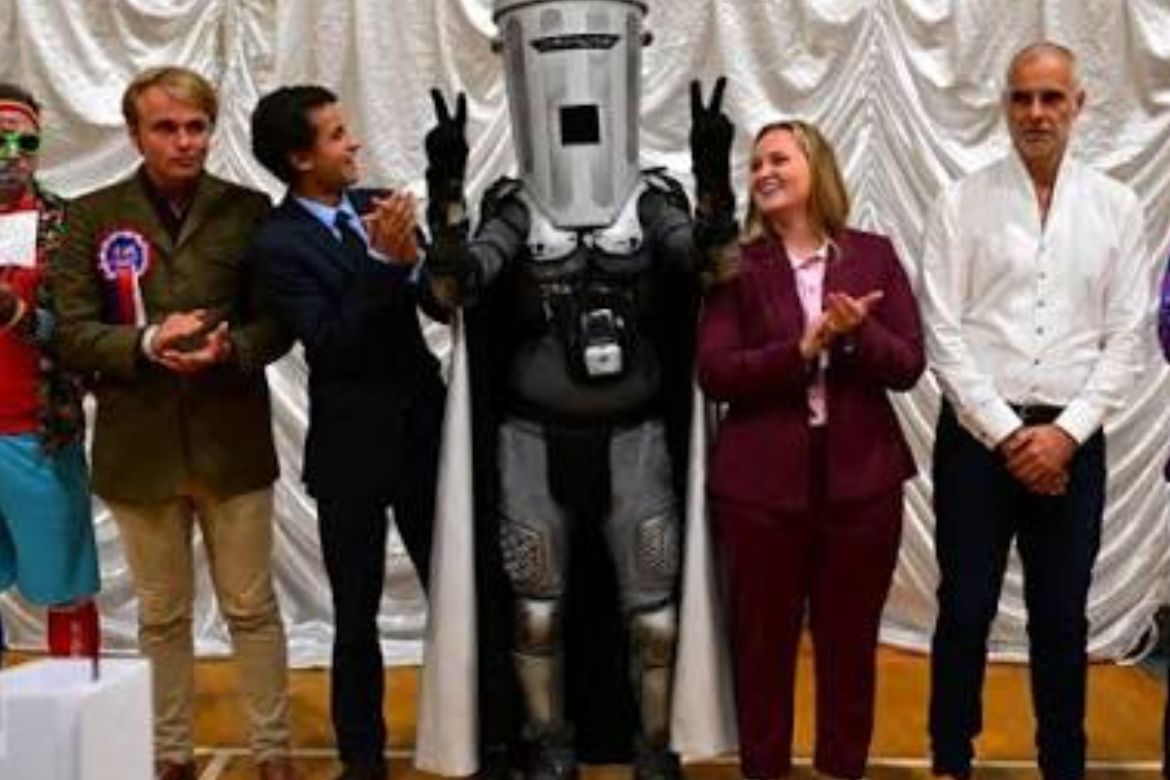
The surprise of the night was Count Binface, the satirical candidate created by comedian Jonathan Harvey. Wearing his trademark bin-shaped headgear, Binface secured 9,455 votes, representing nearly 27 per cent of all ballots cast and recording his strongest-ever electoral performance.
His result meant that more than one in four voters backed a novelty candidate, transforming what could have been a routine by-election into a political spectacle watched across the UK and beyond.
Why Farage Stayed Away
Farage’s absence from the count sparked immediate controversy. The Reform UK leader claimed he had been informed of an “organised campaign” to disrupt and degrade the event and therefore chose not to attend.
Police, however, did not publicly confirm that such advice had been given. Essex Police stated that adequate security arrangements were in place and disputed suggestions that candidates had been warned against attending.
Reports also indicated that Farage had told supporters he was unwilling to stand on stage and be “demeaned and humiliated by a bunch of nobodies,” referring to the large number of fringe and independent candidates contesting the seat.
A By-Election Farage Created Himself
The by-election came about after Farage resigned from Parliament while facing scrutiny over a £5 million donation that he allegedly failed to declare. Farage described the investigation as a parliamentary “witch-hunt” and argued that voters, rather than political opponents, should decide his future.
He framed the campaign as a battle against the political establishment and sought a renewed mandate from local voters. That goal was achieved, with Farage actually receiving around 1,000 more votes than he won during the 2024 General Election.
A Record Number of Candidates
The contest attracted a record 34 candidates after Britain’s major political parties chose not to participate, dismissing the election as a political stunt. The absence of Labour, Conservatives and Liberal Democrats created an unusual race dominated by independents, protest candidates and political eccentrics.
Turnout reached just over 44 per cent, significantly lower than a general election but typical of many by-elections.
Critics Say Questions Remain
Despite the convincing win, Farage remains under political pressure. The parliamentary standards investigation that was paused when he resigned is expected to resume now that he has been re-elected. The inquiry will examine whether the £5 million gift should have been formally declared. Farage has denied any wrongdoing.
Labour figures quickly seized on Count Binface’s strong performance, arguing that Farage had failed to secure the political endorsement he was seeking. Critics also questioned whether an election dominated by fringe candidates could truly be regarded as a meaningful test of public support.
Binface Claims His Own Victory
Following the result, Count Binface celebrated what he described as a major breakthrough, noting that more than one in four voters preferred him over the leader of Reform UK. The comedian-turned-candidate promised to continue championing local issues and challenging Britain’s political establishment.
While Farage reclaimed his seat, it was Count Binface who emerged as the night’s biggest talking point, proving that in British politics, satire can sometimes come surprisingly close to the mainstream.
