

Palestinian relations with the United Kingdom are continuing to develop despite growing diplomatic tensions with Israel, as both sides work to implement sanctions targeting illegal Israeli settlements in the occupied West Bank.
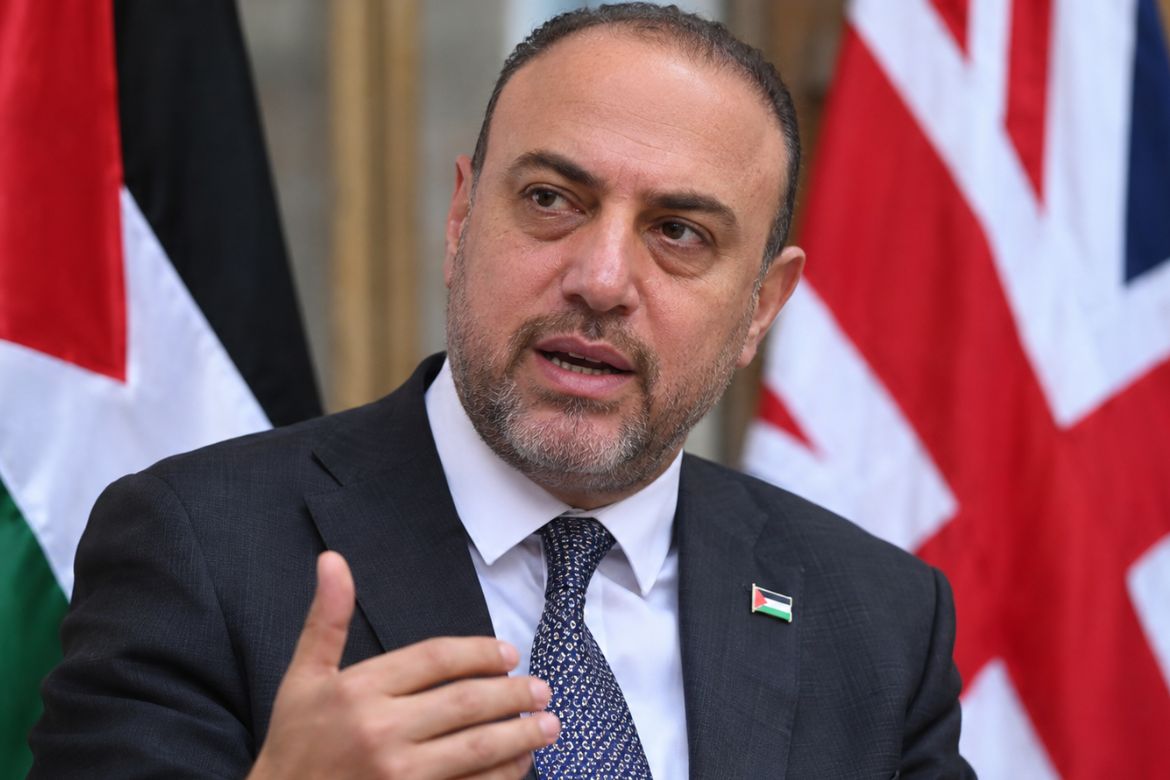
Palestinian Ambassador to the UK Husam Zomlot has said the partnership remains resilient, emphasising that Britain’s measures are essential to countering economic pressure on Palestinians, limiting settlement expansion and supporting the prospects of an independent Palestinian state.
Speaking to The National, Mr Zomlot said Palestinian diplomats were working closely with British officials to ensure the newly announced sanctions regime effectively targets settlement-related trade and activities.
The developments come as Britain seeks to strengthen its engagement with Palestine following its recognition of Palestinian statehood, while Israel continues to oppose measures it considers harmful to its interests.
UK Sanctions Target Israeli Settlement Activities
Britain introduced a new sanctions regime in September, banning trade in goods and services from illegal Israeli settlements in the occupied West Bank.
The measures are intended to address settlement expansion and protect the prospects of a two-state solution.
Palestinian officials have welcomed the move, describing it as an important step towards limiting economic activities that support settlements and contribute to restrictions on Palestinian development.
However, Ambassador Zomlot has called for broader action, arguing that sanctions should extend beyond settlement-related activities to include Israeli institutions involved in their expansion.
Palestinian officials, alongside British campaign groups, are also seeking a full arms embargo on Israel.
Mr Zomlot said the sanctions process was still at an early stage and that further measures would be necessary.
“Settlements are the crime. Israel is the criminal. So you cannot just sanction the crime and not the criminal,” he said.
His remarks underline Palestinian concerns that restrictions targeting settlement-related trade alone may not be sufficient to address the wider political and economic challenges facing the Palestinian territories.
Palestinian Economy Faces Growing Financial and Trade Restrictions
Economic independence remains a central priority for Palestinian officials as they seek stronger international partnerships.
Palestinian trade is heavily affected by restrictions, with exports largely dependent on Israeli-controlled checkpoints and customs channels. Palestinian banks also rely on a limited number of Israeli banking institutions to facilitate international payments.
These arrangements create significant challenges for Palestinian businesses seeking to access overseas markets, process transactions and expand commercial operations.
Ambassador Zomlot described the situation as a serious threat to the Palestinian economy.
“They are strangling our economy. They have our economy by the throat. We need the UK and the rest of the world make sure that we have several throats to breathe,” he said.
He highlighted the dependence of Palestinian trade and banking on Israeli-controlled systems, arguing that greater international cooperation is needed to create alternative economic channels.
For Palestinian officials, strengthening relations with Britain and other international partners could help diversify trade, improve financial access and reduce economic vulnerability.
Palestine and UK Explore Stronger Trade and Investment Ties
Alongside the sanctions initiative, Palestinian officials are seeking to expand economic cooperation with Britain.
The discussions build on an agreement signed last year by Palestinian Prime Minister Mohammad Mustafa and former British Foreign Secretary David Lammy.
Ambassador Zomlot said stronger bilateral and multilateral economic relationships would be important in supporting the establishment of the Palestinian state recognised by the UK.
Trade cooperation is increasingly being viewed as a practical way to strengthen Palestinian economic development.
Palestinian trade association Paltrade and agricultural company Al Reef recently conducted a European roadshow promoting Palestinian agricultural products and engaging with European officials.
The initiative highlighted opportunities for Palestinian businesses to access new markets and build stronger international commercial relationships.
Beyond agricultural exports, discussions between Palestinian and British officials are also exploring potential exchanges involving technology and renewable energy expertise.
These sectors could create opportunities for investment, knowledge-sharing and the development of new economic capabilities.
For Palestinian officials, the objective is to move beyond diplomatic recognition and establish economic partnerships that contribute to long-term national development.
Israeli Pressure Fails to Halt Diplomatic Cooperation
The strengthening relationship between Palestine and the UK has faced resistance from Israel.
Last month, Israel retaliated against Britain’s settlement trade restrictions by downgrading the status of the British Consulate General in Jerusalem.
The move raised concerns about the future of Britain’s diplomatic presence in the city and its longstanding role in relations with the Palestinian people.
However, Ambassador Zomlot said the development had not deterred cooperation between Palestinian and British officials.
He confirmed that discussions were continuing with relevant authorities to ensure the British consulate remains operational and that Britain’s diplomatic presence in Jerusalem is maintained.
Mr Zomlot also rejected Israel’s position regarding Jerusalem, arguing that Israel has no sovereignty over occupied East Jerusalem.
He described the Israeli decision as illegal and said the consulate served as an important diplomatic address for Britain in its engagement with Palestinians.
Palestinian officials have maintained that preserving Britain’s diplomatic presence in Jerusalem is essential to protecting international engagement with the Palestinian people.
The dispute highlights the broader diplomatic tensions surrounding Jerusalem and the international community’s role in the Israeli-Palestinian conflict.
UK Strengthens Human Rights Sanctions Powers
Britain is also strengthening its ability to respond to human rights violations.
British Foreign Secretary Ed Miliband said recently that new regulations would allow the government to act more swiftly when designating individuals and organisations on human rights grounds.
The expanded powers could provide additional mechanisms for addressing activities linked to settlement expansion and human rights concerns.
However, the scope and implementation of any additional sanctions remain important questions.
Palestinian officials continue to press Britain to take stronger action against Israeli state institutions and organisations involved in settlement activities.
The developments come amid broader international concerns over settlement expansion, the humanitarian situation in the occupied Palestinian territories and the future of the two-state solution.
What the Strengthening Palestine-UK Partnership Means
The continued cooperation between Palestine and the UK demonstrates that diplomatic relations can remain active despite pressure from Israel.
For Palestinians, the partnership offers opportunities to strengthen international recognition, improve economic access and build greater institutional capacity.
For Britain, the challenge lies in balancing its relationship with Israel against its commitments to Palestinian self-determination, international law and the two-state solution.
The sanctions regime represents one aspect of this evolving relationship, while economic cooperation could provide a more sustainable foundation for future engagement.
However, the effectiveness of these initiatives will depend on implementation, enforcement and the ability to translate diplomatic commitments into tangible improvements for Palestinians.
Palestinian-British relations are entering a significant phase as both sides work to strengthen economic cooperation and enforce restrictions on illegal Israeli settlement activities.
Ambassador Husam Zomlot’s remarks underline Palestine’s determination to maintain its partnership with Britain despite Israeli diplomatic pressure.
The focus on trade, technology, renewable energy and financial independence reflects a broader effort to build a more resilient Palestinian economy.
While major political and economic challenges remain, continued cooperation between Palestine and the UK could play an important role in supporting Palestinian statehood and advancing the prospects of a peaceful two-state solution.
For Palestinians, the central question is whether international diplomatic support can translate into meaningful economic independence and lasting progress on the ground.
