

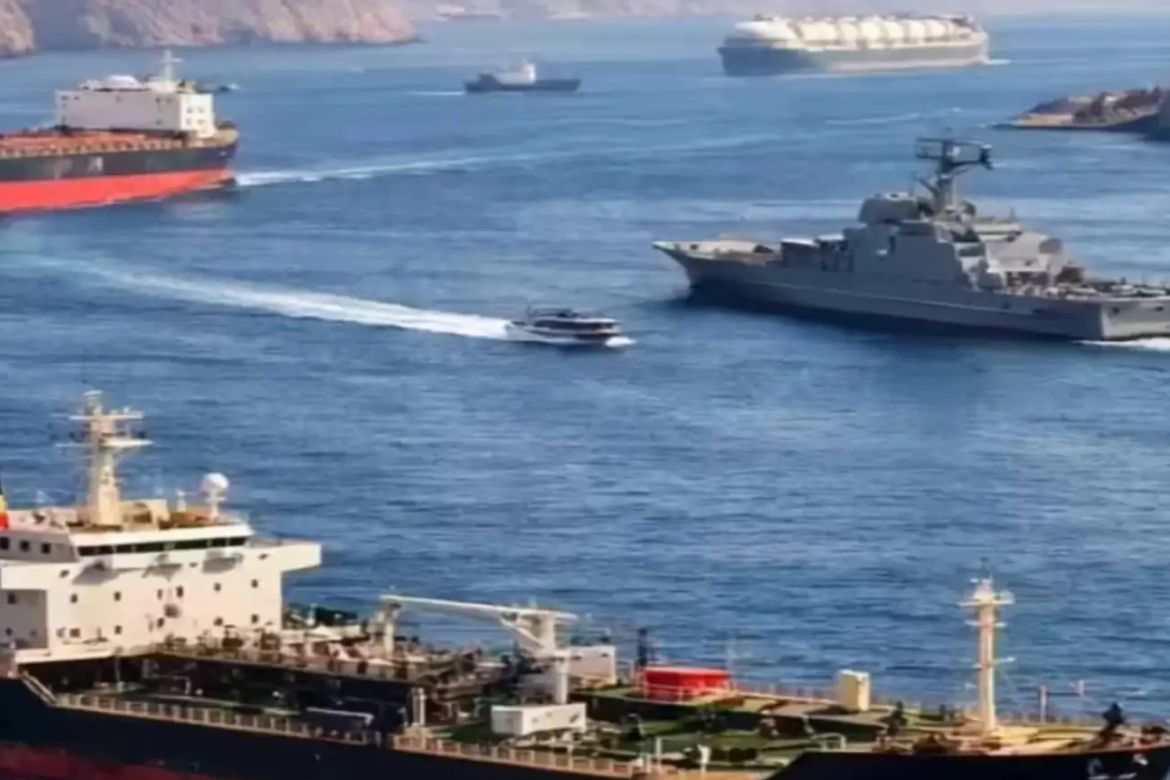
The fragile calm in the Strait of Hormuz has been disrupted once again, after a vessel attack forced the United Nations to suspend a critical evacuation operation meant to rescue thousands of stranded seafarers.
The UN’s International Maritime Organisation (IMO) confirmed on Thursday that it has paused its evacuation mission, which was aimed at clearing hundreds of ships and more than 11,000 sailors trapped in the region since the escalation of the Iran war in February 2026.
Evacuation Plan Put on Hold
The move comes after a cargo vessel was struck by an unidentified projectile in the Gulf of Oman while transiting through the Strait of Hormuz — one of the world’s most crucial energy corridors.
IMO Secretary-General Arsenio Dominguez said the attack raised immediate safety concerns:
“I have been informed of an attack today in the Gulf of Oman on a vessel which passed through the Strait of Hormuz. This vessel did not transit under IMO’s evacuation framework.”
The agency clarified that the suspension is temporary and aimed at reassessing safety guarantees for ships operating in the region.
Attack Near Oman Raises Alarm
According to maritime authorities, the vessel was hit approximately 14 kilometres southeast of Oman’s coast, damaging its bridge but leaving the crew unharmed.
While no group has officially claimed responsibility, multiple reports indicate the possibility of a drone strike, with early intelligence pointing towards Iranian involvement.
Crucially, the ship was operating outside the designated evacuation corridor, highlighting the heightened risks for vessels not adhering to approved navigation routes.
Iran Issues Strong Warning
In a notable escalation, Iran’s Islamic Revolutionary Guard Corps (IRGC) navy responded by warning vessels against deviating from authorised routes.
It described the path taken by the targeted ship as:
“Unacceptable and extremely dangerous”
Tehran further cautioned:
“We warn all vessels to strictly refrain from any movement outside the designated routes.”
Iran indicated that action could be taken against ships violating its maritime directives, reinforcing its position over navigation control in the strait.
The warning came just a day after Oman had introduced a temporary transit corridor to facilitate evacuation operations — a move now under renewed scrutiny.
Thousands of Sailors Left in Limbo
The suspension directly impacts the large-scale humanitarian evacuation effort:
- Over 11,000 seafarers remain stranded in the Strait of Hormuz
- Hundreds of vessels are still unable to safely exit the Gulf
- Only a limited number of ships had been successfully evacuated before the halt [moneycontrol.com]
The operation, launched earlier this week following a tentative US-Iran understanding, had been seen as a breakthrough in easing months of maritime congestion.
Diplomatic Momentum Meets Ground Reality
The latest incident underscores tensions between diplomacy and on-ground realities.
While Gulf nations have welcomed ongoing US-Iran negotiations, they continue to stress:
- The need for unrestricted navigation in the Strait of Hormuz
- Strong opposition to any transit fees or control measures
- Addressing broader regional threats linked to Iran’s military capabilities
Meanwhile, Iran and Oman are reportedly discussing the future governance framework of the strait, including maritime coordination and operational oversight.
Global Stakes Remain High
Any instability in the Strait of Hormuz sends ripples far beyond the region:
- The waterway handles a significant share of global oil shipments
- Energy markets react sharply to disruptions
- Shipping costs and insurance risks escalate in uncertain conditions
Even before this attack, shipping activity had shown only a tentative recovery, with operators cautious about security risks and unclear navigation rules.
The latest disruption highlights a critical fault line in the evolving Iran conflict: control of maritime access equals strategic leverage.
While diplomatic channels remain active, incidents like this demonstrate that stability in the Strait of Hormuz cannot be assumed — it must be enforced, monitored, and mutually respected.
Until then, thousands of sailors remain caught in a geopolitical crossfire, and global markets continue to watch every movement in one of the world’s most sensitive waterways.
