

For the Gulf, aviation is more than an industry—it’s an identity. Emirates, Etihad, Qatar Airways and their peers are the wings of national ambition, turning desert skylines into global crossroads for trade, tourism and investment. But as the world accelerates its climate agenda, those same wings could face turbulence.
The Climate Headwind
Flying has become a flashpoint in the climate debate. While aviation contributes about 2.5% of global CO₂ emissions, far less than heavyweights like cement (8%) or steel (7%), it leaves a distinct footprint. Jet engines create contrails—thin, high-altitude clouds that amplify warming—and air travel demand is rising fast. Left unchecked, emissions could triple by 2050.
Europe’s private jet backlash offers a warning: high per-person emissions and luxury excesses are attracting calls for bans. And unlike cars or power plants, aviation cannot simply “plug in” to cleaner electricity. The Gulf’s jet-powered economies know this well.
Technology’s Limits
Electric aircraft exist—on paper and in prototypes. But current battery technology limits them to short hops of 500 km, enough for Dubai–Muscat or Doha–Riyadh. That’s a fraction of the Gulf’s long-haul network. Supersonic travel, meanwhile, is making headlines again, with promises of London–Dubai in three hours. Yet even the most advanced designs would still burn two to three times more fuel per passenger than today’s business class.
Efficiency has improved: today’s jets use half the fuel they did in 1990. But incremental gains won’t meet climate goals. Carbon offsets—like tree-planting—offer temporary relief but raise questions of credibility.
Fuel for the Future
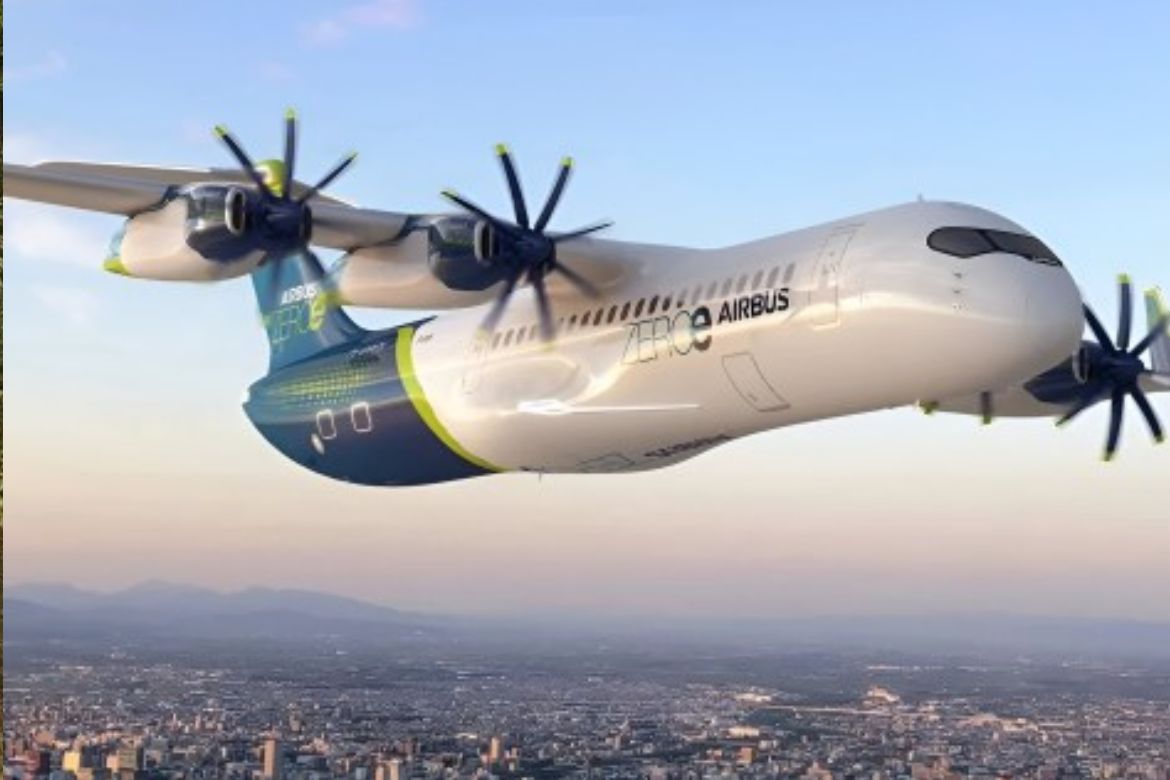
To align with net-zero targets, experts say all new aircraft after the mid-2030s must be zero-carbon. That’s barely a decade away. For the Gulf, the options are clear but challenging:
- Sustainable Aviation Fuel (SAF) – already in use. Emirates flew an A380 on 100% SAF; the UAE aims for 1% SAF in jet fuel by 2031. Europe is far more aggressive: 70% by 2050.
- Synthetic fuels – made by combining green hydrogen with captured CO₂. Clean and compatible with today’s engines, but costly and scarce.
- Hydrogen – energy-rich but bulky, needing redesigned aircraft and new infrastructure. Commercial scale-up is unlikely before the 2040s.
The Supply Chain Standoff
The Gulf’s oil and gas giants have the expertise to produce synthetic fuels or hydrogen. But here’s the bind: airlines argue there isn’t enough sustainable fuel, and it’s too expensive; fuel producers insist they need long-term purchase commitments before investing billions. Meanwhile, regulators tighten the screws—Europe’s mandates are firm, and climate-conscious tourists are watching.
Risks and Rewards for the Gulf
The region walks a fine line. Move too quickly, and hubs risk losing passengers to rivals like Istanbul; move too slowly, and face carbon tariffs, route restrictions or boycotts. But the Gulf is also uniquely positioned to turn challenge into advantage.
- Synthetic fuel leadership – Blessed with sun, land and refining know-how, the Gulf can become a global supplier. The EU’s guaranteed demand and premium pricing make it an attractive play.
- Carbon removal hub – Instead of replacing kerosene, capture and store its emissions. Direct Air Capture (DAC) technology could let airlines keep flying while pulling CO₂ from the sky. Costs are high—around $500 per tonne today, targeting $200 in future—but feasible. A Dubai–London economy return emits ~2 tonnes of CO₂; offsetting half through efficiency and SAF, DAC could lift ticket prices by about 25%—not cheap, but not catastrophic.
Flying Forward
The Gulf’s aviation sector was built on ambition and bold investment. Now it faces a new race—not just for passengers, but for sustainability leadership. Whether through green fuels, carbon removal, or hydrogen-ready designs, the region has the capital, energy resources and engineering talent to lead.
The question is one of timing and strategy. The world is watching. The Gulf’s airlines cannot afford to simply cruise—they must chart a flight path that balances growth with responsibility. Because in the coming decades, staying aloft won’t be about speed alone; it will be about flying cleaner, smarter and ahead of the climate curve.
