

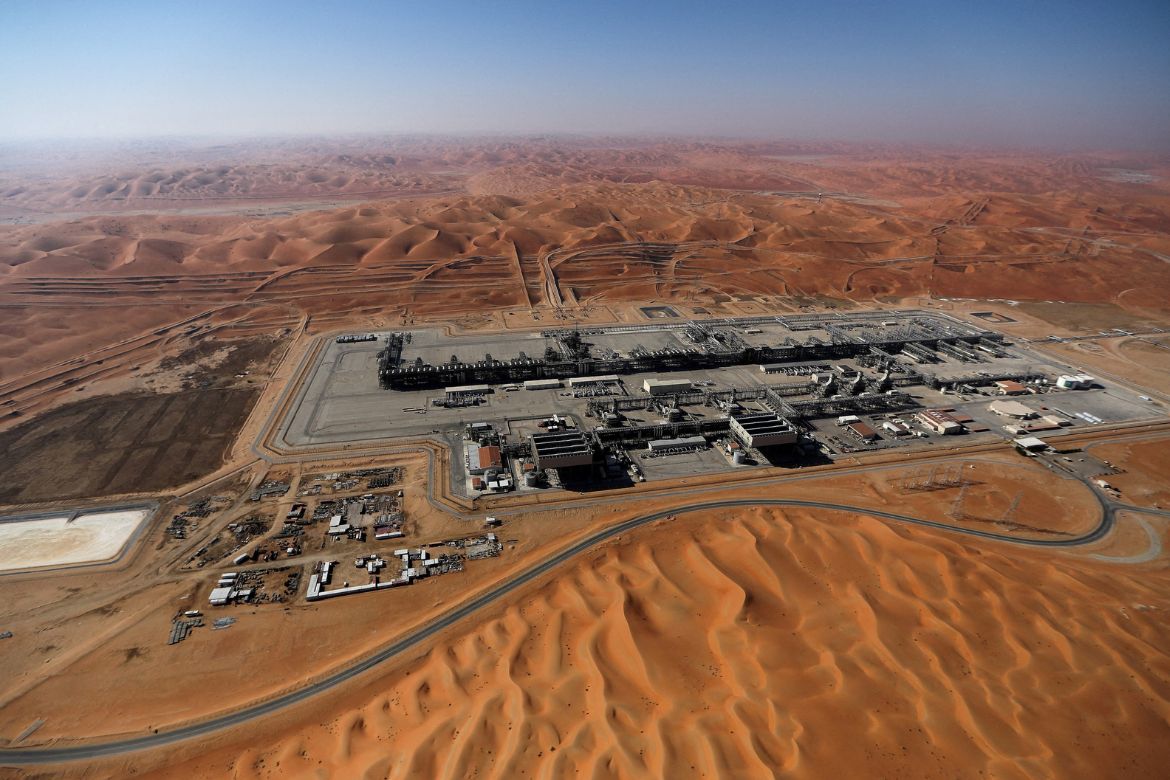
In a development closely watched by energy stakeholders and Gulf policymakers alike, Saudi Aramco has posted its 10th straight quarterly profit decline, as the Kingdom’s oil giant continues to wrestle with the global impact of softening crude prices, refined product demand, and macroeconomic uncertainty.
For the second quarter of 2025, net profit dropped 22% year-on-year to SAR 85 billion (USD 22.6 billion), compared to SAR 109 billion (USD 29 billion) in the same period last year, according to Aramco’s filing with the Tadawul stock exchange. Revenue was also down, falling 11% to SAR 378.8 billion, amid pressure across both upstream and downstream segments.
A Market Barometer for the Gulf
Aramco’s results, often viewed as a proxy for the wider regional economic mood, have been hit by lower crude and refined product prices, despite production levels remaining elevated. Free cash flow in Q2 dropped to USD 15.2 billion, a 20% decrease year-on-year, reducing room for discretionary spending and dividend distribution.
The oil major’s gearing ratio — a measure of debt to equity — has climbed to 6.5%, up from negative territory in 2024, pointing to greater financial leverage as the company navigates a shifting energy landscape.
Dividends Hold, But Lower
Despite the dip, Aramco confirmed a base dividend of USD 21.1 billion, along with a performance-linked payout of USD 200 million — totaling USD 21.3 billion for Q2. That’s 31% lower than last year’s Q2 distribution, underscoring growing caution as global oil volatility persists.
Optimism from the Top
In a statement, Aramco CEO Amin Nasser struck a confident tone:
“Market fundamentals remain strong. We anticipate oil demand in the second half of 2025 to exceed the first half by over two million barrels per day.”
Nasser reiterated Aramco’s commitment to hydrocarbons as a long-term pillar of global energy security — an important reassurance amid rising global conversations on the energy transition.
Regional Dynamics and OPEC+ Strategy
The earnings update comes as Saudi Arabia continues to anchor the OPEC+ policy direction. On Sunday, the coalition — led by Riyadh and Moscow — agreed to raise September production by 547,000 barrels per day, part of the phased restoration of 2.2 million barrels/day voluntarily cut since the pandemic.
This marks the sixth consecutive monthly increase, though the bloc reaffirmed its commitment to pause or reverse increases if market conditions weaken — a nod to Gulf-led oil diplomacy aimed at stabilizing the market without surrendering price influence.
Price Check: Oil in 2025
Brent crude stood at USD 68.7/barrel on Tuesday, down nearly 8% year-to-date, despite periods of mid-year recovery.
WTI held at USD 66.2/barrel, down over 6% in 2025, as the market grapples with geopolitical tensions, tariff regimes, and global demand concerns.
CapEx and the Future of Energy
Aramco’s capital expenditure remained consistent at USD 12.3 billion in Q2, up slightly from USD 12.1 billion in the same period of 2024. Notably, the company continues to channel investments into non-oil ventures, with Nasser pointing to growth in:
- New energy sectors
- Digital transformation
- Artificial Intelligence-led innovation
“We are leveraging scale, low-cost operations, and technological advancements to position ourselves for long-term success,” said Nasser.
Shrinking Market Cap, Strategic Response
The company has lost nearly USD 800 billion in market value since its peak in early 2022 — a stark reminder of the risks tied to commodity cycles. In response, Aramco is reportedly exploring asset divestments, cost reductions, and high-return investments to maintain profitability and sovereign fiscal stability.
GTNews Take: Why This Quarter Matters
For the Gulf region, where national budgets and diversification plans remain closely tied to oil revenues, Aramco’s earnings are more than just a corporate metric — they are a macro-economic signal. This 10-quarter dip not only reveals fragilities in global oil demand but also puts Vision 2030 financing and energy transition goals under sharper scrutiny.
As Saudi Arabia doubles down on its transformation narrative — spanning tourism, logistics, and renewable energy — Aramco’s performance will remain a critical lever in balancing the traditional and the transformational.
What to Watch in the Coming Quarters:
- Will oil prices stabilize as geopolitical pressures ease or intensify?
- Can Aramco sustain its dividend promise without compromising long-term growth?
- How quickly will diversification (hydrogen, renewables, AI) yield returns?
Aramco’s next moves — both fiscal and strategic — will help shape not just its own future, but that of the Gulf’s broader energy narrative.
