

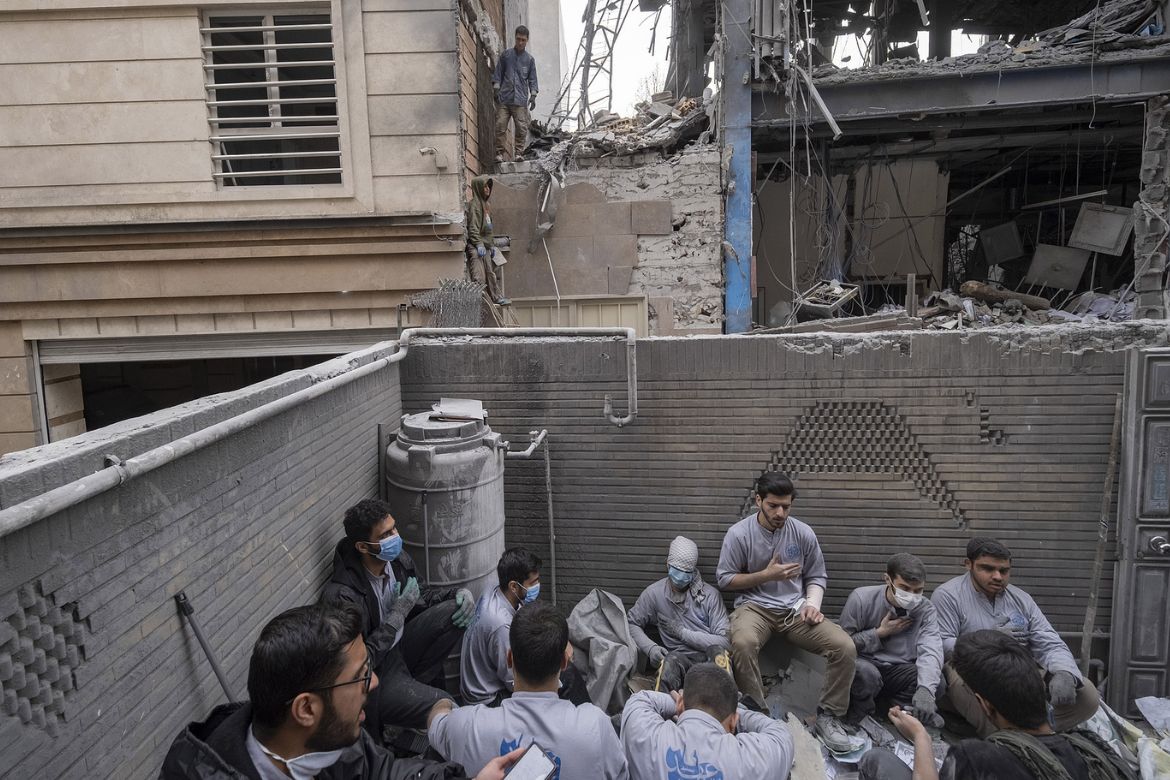
The Middle East has once again moved to the edge of a wider regional conflict after the United States launched a large-scale wave of retaliatory strikes against Iran’s Islamic Revolutionary Guard Corps (IRGC). The operation, described by US Central Command (CENTCOM) as a “powerful response”, came hours after Iran allegedly launched missiles towards American military installations in the region.
What began as a military exchange between Washington and Tehran is now rapidly expanding into a broader geopolitical crisis involving Iraq, Jordan, Saudi Arabia, Kuwait, Egypt and key maritime routes in the Strait of Hormuz.
US Demonstrates Military Resolve
The latest American operation targeted dozens of IRGC-linked sites across Iran, including missile facilities, drone infrastructure, command centres, maritime assets and coastal defence systems. According to CENTCOM, the strikes were designed to degrade Iran’s ability to threaten US forces, commercial shipping lanes and Gulf allies.
The message from Washington was unmistakable: attacks on American interests will trigger an immediate and forceful response. President Donald Trump had publicly warned that Iran would be “hit very hard” following the attempted missile attacks against US forces.
For Gulf nations closely monitoring regional security, the strikes signal that the US remains committed to maintaining military deterrence despite growing domestic criticism of its involvement in the conflict..
Iran Responds with Defiance
Tehran has condemned the attacks and reported strikes across multiple locations in southern Iran, including Qeshm Island, Khuzestan Province and areas near the Strait of Hormuz. Iranian media claimed civilian casualties, including members of a family on Qeshm Island, although those reports could not be independently verified.
In a swift response, the IRGC announced that it launched ballistic missiles at a US military facility in Jordan. While Iran claimed significant damage to the base, Jordanian authorities said their air defence systems intercepted incoming missiles.
The competing narratives highlight a dangerous reality: both sides are actively escalating while presenting themselves as acting in self-defence.
Iraq Becomes the New Flashpoint
Beyond Iran itself, Iraq is increasingly emerging as a key battleground.
Iranian state media reported that four IRGC personnel were killed in joint US-Saudi air strikes in Iraq’s Diyala province. At the same time, reports indicated that at least five Iranian advisers serving with the Popular Mobilisation Forces (PMF) were among those killed in operations targeting Iran-aligned groups.
The Islamic Resistance in Iraq, a coalition of Iran-backed factions, has vowed retaliation against both the United States and Saudi Arabia. The group warned that future attacks could target American interests and Saudi-linked assets if military operations continue.
This raises concerns that Iraq could become the theatre through which Iran chooses to respond indirectly to American military pressure.
Strait of Hormuz Remains the Biggest Concern
For Gulf economies and global markets, the Strait of Hormuz remains the most critical pressure point.
Iran has rejected proposals aimed at managing security in the strategic waterway and continues to assert control over maritime traffic. The IRGC also claimed that two oil tankers under US escort were forced to turn back after an incident involving a fire near the shipping route.
Adding to concerns, Egypt reported that a drone caused a fire aboard two vessels at Damietta Port, while maritime sources suggested one was a US-linked tanker. Although investigations are continuing, the incident demonstrates how commercial shipping is increasingly caught in the conflict.
Any disruption to Hormuz could have immediate consequences for global oil prices, energy security and international trade.
Political Pressure Builds on Trump
While the US administration has projected confidence abroad, political challenges are growing at home.
A new Quinnipiac University survey shows declining public support for military action against Iran. Republican voter approval of President Trump’s performance reportedly fell from 85% in June to 76%, while only 34% of voters expressed support for continued military action.
The findings suggest that while Washington may retain military superiority, sustaining public support for a prolonged conflict could prove more difficult.
The latest exchange marks more than another round of US-Iran hostilities. It reflects a conflict that is gradually drawing in regional actors, threatening maritime security and increasing the risk of miscalculation.
The immediate concern is no longer whether the US and Iran will continue exchanging strikes. The real question is whether regional players can prevent these confrontations from evolving into a wider Middle East war.
For Gulf nations, stability in the Strait of Hormuz and protection of critical energy infrastructure remain paramount. The coming days will likely determine whether diplomacy regains momentum or whether the region moves closer to a conflict with far-reaching global consequences.
