

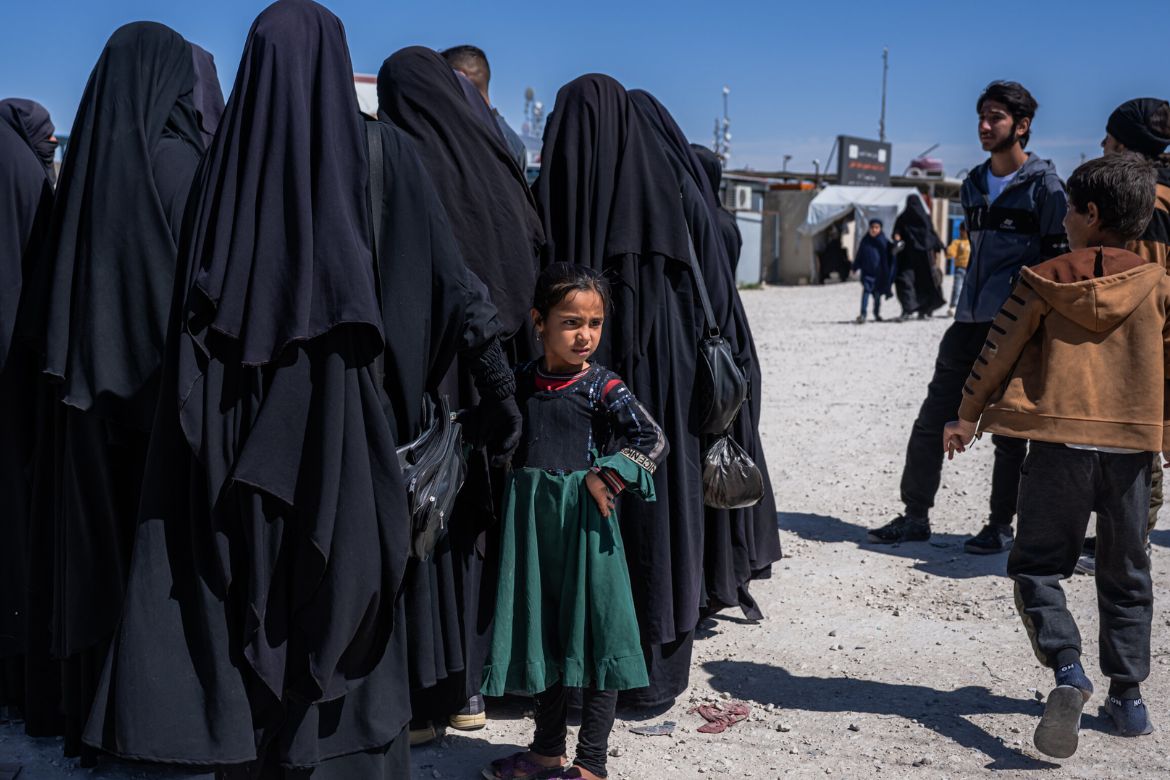
Thousands of people have fled Al Hol camp in north-eastern Syria following its transfer from Kurdish-led control to the Syrian government in January, triggering renewed fears over extremist escapes and regional instability.
According to Syrian officials, civil defence teams entered the sprawling camp — once home to around 24,000 residents, mostly women and children — to relocate remaining families to Akhtarin camp in northern Aleppo. The first convoy departed this week as authorities began emptying the facility. Unlike Al Hol, Akhtarin is not a high-security detention centre.
A particularly sensitive section of Al Hol, known as the Annexe, housed roughly 6,000 foreign women and children from dozens of countries who were considered high-risk. That section is now nearly deserted. Many former residents are believed to have travelled to Idlib, reportedly aided by informal fundraising drives and smuggling networks that emerged as camp security weakened.
The United Nations High Commissioner for Refugees has confirmed a sharp decline in the camp’s population and says it will continue supporting reintegration efforts for Syrians leaving the site. However, aid groups report restricted access, and only a few hundred families are thought to remain, with no official figures released.
Security analysts warn that the breakdown of control at facilities once managed by the Kurdish-led Syrian Democratic Forces could complicate ongoing counter-extremism efforts. A recent prison break involving ISIS detainees elsewhere in north-east Syria has intensified concerns about militant regrouping.
Humanitarian organisations have long criticised conditions inside Al Hol, citing overcrowding, shortages of essential supplies and the prolonged detention of civilians — including thousands of children — without formal legal proceedings. While some escapees may attempt to reconnect with extremist networks, many others are civilians displaced by years of conflict who now face the difficult task of rebuilding their lives amid stigma and economic hardship.
For regional observers, the rapid emptying of Al Hol highlights the fragile balance between security and humanitarian priorities in post-conflict Syria. The coming months will test the ability of authorities and international agencies to manage reintegration while preventing renewed instability.
