

European military forces have begun deploying to Greenland after diplomatic talks with the United States failed to ease tensions over the strategically vital Arctic territory, underscoring a rare and growing rift within the transatlantic alliance.
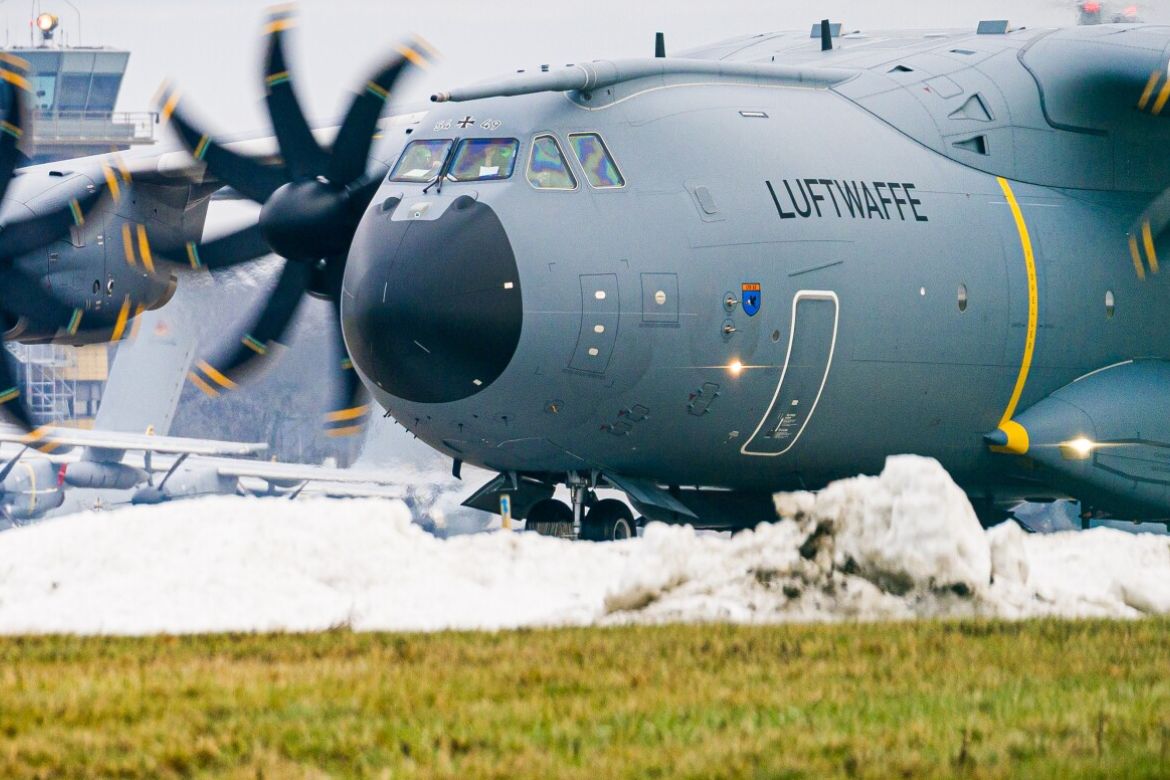
A German military detachment arrived in Greenland on Thursday to take part in a multinational reconnaissance and security mission led by Denmark, which has invited European NATO allies to help reinforce the Arctic gateway. Greenland is an autonomous territory under Danish sovereignty but has become a focal point of global strategic competition.
The deployment comes amid mounting concern in Europe over statements and policy signals from US President Donald Trump, who has demanded stronger security control over Greenland. Senior figures in Washington have gone further, outlining ambitions that include seizing the territory, alarming European capitals and Greenlandic leaders.
Alongside Germany, France, Sweden, Norway and the United Kingdom have confirmed they have sent personnel to Greenland at Denmark’s request as part of the Arctic Endurance exercise.
The move followed high-level talks in Washington between American and Danish officials earlier this week. Speaking afterwards, Danish Foreign Minister Lars Løkke Rasmussen said discussions had failed to change President Trump’s stance, adding that the US leader remained intent on “conquering” Greenland.
During the three-day mission, a 13-member German team, together with troops from other NATO nations, will assess terrain, logistics and the scale of military resources required to strengthen Greenland’s defences as geopolitical rivalry in the Arctic intensifies.
France has deployed 15 elite mountain infantry troops, with President Emmanuel Macron confirming that further land, air and naval assets will follow.
“France and Europe must remain present wherever their interests are threatened,” Mr Macron said, stressing that this would be done “without escalation, but with absolute respect for territorial sovereignty”.
The Arctic’s rising importance reflects both security and economic factors. Russia, with up to 57 icebreakers and Arctic patrol vessels, maintains the largest military-capable fleet in the High North, while China has rapidly expanded its presence with a growing fleet of ice-capable ships.
The region is also rich in rare earth minerals vital for clean energy and advanced technologies, while melting ice due to climate change is opening new global shipping routes, adding to its strategic value.
Britain is in discussions with NATO allies about enhancing its Arctic presence. Analysts told The Gulf Talk that a future deployment of a Royal Navy aircraft carrier could be considered as part of a second phase.
UK Prime Minister Keir Starmer views Russian activity in the region as an “extremely serious” threat, according to Downing Street, while also seeking to convince Washington that Arctic security can be achieved without annexing Greenland.
Former military intelligence officer Frank Ledwidge said Britain could consider deploying one of its 65,000-tonne aircraft carriers, capable of operating F-35 fighter jets, anti-submarine helicopters and Royal Marines. While a major commitment, such a move could restore meaningful capability to the strategically critical Greenland–Iceland–UK gap, he said.
European leaders have echoed calls for a stronger collective posture. UK Foreign Secretary Yvette Cooper has urged NATO to step up its military presence in the Arctic, while European Commission President Ursula von der Leyen said the EU was accelerating efforts in Greenland to boost Arctic security.
French officials have been unusually candid in addressing Washington’s ambitions.
“This is unprecedented in response to an American political threat, but it sends a strong signal,” said Olivier Poivre d’Arvor, France’s ambassador to Poland. “Europe is acting faster than many expected.”
French Foreign Minister Jean-Noël Barrot reiterated that Greenland “does not want to be owned, governed or integrated by the United States”.
The idea of deploying European NATO forces was first raised last week by German Foreign Minister Johann Wadephul, who stressed that any action must prioritise both alliance interests and the rights of Greenland’s people.
The Netherlands has since confirmed its participation in the Danish-led exercise. Dutch Foreign Minister David van Weel said Arctic security was a shared responsibility, while his ministry emphasised the need for collective, solidarity-based solutions within NATO.
As Europe moves to assert its role in the High North, Greenland has emerged as a symbol of broader questions around sovereignty, alliance unity and the future balance of power in the Arctic — issues now resonating far beyond the polar circle.
