

Two years after the Gaza war began, the prospects for Palestine’s economic recovery remain bleak. Despite diplomatic overtures and reconstruction promises, experts say Israel’s continued control over Palestinian borders, trade, and fiscal policy will keep the economy under severe strain — even if peace returns.
The message is clear: Palestine needs statehood, not just ceasefires, to take charge of its economic future.
“Recovery won’t happen under the same conditions”
“Israel will continue to employ adverse measures against the economy and follow the same policy, so the economy will not recover — at least in the coming two or three months,” said Professor Naser Mufrej, an economist at the Arab American University in Ramallah.
Speaking to The National, Prof. Mufrej said negotiations alone will not alter economic realities on the ground. “I don’t think what’s going on in Gaza or in diplomatic circles will bring much effect on the Palestinian economy.”
However, he emphasized that a sovereign Palestinian state could radically change the equation. “If a ceasefire leads to a just and peaceful solution that results in a sovereign, viable Palestinian state, it will immediately create an appetite for investment, consumption, and optimism — even among donors.”
A vision of potential prosperity
Raja Khalidi, director general of the Palestine Economic Policy Research Institute, believes a free Palestine could become a competitive regional economy.
“We already have models of industrial growth, agricultural development, services, and banking in the West Bank that are regionally competitive,” he said. “A free Palestine would be a very strong player in the region.”
Khalidi added that the concept of a Palestinian state has been on the table for decades. “The State of Palestine should have been established back in 2003 — a constitution was even drafted under Yasser Arafat. The discussion must move back to that vision.”
The mechanisms of control
For now, Israel’s control of the Palestinian economy remains entrenched. It regulates the movement of goods, labour, and trade, and controls the collection and transfer of tax revenue.
The Israeli shekel serves as the main currency in both Gaza and the West Bank, effectively placing monetary policy in Israeli hands.
Since the start of the Gaza conflict in October 2023, Israel has also withheld Palestinian clearance revenues, including customs and VAT transfers — a move that has crippled the Palestinian Authority’s finances.
“The status quo in the occupied West Bank will continue until a new arrangement takes place,” said Firas Melhem, former governor of the Palestine Monetary Authority. “Restrictions will remain, and Israel will continue to pressure Palestine’s economy by withholding revenue and limiting the ability to pay public-sector salaries.”
The Gaza collapse
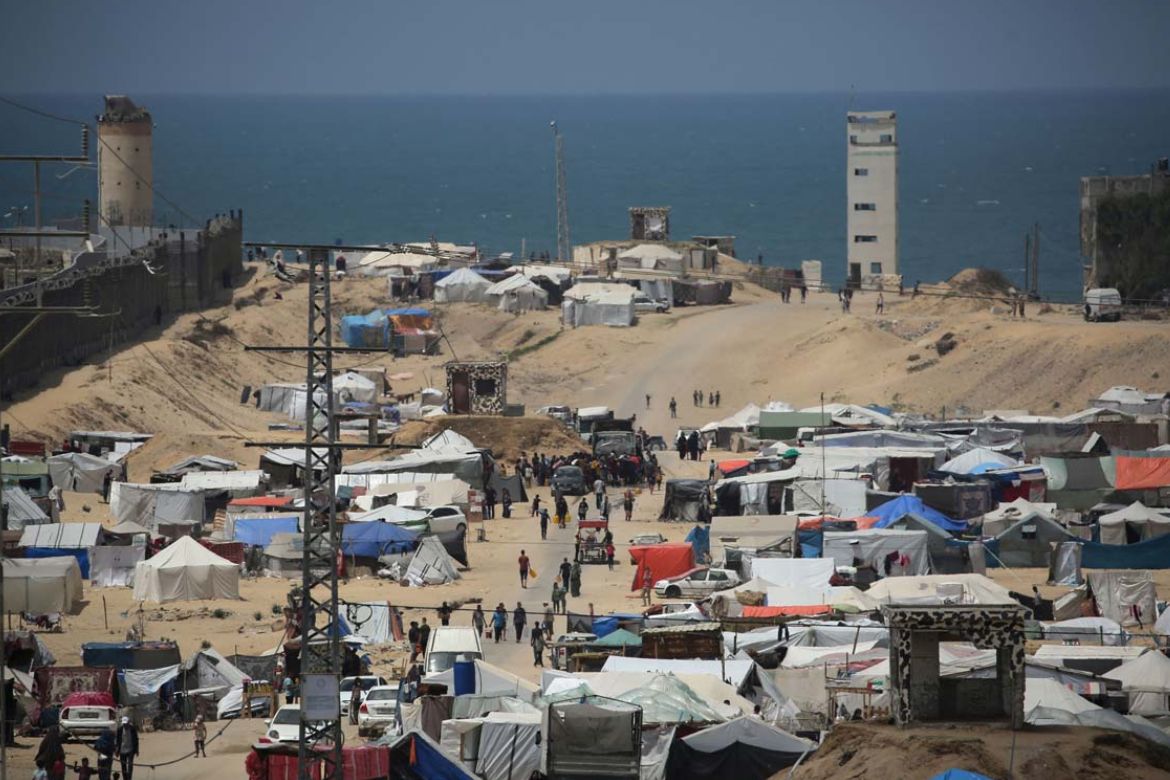
Gaza’s economy has been virtually obliterated since the war began on October 7, 2023, following Hamas attacks in southern Israel that killed around 1,200 people. Israel’s military response has since killed more than 67,000 civilians, according to humanitarian estimates, and reduced much of Gaza’s infrastructure to rubble.
A World Bank report earlier this year described Gaza’s economic activity as “effectively at a standstill.” The enclave’s GDP plunged 83% in 2024, followed by another 12% decline in early 2025.
Factories, schools, hospitals, and power plants lie in ruins. Reconstruction materials are severely restricted from entering through Israel-controlled crossings, making recovery nearly impossible.
The West Bank under pressure
The economic crisis extends beyond Gaza. In the West Bank, Israeli closures, checkpoints, and military operations have choked mobility and trade. According to UNCTAD, there are currently 849 active movement restrictions, including roadblocks, gates, and trenches, affecting 3.3 million Palestinians.
The 712-kilometre separation wall remains the most significant barrier, physically dividing communities and markets.
“The additional Israeli restrictions drove the occupied West Bank’s economy into its most severe contraction in more than fifty years,” UNCTAD reported.
In 2024, the West Bank’s economy shrunk by 17%, wiping out 17 years of development gains. GDP per capita fell by nearly 19%, pushing the economy back to levels not seen since 2008.
A survey by the International Labour Organisation found that 99% of West Bank businesses were negatively affected by these restrictions, with nearly all small and medium enterprises reporting losses and layoffs.
UNCTAD estimates that without such restrictions, the Palestinian economy could have generated $170.8 billion more in cumulative GDP between 2000 and 2024 — equivalent to 17 times the West Bank’s current output.
Symbolic recognition, limited power
Recent diplomatic moves — including recognition of Palestine by the UK, France, Australia, Portugal, and others — have sparked renewed optimism. Yet experts caution that such recognition is symbolic without sovereignty.
“Recognition alone will not deliver economic benefits,” said Dr. Anas Iqtait of the Australian National University. “Sovereignty over land remains the primary missing component of a Palestinian state.”
He added that the Palestinian Authority’s fiscal autonomy is minimal. Domestic taxes account for only about 30% of expenditure, while the majority of funds are import taxes collected and transferred by Israel, leaving the PA heavily dependent and financially exposed.
Peace plans and promises
As Hamas and Israel continue indirect negotiations to end the conflict, reports suggest a renewed US-led redevelopment plan for Gaza, described as a “Trump Economic Development Plan.”
The plan envisions a special economic zone offering preferential tariffs and access rates, coordinated by experts involved in building “modern miracle cities in the Middle East.”
But regional observers remain sceptical. Without full sovereignty and control over borders, even the most ambitious plans risk becoming temporary relief efforts rather than pathways to sustainable growth.
A regional perspective: the Gulf’s role
From a Gulf standpoint, the stakes go beyond humanitarian concern. A stable and economically viable Palestine would contribute to regional trade integration, labour mobility, and energy cooperation — priorities that align with Gulf states’ own visions for sustainable economic diversification.
However, Gulf analysts caution that financial aid without political progress will not bring lasting change. As one Dubai-based economist told The Gulf Talk, “You cannot build an economy under occupation. Gaza does not need more donors; it needs freedom to function.”
The road ahead
Two years after the Gaza war began, the Palestinian economy stands at a historic crossroads. While global recognition grows, true sovereignty — over borders, resources, and policy — remains out of reach.
Without it, experts warn, any reconstruction effort will remain fragile, donor-driven, and temporary.
The path to peace may begin with diplomacy, but the path to prosperity begins with Palestinian control over its own economy.
