

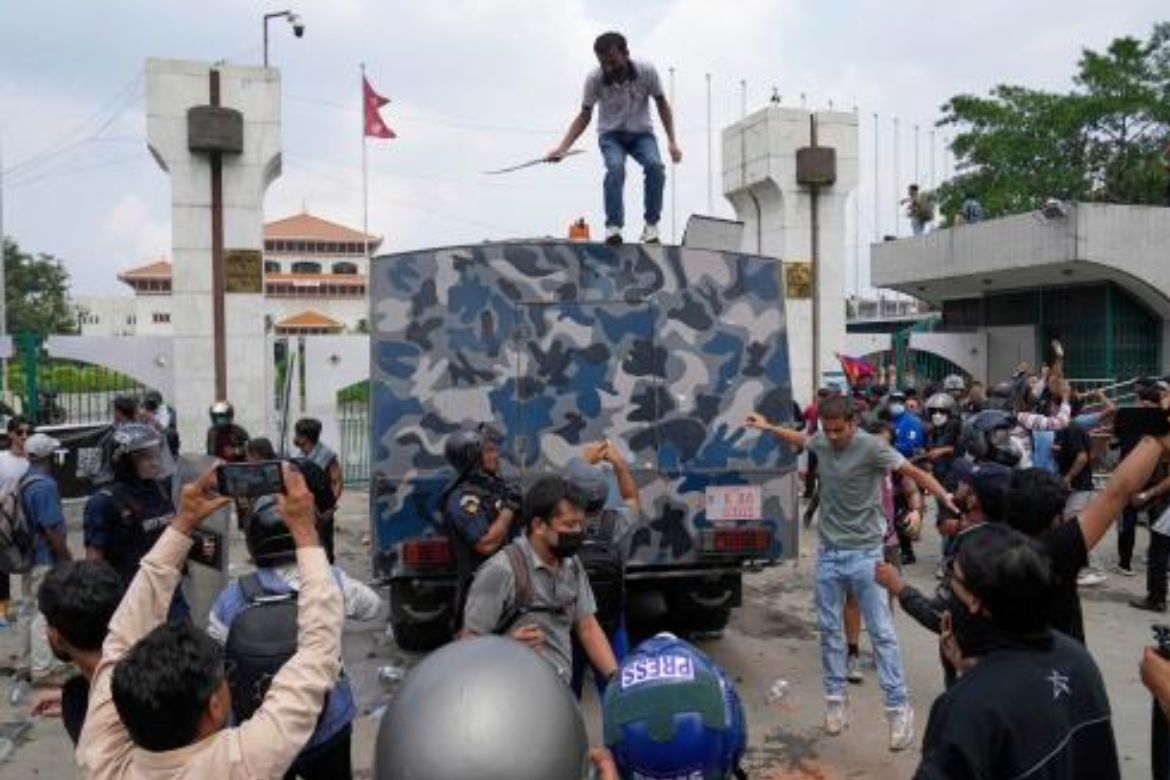
Nepal is reeling after a wave of Gen Z–led protests against a sweeping social media ban turned deadly, leaving at least 17 people dead and hundreds injured. The unprecedented youth-led uprising highlights the growing power of digital freedoms in shaping political movements—not just in South Asia, but across the globe, including the Gulf region where digital economies thrive.
The Trigger: A Digital Blackout
On Friday, Nepal’s government blocked access to Facebook, YouTube, X (formerly Twitter), Instagram, and several other popular platforms, citing security concerns and non-compliance with new regulatory measures. The ban instantly cut off millions of Nepalis from their primary source of news, entertainment, and livelihood.
In a country where social media doubles as a marketplace for small businesses, a classroom for digital learning, and a platform for self-expression, the ban felt like a direct assault on daily life. By Monday, anger had spilled onto the streets of Kathmandu, where thousands of students and young professionals marched under the banner of the “Gen Z demonstrations.”
Clashes Near Parliament
The demonstrations, initially peaceful, escalated when protesters attempted to breach barbed wire fences around the Parliament complex. Security forces responded with tear gas, water cannons, rubber bullets, and, according to eyewitnesses, live ammunition.
“Seventeen people have died,” confirmed Kathmandu Valley police spokesperson Shekhar Khanal. More than 400 others were injured, including dozens of police personnel. Hospitals across the capital were overwhelmed as ambulances ferried the wounded through streets echoing with sirens and chants of defiance.
Voices From the Ground
For many, the protests symbolized more than just opposition to a social media blackout.
“I came for a peaceful protest, but the government opened fire,” said 20-year-old student Iman Magar, whose arm was shattered by a metallic bullet. “The ban may have triggered us, but our frustration is about corruption and inequality.”
Another student, 24-year-old Yujan Rajbhandari, echoed the sentiment: “We are protesting against corruption that has been institutionalised in Nepal. The social media ban was only the last straw.”
International Condemnation
The violence drew sharp criticism from international human rights groups. The United Nations expressed shock at the killings, calling for a full investigation. Amnesty International accused Nepalese authorities of using live ammunition against demonstrators in violation of international norms.
Curfews were swiftly imposed around sensitive areas, including the Parliament building and the President’s residence, after reports of vandalism and gate breaches by protesters.
Digital Divide and Corruption Outrage
The protests tapped into wider discontent with Nepal’s governance. Viral TikTok videos—on one of the few platforms still accessible—juxtaposed ordinary Nepalis struggling with inflation and unemployment against politicians’ children flaunting luxury cars and international holidays.
This anger was not new. The government had already blocked Telegram in July, citing fraud and money laundering. But for young Nepalis, the cumulative effect has been a perception of a state cracking down on freedoms while ignoring systemic corruption.
Why It Matters for the Gulf and Beyond
For Gulf nations, Nepal’s turmoil carries a sobering reminder. Millions of Nepali workers contribute to Gulf economies, sending home remittances that make up a significant share of Nepal’s GDP. Disruptions to stability in Nepal can have ripple effects on labour supply chains and economic ties.
Moreover, the protests underscore a universal truth: social media is no longer just a tool for leisure—it is a lifeline for youth engagement, commerce, and civil society. In regions like the Gulf, where governments are investing heavily in digital economies and smart cities, the Nepal crisis serves as a case study of what happens when connectivity is cut overnight.
The Road Ahead
Nepal’s leadership faces mounting pressure both domestically and internationally. While the government insists the bans are about “security and compliance,” the bloodshed has cast a long shadow over its credibility.
The Gen Z movement, spontaneous and largely leaderless, has proven that youth mobilization in the digital era is powerful—and dangerous to suppress. For Gulf observers, the events in Nepal reaffirm that digital freedoms and political accountability are inseparably tied in today’s interconnected world.
The Gulf Talk Takeaway:
Nepal’s Gen Z protests are not just a local crisis—they are a warning of the risks when governments underestimate the role of social media in modern life. As the Gulf deepens its own digital transformation, balancing regulation with freedom will be critical to maintaining stability while empowering its youthful population.
