

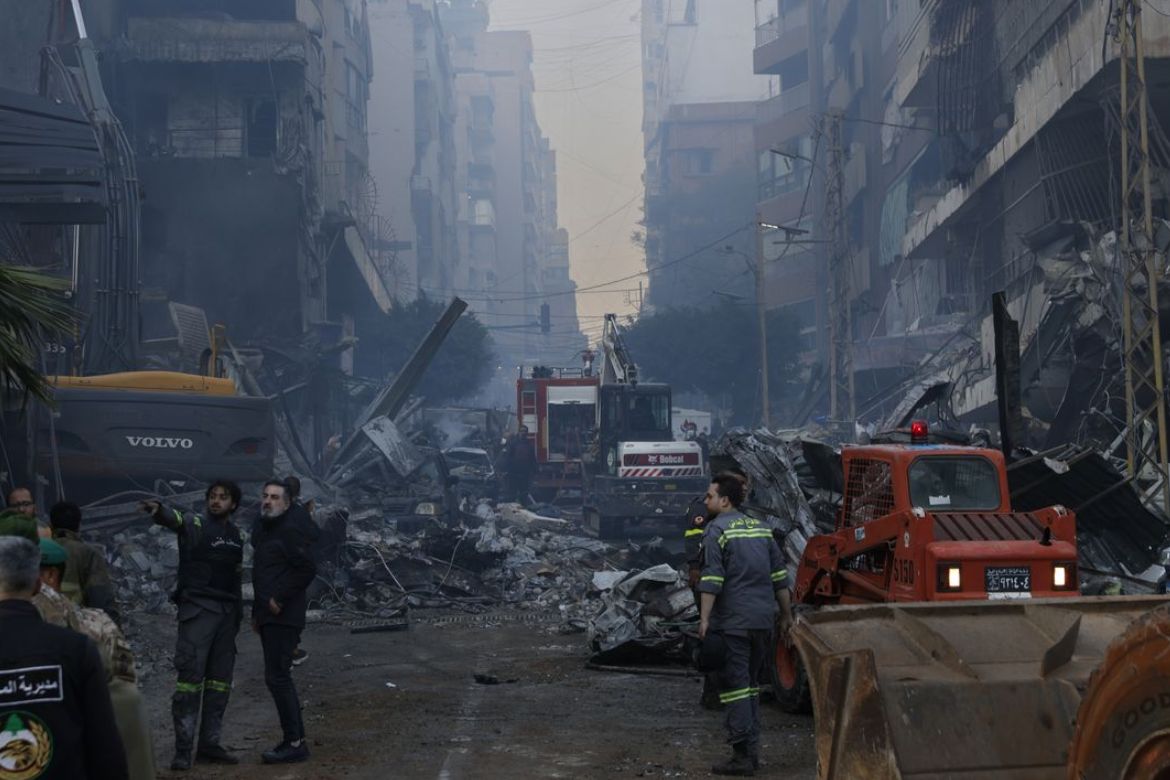
A decisive week looms for the Middle East as the United States moves to host direct talks between Israel and Lebanon—a rare diplomatic step aimed at containing a conflict that is rapidly expanding beyond borders.
The US State Department is expected to lead discussions focused on ceasefire terms, signalling growing urgency in Washington to prevent a wider regional breakdown.
Diplomacy vs Ground Reality
Israeli Prime Minister Benjamin Netanyahu has greenlit the talks but remains firm: military operations will continue. Israeli forces are intensifying strikes on Hezbollah, maintaining that security along the northern frontier cannot wait for negotiations.
For Israel, the strategy is clear—enter talks from a position of strength.
But in Beirut, the response is sharply different.
Senior Hezbollah-aligned politician Ali Fayyad has dismissed the idea of direct engagement, insisting that a ceasefire must come first—not follow negotiations. This disconnect underscores the fragile and uncertain path ahead.
The Ceasefire Gap
At the heart of the crisis is a two-week truce involving Iran and the US—one that lacks clarity and consensus.
- Israel treats Lebanon as outside the deal
- Iran considers Lebanon part of the ceasefire framework
This contradiction has turned Lebanon into the most volatile front, where continued airstrikes risk collapsing already fragile diplomatic progress.
Hormuz: The Strategic Pressure Valve
Tensions are also intensifying around the Strait of Hormuz, where geopolitical pressure is rapidly building.
US President Donald Trump has warned that oil transit will continue regardless of Iranian co-operation—raising the stakes in what is already one of the world’s most sensitive energy corridors.
Any disruption here would not only shake global markets but directly impact Gulf economies that rely on stable energy flows.
Conflict Ripples Across the Region
The consequences of escalation are already visible:
- Heavy casualties reported in Lebanon following intensified strikes
- Hospitals under severe strain amid displacement orders
- Gulf countries facing renewed security threats
- Rising global concern over civilian safety and attacks on peacekeepers
At the same time, diplomatic momentum is weakening, with Tehran pausing further engagement until Israeli strikes are halted.
Gulf Stakes: Stability Above All
From a Gulf perspective, the situation is reaching a tipping point.
The priorities are clear:
- Safeguard energy infrastructure
- Keep vital shipping lanes open
- Prevent a prolonged regional conflict
There is growing consensus that only a clear, enforceable, and inclusive ceasefire—one that explicitly includes Lebanon—can stabilise the region.
A Critical Turning Point
The Washington talks now represent a narrow window of opportunity:
- De-escalation, if diplomacy aligns with action on the ground
- Dangerous escalation, if strikes continue to outpace negotiations
With trust in short supply and tensions running high, the outcome remains uncertain.
This is no longer a fragmented conflict—it is a high-stakes regional test with global consequences.
If diplomacy fails to deliver quickly, the Middle East risks sliding into a broader and far more complex war.
For now, all eyes remain on Washington.
