

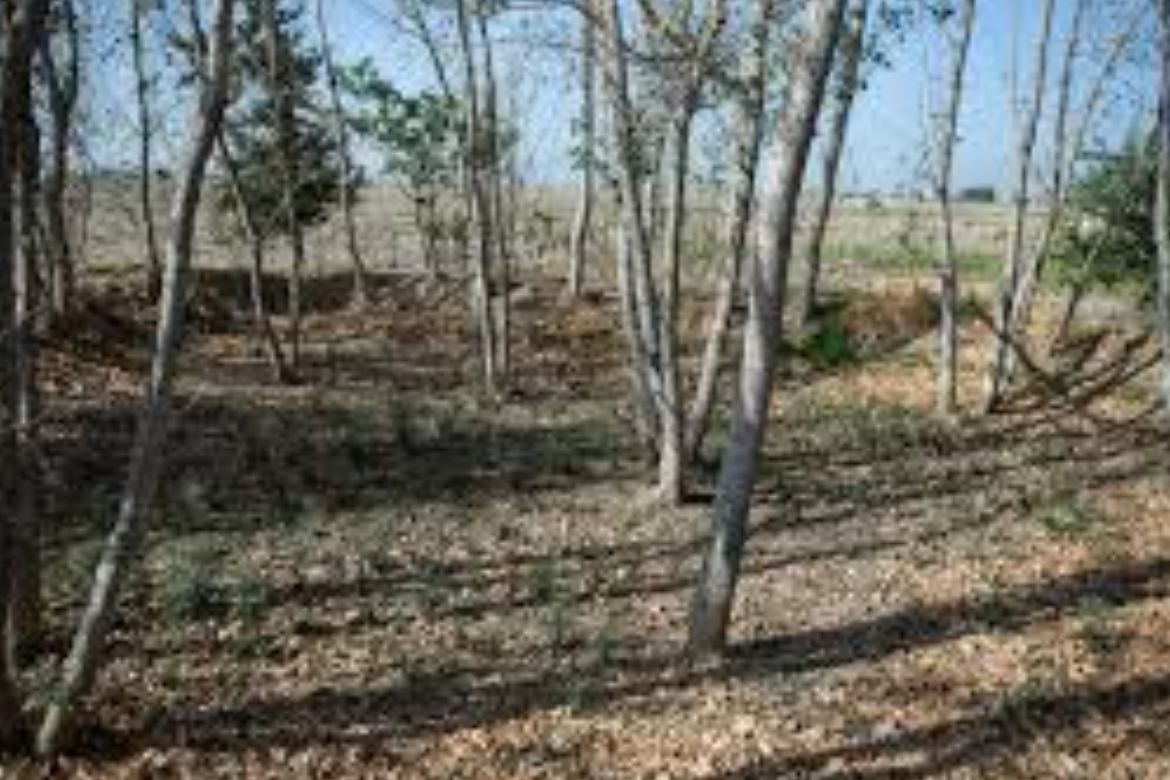
Under the unforgiving Syrian sun, Ali Kallaa walks across land that once sustained his family for generations. Today, it is cracked, lifeless and barren. Not a single crop survived this year’s relentless drought.
“We harvested nothing — absolutely nothing,” he says, sweeping his hand across the dry earth. “We used to sell wheat. Now we can’t even afford bread.”
The impact is devastating. “There are four men in this house and we can’t pay for a bundle of bread,” Ali adds. “No one cares about us.”
🌾 A Crisis Without Precedent
Syria is facing its worst drought in four decades, with farmers describing conditions unlike anything they have ever seen. According to the UN Food and Agriculture Organisation (FAO), rainfall has dropped by nearly 70 per cent in some regions, leaving around three-quarters of the country’s rain-fed farmland severely affected.
“Never in my life have I seen anything like this,” says Hussein Kallaa, Ali’s relative.
Ali’s wheat crop — reliant on rainfall like most Syrian agriculture — failed entirely. His summer vegetables, grown from seeds that cost $500, withered before maturity. Even water pumped from a rapidly drying well offers little relief.
Hussein has been forced to drill his well deeper, now pumping water from 130 metres below ground, risking long-term soil damage — a costly and unsustainable solution many farmers cannot afford.
🏚️ War’s Aftermath Meets Climate Collapse
For Syria’s rural communities, the drought has struck an already shattered sector. Eastern Ghouta, once a thriving agricultural hub, was devastated during years of siege and bombardment and remains largely unrepaired.
Hussein returned to his homeland in 2019 and slowly rebuilt his small farm. Until now.
His land — about two-thirds of a hectare — once produced 4.5 tonnes of vegetables annually. “This year’s losses are catastrophic,” he says. “This is the worst year by far.”
Ali, like many farmers, never managed to rebuild his home and now lives in a partially destroyed structure.
💧 ‘Historic’ Drought, Limited Response
Mohammad Sileen, Director of Syria’s Agricultural Production Support Directorate, describes the drought as “historic”, with severe impact across Hasakeh, Deir Ezzor, Raqqa, and parts of Aleppo, Idlib, Homs and Hama.
While emergency measures — including seed distribution and limited irrigation repairs — have been attempted, Mr Sileen acknowledges the response remains fragmented.
“There is no unified national climate adaptation strategy,” he says, citing political, financial and infrastructure barriers. Syria’s economy, weakened by 13 years of conflict and long-standing sanctions, remains fragile.
War damage to irrigation systems, outdated water infrastructure and poor drainage have all intensified the crisis.
🔥 Beyond Agriculture: Fire, Livestock and Hunger
The drought has also devastated livestock, grazing lands and forests. This summer, massive wildfires in Latakia burned an area larger than Paris.
According to FAO official Paul Opio, 2025 is expected to rank among the hottest years on record, with extreme heat now the deadliest impact of climate change.
“For Syria, where nearly 90 per cent of people live in poverty, the drought has placed unbearable pressure on an already vulnerable population,” he says.
🌾 Food Security on the Brink
FAO estimates Syria will face a wheat deficit of 2.73 million tonnes this year — enough to feed more than 16 million people for a full year.
“Food security is at serious risk,” Mr Opio warns.
The country will be forced to increase wheat imports — a heavy burden for a state already struggling with depleted finances.
👩🌾 ‘We Live Day by Day’
For Fatmeh Qwadir, a farmer from Eastern Ghouta, farming no longer guarantees survival. She now works as a housekeeper in Damascus to support her family.
“We used to eat fresh vegetables every day,” she says. “Now tomatoes and cucumbers are luxuries.”
Her neighbours face the same fate. “A widow nearby planted tomatoes — they all died. It’s everyone here.”
The social fallout is severe. Officials warn that drought-driven poverty increases child labour, school dropouts and early marriage, particularly in rural communities.
🌍 No Funding, No Future
Long-term solutions — expanding irrigation networks, introducing drought-resistant crops and investing in agricultural research — remain stalled due to lack of funding. An FAO emergency project aimed at helping two million Syrians has received just five per cent of its required funding.
Water access is also deeply political. Syria relies on the Euphrates and Tigris, shared with neighbouring countries, while regional tensions further complicate access to vital water resources.
💬 Hope Running Dry
With no relief in sight, Hussein continues to drill deeper into the earth.
“Maybe the water lasts two years. Maybe two months,” he says. “It’s all in God’s hands.”
For Syria’s farmers, survival now depends on a fragile mix of faith, resilience — and rain.
