

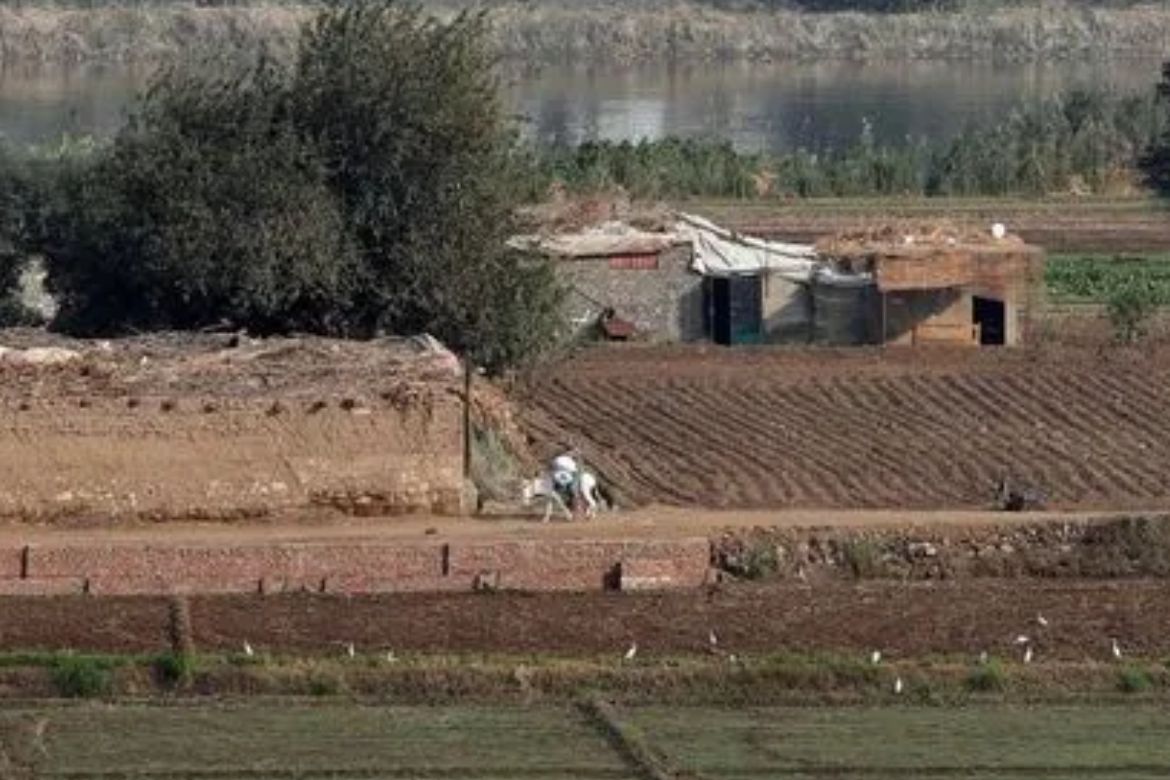
Authorities in Egypt are under growing pressure as farmers and rural families push back against steep rent increases on state-administered Awqaf (charitable endowment) farmland. The new rates—often double or triple previous fees—have triggered nationwide anger and raised broader questions about the government’s evolving strategy toward public assets once rooted in religious charity.
For decades, Awqaf lands were leased at modest, heavily subsidised rates. Until about ten years ago, even the highest rent rarely exceeded 1,800 Egyptian pounds ($38) per feddan annually. These low costs formed the backbone of thousands of long-term tenancies and reinforced the traditional view of endowments as a public good meant to support communities, not burden them.
A Shift Toward Commercial Logic
The current controversy stems from the Ministry of Religious Endowments’ decision to overhaul rental valuations nationwide. After years of gradual increases—partly driven by lawsuits aiming to adjust rents to inflation and the weakening currency—last season’s top-tier rate reached around 18,000 pounds ($378) per feddan.
But under the ministry’s new pricing model, implemented this agricultural year, rates for high-value plots have surged to 55,000 pounds—a staggering jump that has shocked farmers across the country. Even the least expensive lands have at least doubled in price.
Ministry spokesman Osama Raslan, appearing on national talk shows, defended the move as long overdue.
“We are administrators of this wealth, not owners. We are obligated to invest it in the most profitable way,” he said, arguing that the ministry must correct decades of mismanagement.
Raslan emphasised that rents now vary according to soil quality, location, water access, and overall productivity—standards commonly used in the private sector.
New Leadership, New Strategy
The sweeping changes follow an internal restructuring led by Awqaf Minister Osama Al Azhari, appointed during a Cabinet reshuffle last year. A key figure behind the new policy is investment specialist Dr. Khaled El Tayeb, who has introduced a commercial approach to assets historically treated as charitable trusts.
Awqaf’s holdings are substantial:
- 256,000 feddans of agricultural land
- 120,000 real estate units
- Total wealth estimated at $22 billion (2018)
The ministry says its reforms are designed to ensure “good governance” and professional management of these assets.
Farmers Say the Burden Is Crushing
Despite the government’s assurances, farmers’ unions and rural residents say the sudden escalation is unsustainable.
Hussein Abu Saddam, head of the National Farmers’ Union, argues the decision contradicts the very purpose of charitable endowments.
“Awqaf lands are God’s money—meant to ease people’s burdens, not deepen them,” he said, calling the new rates unfair and urging a cap around 25,000 pounds per feddan.
Farmers also argue that unlike private tenants who often receive fertile soil ready for cultivation, Awqaf farmers have spent years improving neglected plots—making the sharp increases feel like punishment for their labour.
Deep-Seated Mistrust Surfaces
Beyond economic strain, the dispute has revived long-standing tensions between farmers and the ministry. Land brokers report widespread fear that families who have cultivated the same land for generations may be forced to leave.
Others note that the ministry’s recent census uncovered irregular leasing practices—where wealthy tenants secured vast tracts at subsidised rates and sublet them at market prices. While officials say this justified the reforms, many farmers believe the ministry is using isolated abuses to justify blanket increases.
Rural distrust runs deep. Stories circulate of neglected mosques, mismanaged funds and poor oversight—fueling resentment as the state pushes for higher profitability.
A Clash Between Tradition and Modernisation
Members of Parliament representing rural constituencies have already pledged to raise the issue, warning that the reforms risk destabilising fragile farming communities. Many say rent increases should be phased in gradually, with protections for smallholders.
The dispute highlights a larger national shift: Egypt’s drive to commercialise state assets—even those historically linked to religious charity—amid mounting fiscal pressures. But for thousands of tenant farmers, the debate over whether “God’s land” should generate market-level profits is not philosophical. It is a matter of immediate survival.
