

In a move that underscores the UAE’s rising stature as a global hub for scientific innovation, a team of researchers in Abu Dhabi has unveiled a breakthrough that could one day challenge the dominance of today’s most sought-after weight-loss drugs.
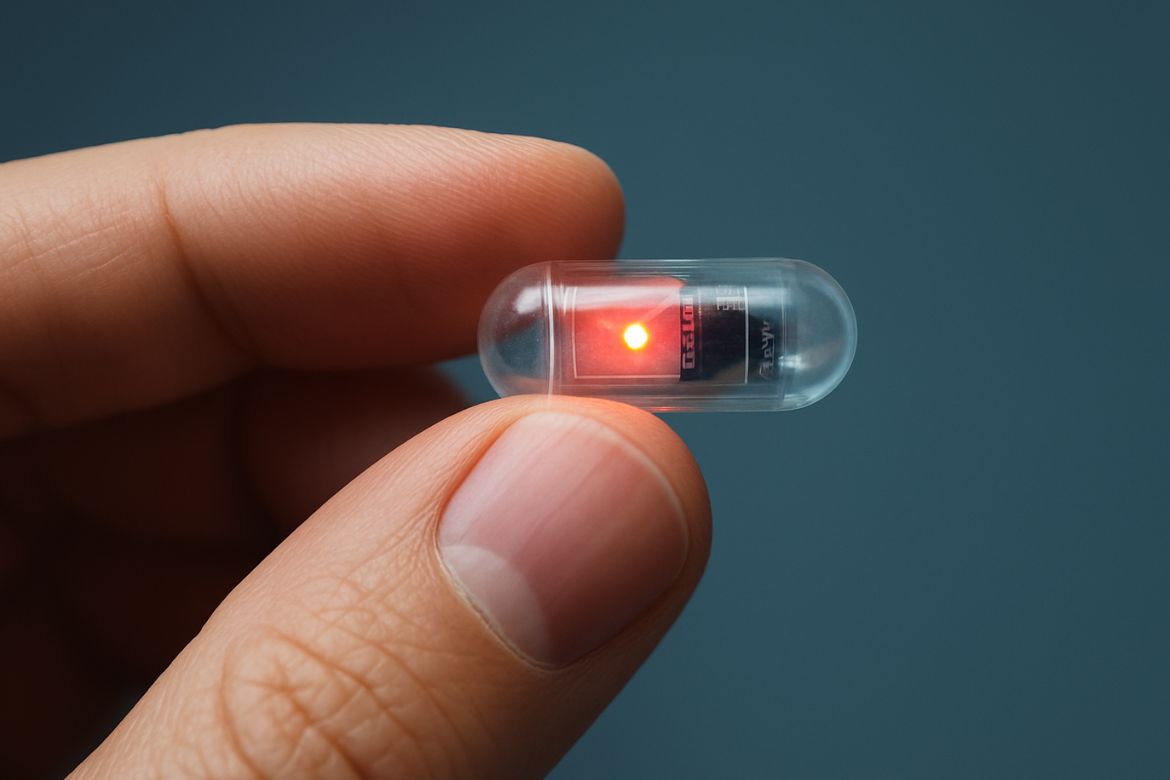
Scientists at New York University Abu Dhabi (NYUAD) have created a tiny ingestible device that emits targeted light inside the gut — a futuristic concept that could eventually influence hunger, digestion, and nutrient absorption. The work positions the UAE at the forefront of next-generation wellness and metabolic health technologies.
The findings, published in Advanced Materials Technologies, mark a bold step toward developing a technology that some researchers describe as the “holy grail” of ingestible medical devices.
A UAE Innovation With Global Potential
The micro-device — a 3D-printed LED capsule — was successfully tested in rats, offering early evidence that light-based stimulation inside the gut can interact with neurological pathways tied to appetite and digestion.
Dr Khalil Ramadi, assistant professor of bioengineering at NYUAD and senior author of the study, says the long-term vision is to create a drug-free alternative to blockbuster weight-loss medications like Ozempic and Mounjaro.
“This is the dream for people working in ingestible technologies — a true next-gen Ozempic-buster,”
Dr Ramadi told The Gulf Talk News.
“We’re still in early stages, but the progress suggests this could become reality.”
How the Capsule Works
In NYUAD’s experiments, rats swallowed the LED capsule, which was then wirelessly powered using a magnetic field — similar to charging a smartphone without cables. Once activated, the device emits light inside the gut.
Future human applications could combine the capsule with optogenetics — a rapidly expanding field where cells are genetically engineered to become light-responsive. In the gut, this could mean:
- Switching hunger signals on or off
- Modifying how the body absorbs specific nutrients
- Controlling digestion rhythms to support gut health
Optogenetics uses plasmids — tiny circular DNA fragments — to deliver the genetic code needed to make gut neurons sensitive to light. While this step was not part of the Abu Dhabi experiment, it is a key direction for upcoming research phases.
After activation, the capsule passes harmlessly through the digestive system and is excreted.
More Than Weight Loss: A New Frontier in Gut Medicine
While the global conversation focuses on weight-loss drugs, the Abu Dhabi team is imagining much broader possibilities.
The technology could one day help:
- Speed up gut movement for patients with severe constipation
- Selectively absorb or block nutrients
- Treat metabolic diseases by adjusting hunger levels
- Deliver drugs only when triggered by light
“Could we tune the body to absorb certain nutrients more than others? Could we boost or suppress appetite depending on the disease?” Dr Ramadi explained. “These are exactly the possibilities we’re exploring.”
The Power Problem — And the UAE’s Unique Approach
Around the world, several research groups have built swallowable LED capsules, but these mostly rely on traditional battery power. NYUAD’s design stands out by using magnetic fields instead, eliminating the need for internal batteries — a major advantage for safety and miniaturisation.
But powering a human-scale device wirelessly remains the biggest challenge.
“The jury is still out on the ideal solution,” Dr Ramadi said. “But what we’ve achieved is exciting — we can transfer energy to a micro-device and then use that power to shine an LED, trigger a switch, or even release medicine. It’s a platform, not just a capsule.”
Built in Abu Dhabi — No Cleanroom Required
Lead author Dr Mohamed Elsherif emphasised that the capsule was manufactured entirely on campus using 3D printing, bypassing the specialised cleanroom environments typically needed for micro-device fabrication.
This makes the technology faster and cheaper to produce — an important factor in scaling up medical innovation.
The device also provides a less invasive alternative to methods that require surgically implanted optical fibres to deliver light inside the body.
A Future Beyond Injections?
Ozempic and its peers have transformed the global weight-loss market, but they depend on weekly injections and can be costly. If the UAE-developed capsule proves effective in future human trials, it could offer:
- A non-drug, non-injection alternative
- Fewer side effects
- The ability to personalise treatment
- A more accessible option for those who cannot take GLP-1 drugs
For now, the technology remains in the animal-testing stage. But the work coming out of Abu Dhabi is generating international interest — and highlighting how Gulf-based research institutions are shaping the future of global healthcare innovation.
