

The echoes of war in Gaza are not just measured in destroyed buildings or displaced families, but in something far more essential: water.
The Gaza Municipality has released stark images showing the devastation of the city’s water infrastructure — once the backbone of daily life, now reduced to rubble. In its official post on X, the municipality detailed how Israeli incursions into northern and south-western Gaza City have wreaked havoc on this critical sector, deepening an already dire humanitarian crisis.
“Gaza City continues to endure a severe and prolonged water crisis as a result of the destruction of wells, networks, main reservoirs, and vital distribution lines,” the statement said.
The city’s wells — its lifeblood — now lie shattered. Reservoirs that once stored precious drinking water are either damaged beyond use or contaminated. Miles of underground pipelines have been torn apart, leaving entire neighborhoods parched and desperate.
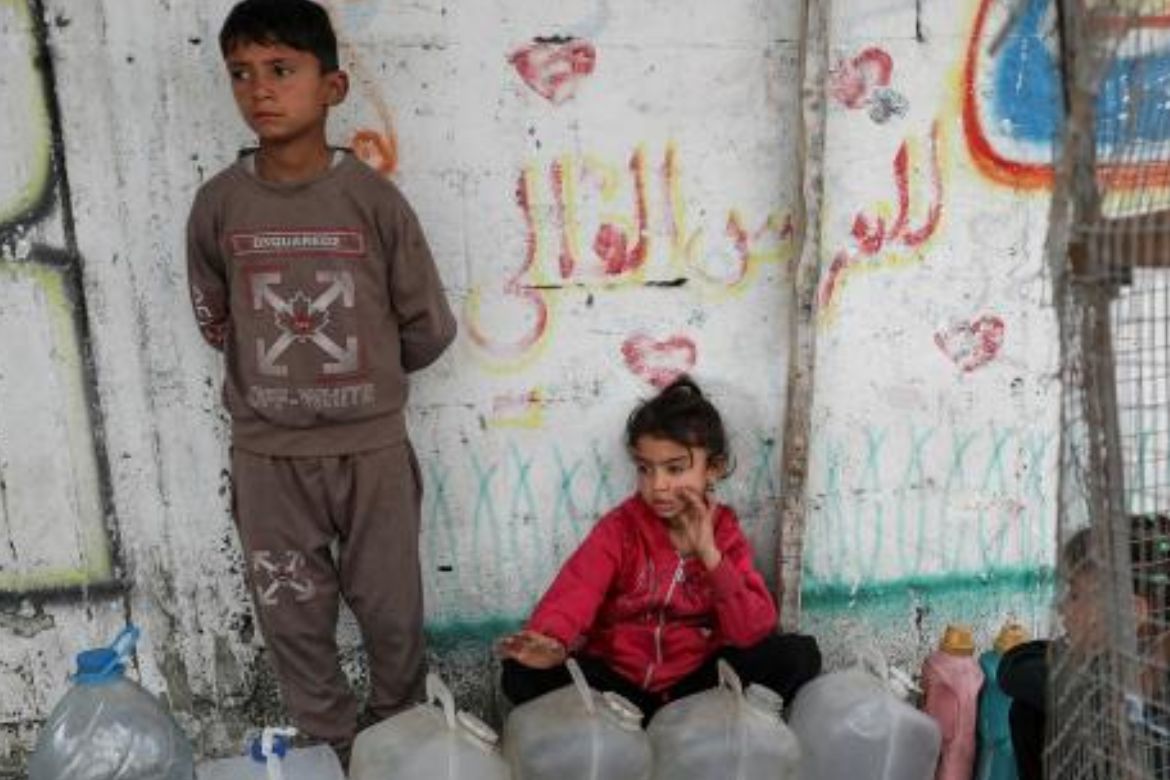
For residents, every drop of water has become a battle for survival. Families queue for hours under the harsh sun, relying on scarce truck deliveries or unsafe water sources. The health risks are mounting — dehydration, poor sanitation, and waterborne diseases are spreading fast among Gaza’s most vulnerable, especially children.
The municipality’s plea is urgent and human: a call to the international community to step in with the materials, fuel, and technical support needed to restore Gaza’s crippled water systems. Officials warn that without immediate assistance, the city faces a full-scale public health catastrophe.
“We appeal for urgent action to fix the supply systems, deliver water to deprived areas, and help restore life to the city,” the municipality urged.
The images shared online are haunting — twisted metal, shattered reservoirs, and gaping craters where wells once stood. They serve as visual testimony to the systematic destruction of civilian infrastructure — destruction that experts say violates international humanitarian law.
As of October 11, when the genocidal war’s latest escalation paused, much of Gaza’s water sector lay in ruins. Repair efforts remain perilous and slow, with access restricted and fuel supplies nearly exhausted.
For the Gulf region — and the wider world — Gaza’s crisis is a stark reminder of the fragility of essential infrastructure in conflict zones. Water, the most basic human need, has become a casualty of war.
The crisis in Gaza is not merely a local tragedy; it is a moral and environmental emergency that demands regional solidarity. The Gulf nations, with their expertise in desalination, water management, and humanitarian logistics, have both the capability and the moral imperative to support Gaza’s recovery.
Rebuilding the city’s water infrastructure will take more than pipes and pumps — it will take political will, international accountability, and a renewed commitment to human dignity.
