

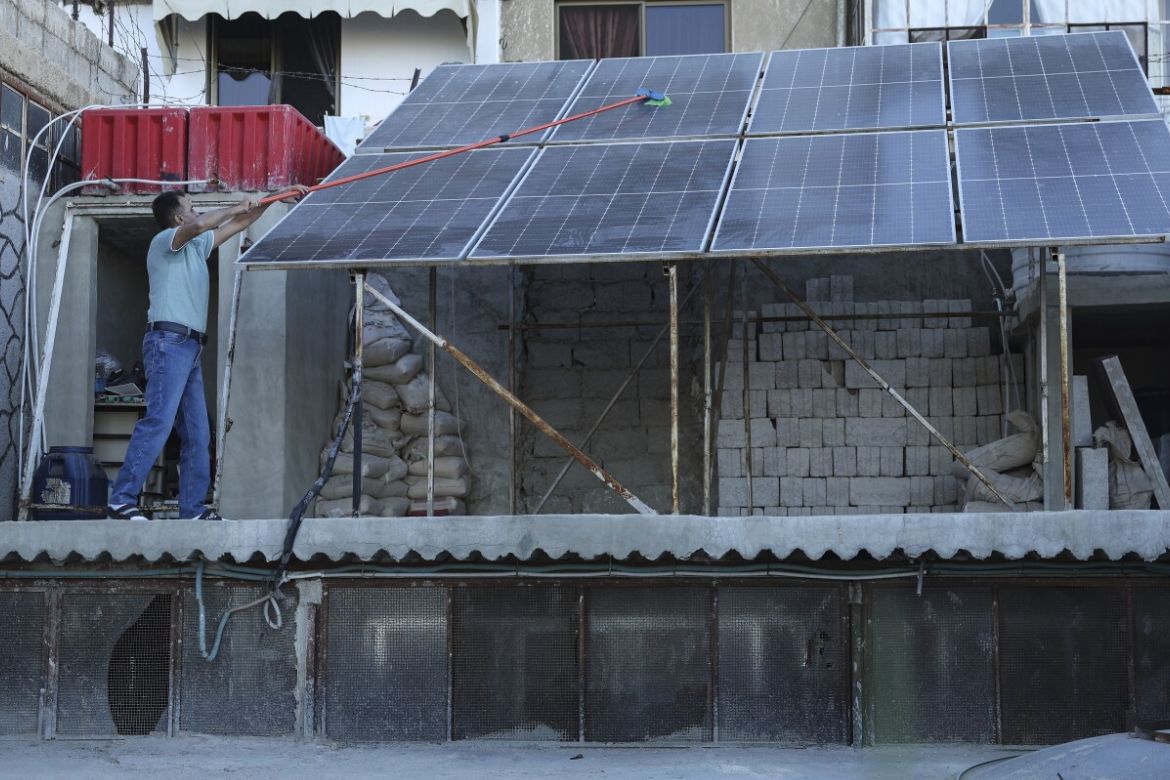
Syria’s electricity grid is flickering back to life after nearly 14 years of conflict, following the fall of Bashar Al Assad’s regime last December. While the transition has opened the door for vital reconstruction, the recovery remains uneven across the country, according to a new report by Crisis Group Syria.
Night Lights Tell the Story
The study draws on satellite imagery of night light reflectance (NLR)—a method used to track how much light different areas emit after dark—alongside survey data from the humanitarian organisation Reach. Together, the findings illustrate where progress is being made and where power access is still fragile.
Gulf States at the Forefront of Support
The Gulf has been central to Syria’s power recovery efforts. Since the installation of the transitional government, Turkey and Gulf countries have stepped up with crucial technical, logistical, and financial support.
Last month, Azerbaijan’s first deliveries of natural gas, routed through regional partners, arrived at Syrian power plants—providing an immediate boost to generation. In June, the World Bank approved a $146 million grant for repairing damaged transmission lines, substations, and transformers, while also offering institutional support to rebuild Syria’s electricity governance.
These investments aim to extend daily electricity supply, which in April had dropped to just two to six hours per day for most communities.
From Collapse to Cautious Recovery
Electricity consumption in Syria has plummeted over the course of the conflict. Figures from the International Energy Agency (IEA) and the World Bank show a drop from 1,611 kilowatt-hours (kWh) per capita in 2010 to just 690 kWh per capita in 2022.
This decline is the result of decades of underinvestment, compounded by the war’s destruction of major power plants and grid infrastructure. The fragmentation of control across different territories further complicated electricity distribution. In the absence of a national grid, communities turned to alternatives:
- In the north-east, local authorities expanded reliance on solar power.
- In the north-west, rebel-held areas relied heavily on Turkey’s supply and distribution system.
Uneven Recovery Across Regions
The new report underlines that political realities continue to shape the distribution of power as much as the grid itself.
In Deir Ezzor, 84% of sites in areas that had been under Assad’s control—and are now administered by the Damascus government—reported significant improvements in electricity.
By contrast, only 62% of sites in the Kurdish-led north-east showed similar progress, reflecting ongoing tensions with the transitional government.
Crisis Group’s findings stress that electricity access depends not just on infrastructure, but also on political arrangements that determine where and how power is delivered.
Even in grid-connected regions such as Damascus, Latakia, Tartus, and Sweida, electricity consumption has grown slowly due to lingering instability and fractured governance. Sweida, in particular, faces heightened risk of exclusion from national improvements as political rifts persist with the new administration.
Why the Gulf’s Role Matters
For the Gulf states, supporting Syria’s recovery is more than humanitarian aid—it represents a strategic investment in regional stability. Reliable power supply is central to economic revival, public confidence, and reconstruction. By helping restore Syria’s energy sector, the Gulf is positioning itself as both a partner in rebuilding and a guarantor of stability in the Levant.
The Gulf Talk Take: Syria’s electricity revival is underway, powered by regional solidarity and international support. But the gains remain uneven, and without political reconciliation, some communities risk being left in the dark. For the Gulf, sustained engagement in Syria’s energy recovery is not only a lifeline for Syrians—it’s also a pathway to safeguarding stability across the wider Middle East.
