

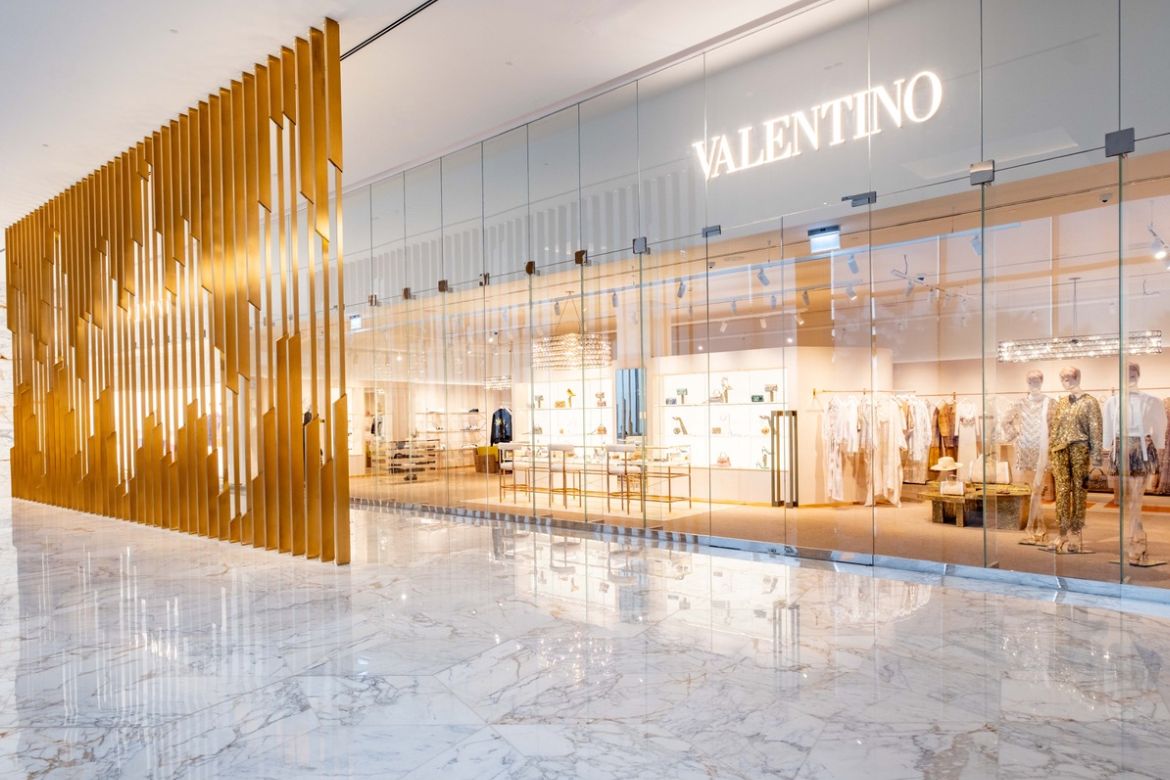
The global fashion industry is mourning the loss of Valentino Garavani, the legendary Italian designer who died on Monday at the age of 93. Tributes have poured in from designers, celebrities and cultural institutions worldwide, but few regions shared as deep and lasting a connection with Valentino as the Middle East.
Known universally by his first name, Valentino reshaped haute couture after co-founding his namesake fashion house in 1960 with longtime partner Giancarlo Giammetti. While the brand’s origins were firmly Roman, its evolution into a global luxury powerhouse was closely intertwined with the rise of the Middle East as a key centre of fashion, patronage and investment.
An early believer in the Gulf
Long before the region became a focal point for global luxury brands, Valentino recognised the Middle East’s appreciation for craftsmanship and occasion dressing. In the 1990s, fashion entrepreneur Ingie Chalhoub, through her Etoile Group, introduced Valentino to the UAE, making it one of the first European couture houses to establish a strong regional presence.
The brand’s aesthetic — fluid silhouettes, dramatic capes, intricate embroidery and bold colour — resonated deeply with Gulf audiences. Valentino’s designs, particularly his signature Valentino Red, quickly became synonymous with refined glamour, appealing to women seeking couture that balanced romance with authority and grace.
A favourite among Arab royalty
Valentino’s creations became a mainstay in royal wardrobes across the Arab world. Queen Rania of Jordan has long favoured the house and was most recently seen wearing a blue Valentino dress at the opening of Jordan’s parliament in October 2025. Qatari royal figures, including Sheikha Jawaher, have also consistently turned to the brand for major public appearances.
Perhaps the most influential supporter of Valentino in the region was Sheikha Moza bint Nasser, mother of the Emir of Qatar Sheikh Tamim and one of the Middle East’s most prominent fashion patrons. A noted collector of Valentino couture, she wore the house’s designs at landmark moments, including a bespoke embroidered ensemble at the Fashion Trust Arabia Awards in Doha in 2025.
Sheikha Moza also selected Valentino for several appearances during the high-profile wedding celebrations of Jordan’s Crown Prince Hussein bin Abdullah and Rajwa Al Saif in 2023, wearing standout looks including a lime-green gown and a two-toned evening coat — moments that cemented the brand’s visibility across the region.
Qatari ownership and strategic investment
The relationship between Valentino and the Middle East deepened significantly in 2012, when Qatari investment group Mayhoola, backed by the royal family, acquired the fashion house from private equity firm Permira for a reported $819 million. The acquisition marked a turning point, positioning Valentino within a portfolio that includes Balmain, Pal Zileri and Turkish luxury retailer Beymen.
In late 2023, Mayhoola sold a 30 per cent stake in Valentino to French luxury conglomerate Kering for nearly $2 billion, valuing the brand at around $6.5 billion. Under the deal, Kering has the option to acquire the remaining stake by 2028, subject to performance — a move that underscores Valentino’s enduring global and regional value.
Celebrating a legacy in Doha
Valentino’s bond with the Middle East was formally honoured in October 2022, when Doha hosted Forever Valentino, the largest exhibition ever dedicated to the designer’s work. Staged at M7 in Msheireb Downtown Doha to mark his 90th birthday, it was the house’s first major exhibition in the region.
Featuring nearly 200 haute couture and ready-to-wear pieces, the exhibition traced Valentino’s six-decade career while also acknowledging the creative leadership of his successors, Maria Grazia Chiuri and Pierpaolo Piccioli. Tens of thousands of visitors attended the show, reflecting both Valentino’s global stature and the region’s deep engagement with fashion as culture.
Piccioli, who led the house from 2008 until March 2024, attended the opening in Doha and later paid tribute to Valentino this week, describing him as a mentor who taught that fashion must combine precision with humanity — and that true style is born where emotion meets craftsmanship.
A legacy that lives on
For the Middle East, Valentino Garavani was more than a designer. He was a cultural bridge — one who understood the region’s love of ceremony, colour and timeless elegance. As global fashion continues to evolve, Valentino’s legacy in the Arab world remains woven into royal histories, landmark investments and moments of beauty that transcended trends.
In the Gulf and beyond, Valentino’s name will endure — not just as a label, but as a symbol of lasting style.
