

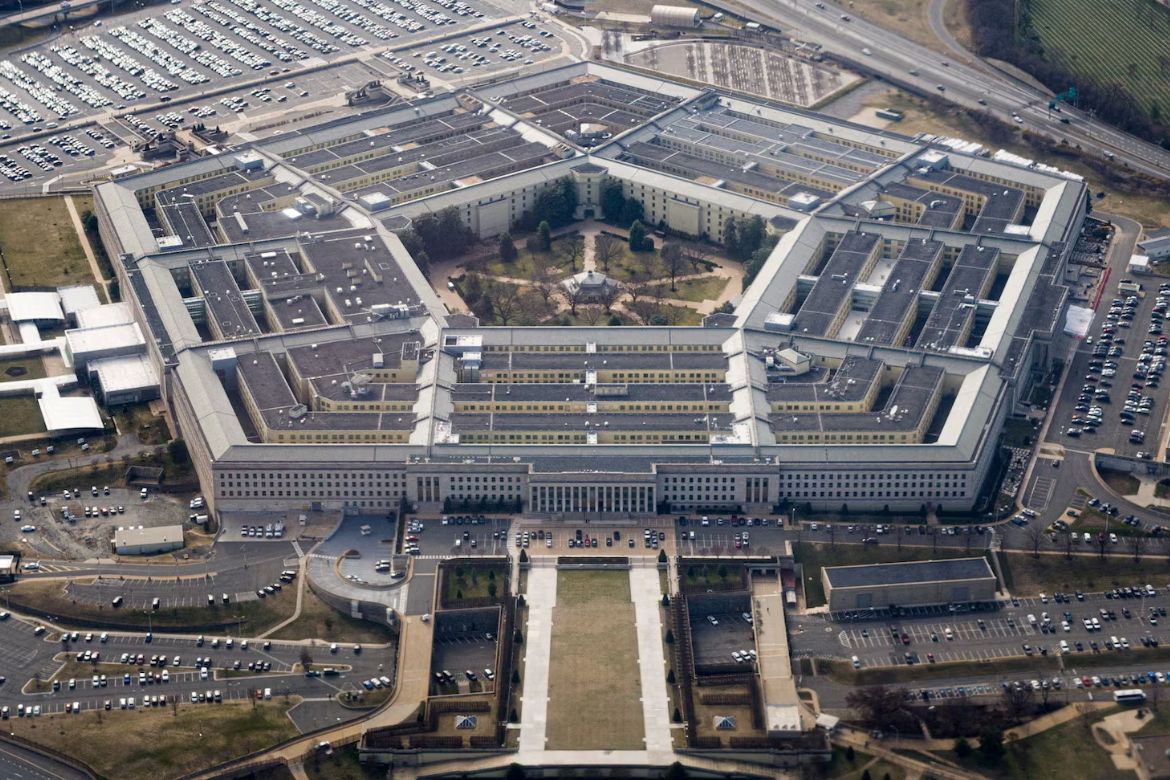
In a dramatic announcement on Thursday, U.S. President Donald Trump declared that the Pentagon has been instructed to “immediately begin testing” nuclear weapons — a decision that ends more than three decades of restraint and reintroduces the world to the specter of nuclear competition.
Posting on his social platform Truth Social just hours before meeting Chinese President Xi Jinping in South Korea, Mr. Trump said the United States must act “on an equal basis” with Russia and China, both of whom he accused of advancing their nuclear testing programs.
“Because of other countries’ testing programmes, I have instructed the Department of War [Department of Defense] to start testing our nuclear weapons on an equal basis,”
— President Donald Trump, October 30 2025
The United States has not conducted a full nuclear test since 1992, following decades of atomic experimentation that included over 1,000 tests and the devastating bombings of Hiroshima and Nagasaki during World War II.
Mr. Trump said the U.S. already holds the world’s largest nuclear arsenal, with Russia in second place and China “a distant third — but catching up fast.” According to his post, the process of resuming nuclear testing will “begin immediately.”
A Return to Cold War Shadows
Trump’s statement comes just one day after Russian President Vladimir Putin announced Moscow’s successful test of a nuclear-powered underwater drone, claiming the weapon was “impossible to intercept.” Earlier in the week, Putin also celebrated the test of a nuclear-powered cruise missile, a move that drew criticism from Washington.
Mr. Trump called the Russian actions “not appropriate,” urging Putin to focus on ending the war in Ukraine instead of escalating nuclear brinkmanship.
However, analysts warn that the U.S. response could mark the start of a new nuclear arms race — one that extends beyond Washington, Moscow, and Beijing, affecting strategic balances from South Asia to the Gulf.
What It Means for the Gulf and the Wider Region
For the Gulf region, this announcement lands at a time of delicate geopolitical recalibration. Energy-rich states such as the UAE and Saudi Arabia have been expanding nuclear energy programs for civilian purposes, while also strengthening security cooperation with both Washington and Beijing.
If nuclear testing resumes globally, experts fear a ripple effect:
Strategic uncertainty could intensify, driving nations to reconsider their defence partnerships.
Non-proliferation norms, already under pressure, might weaken — complicating the Gulf’s vision of a nuclear-safe Middle East.
Energy markets could face volatility as heightened tensions push investors toward safe assets, affecting oil and gas pricing.
The Gulf’s strategic geography — sitting between Asian, European, and African theatres — means it would inevitably feel the tremors of renewed U.S.–Russia–China rivalry.
Global Shockwaves Ahead
Trump’s declaration challenges decades of bipartisan U.S. policy that favoured simulated, non-explosive testing to uphold global non-proliferation norms. If physically realised, new U.S. tests — likely at the Nevada National Security Site — could undermine treaties such as the Comprehensive Nuclear-Test-Ban Treaty (CTBT) and embolden other nuclear powers, including India, Pakistan, and North Korea, to follow suit.
Strategic analysts note that the announcement could be more symbolic than operational, signalling to rival powers that the U.S. is prepared to reassert military dominance. Yet even symbolism carries real-world consequences: diplomatic tensions, military build-ups, and shifting alliances are already under way.
The Gulf’s Balancing Act
For Gulf nations pursuing regional stability, this development underscores the need for strategic neutrality and diplomatic engagement. The UAE, for instance, continues to advocate peaceful nuclear energy under IAEA safeguards, while maintaining strong ties with both Washington and Beijing.
A renewed era of nuclear competition could challenge this balancing act — forcing Gulf states to navigate a complex web of great-power politics without compromising their development and diversification agendas.
From a Gulf perspective, Trump’s call to resume U.S. nuclear testing represents more than a military manoeuvre — it is a geopolitical statement about power, rivalry, and influence. It raises urgent questions:
Will this accelerate a new arms race in Asia and beyond?
How will it affect global energy security and investment flows?
And what role can the Gulf play in advocating stability amid a return to nuclear brinkmanship?
The world may soon enter a phase reminiscent of the Cold War — but with far more complex interdependencies in trade, technology, and energy. As the U.S., Russia, and China flex their strategic muscle, the Gulf’s voice of balance and diplomacy will be more critical than ever.
Conclusion
President Trump’s order to resume nuclear weapons testing sends a powerful signal — one that could reshape global security and redraw diplomatic lines. For the Gulf and wider Middle East, it is a reminder that peace and stability cannot be taken for granted.
While the great powers test their strength, the Gulf must continue testing its resolve — to remain a bridge of dialogue, diplomacy, and development in an increasingly divided world.
