

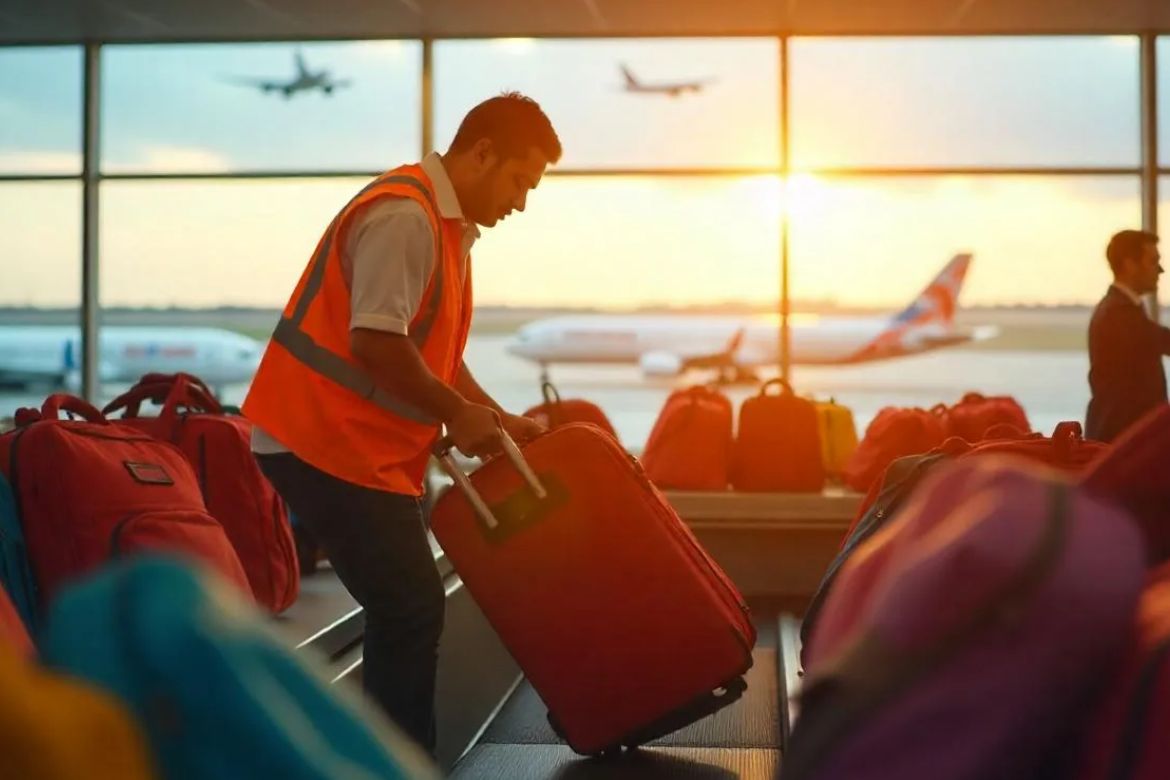
Few travel experiences are as frustrating as watching a baggage carousel come to a halt while your suitcase remains nowhere in sight. For decades, mishandled baggage has been one of aviation’s most persistent pain points, affecting millions of passengers and costing airlines significant revenue each year.
Today, however, the story is changing—and the Middle East is leading that transformation.
According to the latest SITA Baggage IT Insights report, global baggage mishandling rates declined by 23% over the past year. More notably, the Middle East recorded just 5.3 mishandled bags per 1,000 passengers, significantly outperforming the global average of 9.12 bags per 1,000 passengers.
For a region that serves as one of the world’s busiest aviation crossroads, connecting East and West through mega hubs such as Dubai, Doha, Abu Dhabi, Riyadh, and Jeddah, the achievement underscores the Gulf’s growing reputation as a global aviation innovation leader.
Technology Driving Regional Success
The Middle East’s exceptional performance is no accident. Years of investment in smart airport infrastructure, automated baggage handling systems, artificial intelligence, RFID tracking, and real-time data management have transformed the way luggage moves through airports.
Selim Bouri, President of Middle East, Africa and Turkey at SITA, attributes the success largely to technology adoption.
“It’s about the usage of technology, and airports in the Middle East have a much better implementation of technology,” he said.
As passenger traffic across the Gulf continues to rise, airports are leveraging intelligent systems that track baggage throughout every stage of its journey, reducing errors, improving transfer efficiency, and enhancing the overall passenger experience.
Why Every Bag Matters
While mishandling rates are falling, the financial impact remains substantial.
SITA estimates that every mishandled bag costs airlines approximately $260 globally, rising to $280 per bag in the Middle East. For airlines operating on tight margins, even a handful of mishandled bags can erase the profitability of an entire flight.
“One mishandled bag on a flight can wipe out the profit generated by dozens of passengers,” Bouri noted.
The business case for investing in baggage technology has therefore become just as compelling as the customer service case.
Excelling Where It Matters Most: Connecting Flights
Perhaps the most impressive aspect of the Middle East’s performance is its ability to manage transfer baggage.
Globally, transfer-related issues account for 41% of all baggage mishandling incidents, making connecting flights the industry’s biggest operational challenge. Yet Gulf airports have consistently achieved some of the world’s lowest mishandling rates on international routes.
This is particularly significant because the region’s airports serve primarily as transit hubs, handling millions of connecting passengers every year.
The combination of advanced automation, seamless airline-airport collaboration, and integrated digital systems is helping Gulf airports outperform many of their international counterparts in this critical area.
Passengers Expect More Than Ever
The modern traveller no longer views baggage tracking as a luxury. Much like monitoring an online delivery, passengers increasingly expect real-time visibility of their luggage.
This shift in consumer expectations has accelerated innovation across the aviation sector.
“The expectations of passengers are changing,” Bouri explained. “They expect the same level of control and visibility over their bags that they have with parcel deliveries.”
For Gulf airports and airlines, meeting these expectations has become an important part of the customer experience strategy.
AirTags and Smart Tracking Are Changing the Game
A major breakthrough has come through the integration of consumer technology into airline baggage systems.
SITA has successfully integrated Apple’s Find My network into its WorldTracer baggage recovery platform, allowing passengers to share the location of AirTag-equipped luggage directly with airlines when bags are delayed or misplaced.
The results have been striking.
According to SITA, the use of Apple AirTag integration has reduced permanently lost baggage cases by up to 90% while significantly improving recovery times.
The company has also announced a similar collaboration with Google’s Find Hub, enabling Android users to benefit from enhanced baggage visibility and recovery capabilities.
For passengers, the message is simple: greater transparency, faster recovery, and fewer headaches when disruptions occur.
The Future: Bags That Travel Smarter Than Passengers
Looking ahead, the next frontier in baggage management could be even more revolutionary.
Industry leaders are already exploring a future where passengers check bags from home before travelling to the airport. Using dynamic routing technology, luggage could potentially travel separately from passengers and arrive at the destination ahead of schedule.
“When you arrive at your destination, your bag could already be there waiting for you,” Bouri said. “It may not even take the same flight as you.”
While the concept may sound futuristic today, it aligns perfectly with the Gulf’s ambition to build some of the world’s most technologically advanced travel ecosystems.
The Middle East’s leadership in baggage handling reflects a broader trend across the region’s aviation sector: a relentless focus on innovation, efficiency, and customer experience.
As airports expand capacity and airlines continue to strengthen global connectivity, the Gulf is setting a benchmark that others are increasingly seeking to emulate.
In an era where nearly every aspect of travel has become digital, baggage remains the one physical element passengers entrust to the aviation industry. Ensuring it arrives safely, accurately, and on time is becoming a powerful differentiator.
The latest figures suggest the Middle East is not merely keeping pace with global aviation standards—it is helping define them.
