

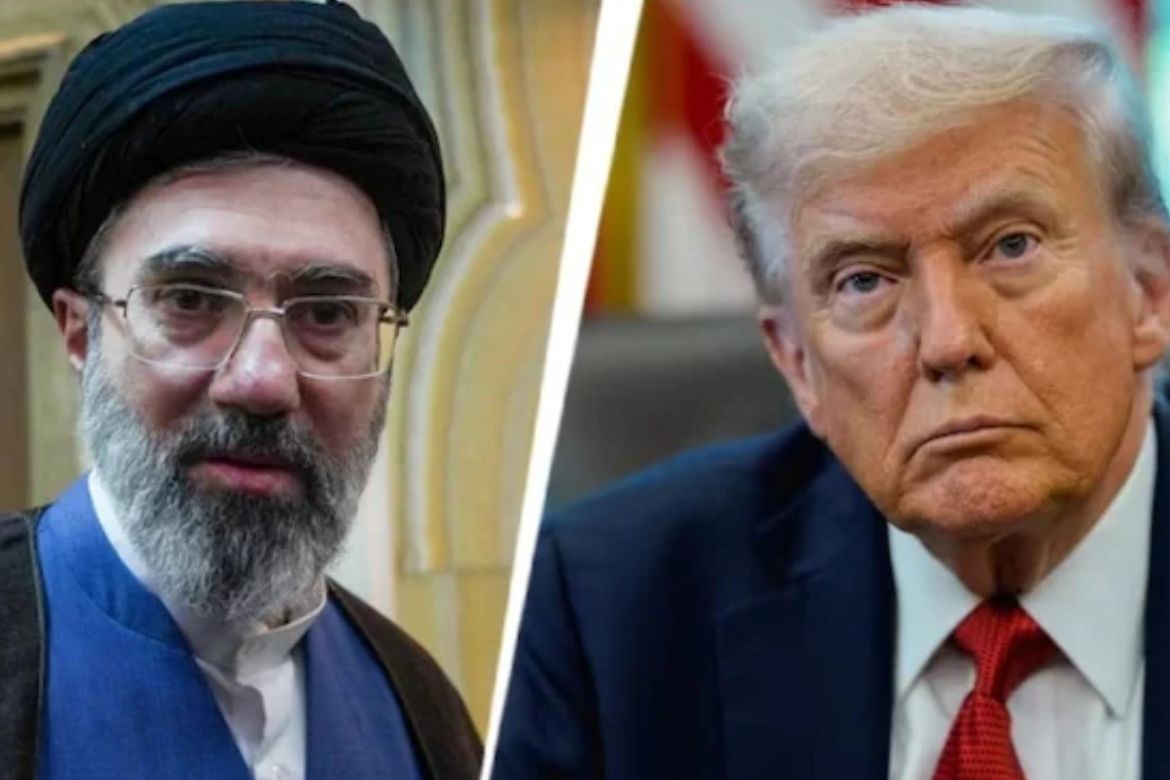
The Middle East stands at another critical crossroads.
Just weeks after Washington and Tehran signed an interim agreement aimed at ending months of conflict, US President Donald Trump has effectively declared the deal dead, raising fears of a renewed and potentially wider regional confrontation.
Speaking on the sidelines of the NATO Summit in Ankara, Trump insisted that the ceasefire framework had lost its relevance following fresh Iranian attacks and mounting tensions in the Gulf.
“To me, I think it’s over. I don’t want to deal with them anymore,” Trump told reporters, while also defending the latest US military action against Iranian targets.
From attacks on commercial shipping in the Strait of Hormuz to missile interceptions over Kuwait and new US military strikes inside Iran, the region is witnessing a rapid deterioration of the security environment that many believed was beginning to stabilize.
A Fragile Peace Unravels
The US-Iran memorandum signed in June was designed as a temporary roadmap toward a lasting settlement. The agreement created a 60-day negotiation window intended to transform a fragile ceasefire into a broader peace framework.
However, diplomatic progress quickly stalled.
Indirect negotiations failed to deliver meaningful breakthroughs, while mutual accusations of violations continued to grow. The latest escalation followed attacks on commercial vessels in the Strait of Hormuz, triggering a forceful US military response.
According to US Central Command, more than 80 Iranian-linked targets were struck in recent operations, representing one of Washington’s most significant military actions since the ceasefire was signed.
Iran, meanwhile, accused Washington of breaching the agreement through military strikes, sanctions measures and interference in regional security arrangements, warning of further retaliation if attacks continue.
Gulf States Once Again on the Front Line
The renewed confrontation has once again placed Gulf nations at the centre of a rapidly evolving security crisis.
Kuwait announced that its armed forces intercepted two ballistic missiles and 13 drones that entered the country’s airspace, while authorities confirmed that falling debris damaged several power transmission lines. Fortunately, no casualties or major service disruptions were reported.
In Bahrain, air raid sirens sounded repeatedly as security forces monitored potential threats linked to Iranian operations targeting US facilities in the kingdom.
For Gulf capitals, the latest exchange underscores a longstanding concern: regional stability remains vulnerable whenever US-Iran tensions escalate beyond diplomatic channels.
Strait of Hormuz Becomes the Flashpoint
The Strait of Hormuz, through which a significant share of the world’s energy supplies passes, has once again become the focal point of international concern.
Recent attacks on commercial vessels have heightened fears of supply disruptions and increased risks for global shipping. Saudi shipping giant Bahri confirmed that its tanker Wadiyan was involved in an incident while transiting the strategic waterway, although its crew and cargo remained safe.
The International Maritime Organization warned that nearly 6,000 seafarers remain stranded in Gulf waters, facing growing uncertainty and psychological pressure as security conditions continue to deteriorate
In response, Washington revoked Iran’s oil sanctions waiver, a move that further increases economic pressure on Tehran and signals a hardening US position.
Diplomatic Efforts Under Pressure
While military developments dominate headlines, international actors continue to push for restraint.
European Union foreign policy chief Kaja Kallas warned that the latest exchange of attacks is making already difficult negotiations even harder.
According to Kallas, attacks on Gulf shipping and regional states directly undermine commitments associated with the ceasefire framework and threaten prospects for a political settlement.
Turkey’s President Recep Tayyip Erdogan also emphasized the importance of pursuing peace efforts, even as regional security concerns intensify.
Meanwhile, the European Union Aviation Safety Agency has advised airlines to avoid the airspace of Iran, Iraq and Lebanon until at least the end of August due to escalating security risks.
Regional Stakes Continue to Rise
Adding another layer of complexity, US Defence Secretary Pete Hegseth is expected to travel to Israel for discussions focused on Iran and broader regional security issues. Reports indicate Israel remains concerned about potential US consideration of advanced military sales to Turkey, particularly F-35 fighter aircraft.
These developments highlight how the current crisis extends far beyond Washington and Tehran, touching nearly every major security equation across the Middle East.
The collapse of trust between Washington and Tehran is rapidly overshadowing the fragile gains achieved through last month’s ceasefire framework.
For Gulf countries, the priority remains clear: protecting regional stability, safeguarding maritime trade routes and preventing a broader conflict that would carry enormous economic and security consequences.
As military rhetoric intensifies and diplomatic channels narrow, the coming days may determine whether the region moves back toward negotiations—or enters a new and more dangerous chapter of confrontation.
