

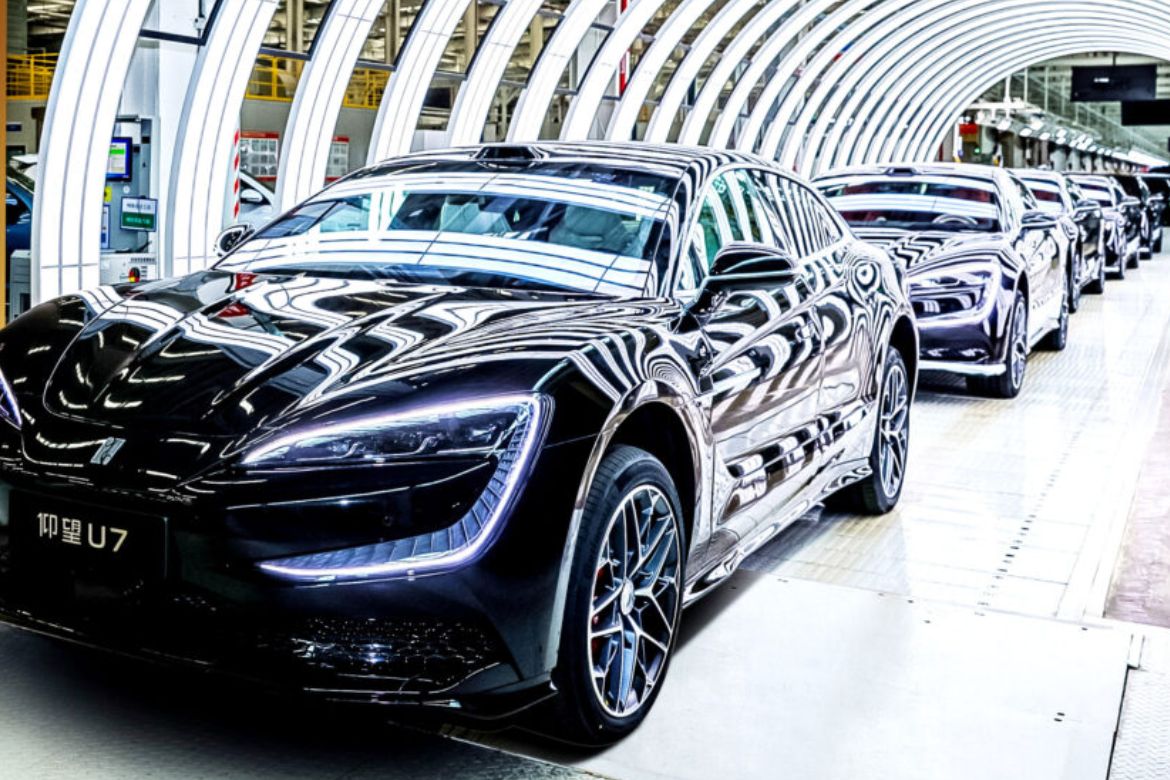
As Keir Starmer steps into China for a landmark visit, Britain is already experiencing the impact of Chinese influence—on its roads.
What was once a distant competitor has become a dominant force. Chinese automakers are no longer entering the UK market—they are reshaping it.
A Rapid Rise No One Expected
The shift has been nothing short of dramatic.
In September 2025, BYD recorded an 880% surge in UK sales in a single month, signalling a turning point for the industry.
By the end of the year, Chinese brands captured close to 10% of the UK’s new car market, with nearly 200,000 vehicles sold—a remarkable leap from near invisibility just five years ago.
Britain: An Open Door in a Protected World
While the European Union moved to shield its market with tariffs on Chinese EVs, post-Brexit Britain chose a different path.
The UK has effectively positioned itself as a gateway market—offering Chinese automakers a rare combination of demand, accessibility, and regulatory openness.
From a Gulf standpoint, this highlights how policy decisions can rapidly reshape entire industries.
The Price Advantage That’s Driving Change
At the heart of this surge lies a simple but powerful factor: affordability.
Electric cars in the UK average around £62,000. In contrast, Chinese equivalents are significantly cheaper—even after export costs.
Models like the BYD Dolphin are entering the UK market at prices that undercut many European rivals, making EV ownership accessible to a broader audience.
In a cost-conscious economy, that advantage is proving decisive.
Innovation Beyond Expectations
Chinese automakers are not just competing on price—they are setting new benchmarks.
Companies like XPeng and Chery are delivering vehicles equipped with:
- Smart digital ecosystems
- Advanced driver assistance
- Continuous software updates
Even traditionally European names such as MG and Volvo reflect how deeply Chinese ownership is embedded in today’s automotive landscape.
Security and Trust in Focus
However, rapid expansion has also sparked debate.
Concerns around connected vehicle technology intensified following reports involving electric buses from Yutong and potential remote access risks—claims that remain unverified but have raised important questions.
As vehicles evolve into data-driven platforms, trust and transparency are becoming critical factors in consumer and government decision-making.
The Missing Piece: Local Investment
Despite booming sales, Britain is yet to secure manufacturing gains.
When BYD outlined plans for its first European production facility, the UK was not selected—losing out to EU countries. The result is a growing imbalance: strong consumer demand without parallel industrial growth.
A Transition That Needs China
With a 2030 ban on petrol and diesel cars, the UK is racing toward an electric future.
Industry consensus is clear—meeting these ambitious targets without Chinese manufacturers would be extremely difficult. Their scale, pricing, and supply chain strength make them indispensable players in the transition.
Gulf Insight: A Preview of What’s Next
For the Gulf Cooperation Council, Britain’s experience offers a glimpse into the future.
As Gulf nations accelerate investments in sustainability and smart mobility, Chinese automakers are likely to play a pivotal role—bringing both opportunity and strategic considerations.
China’s EV surge is not just about cars—it’s about global influence, economic strategy, and technological leadership.
For UK consumers, the appeal is clear: better cars at better prices.
For policymakers, the challenge lies in managing long-term dependencies.
As Keir Starmer continues his engagement in Beijing, one conclusion stands out:
The shift is already underway—and there is no turning back.
