

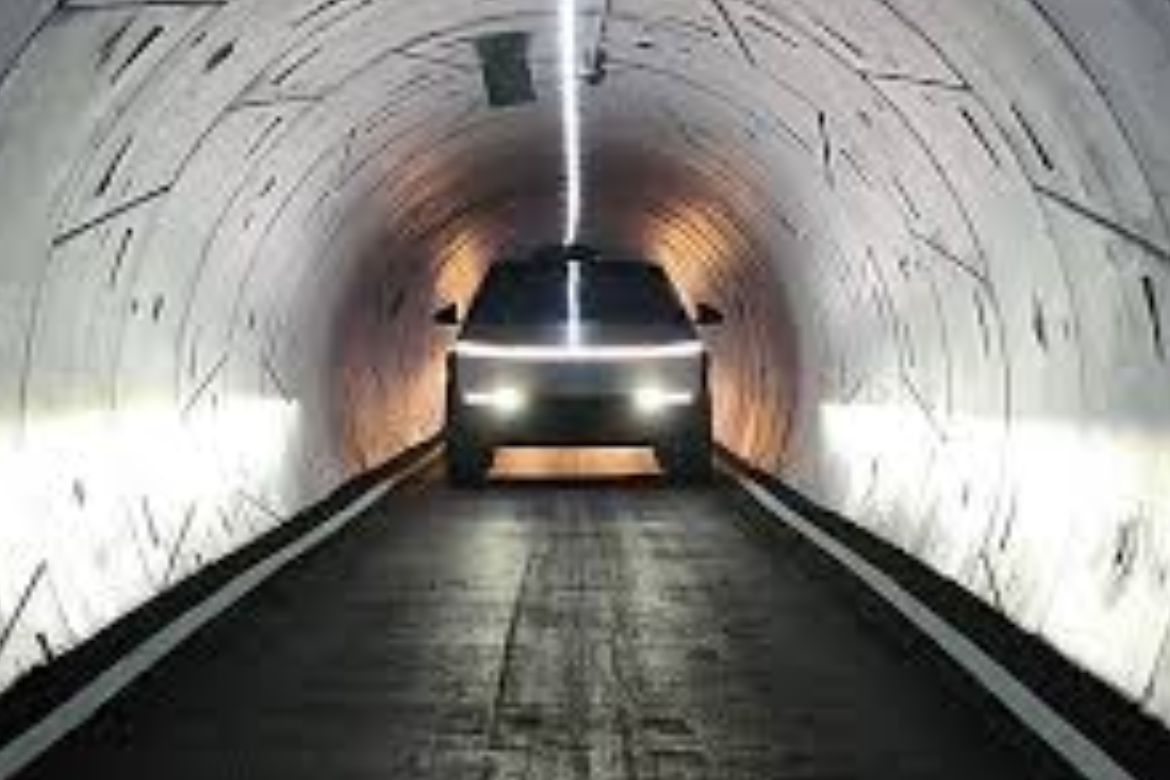
A revolutionary underground transport system that began beneath the entertainment capital of the United States could soon inspire a similar mobility project in the Middle East. The innovative tunnel network known as the Vegas Loop is now being closely studied as a potential model for Dubai’s next-generation transport infrastructure.
Developed by The Boring Company, the concept has already begun transforming how people move around parts of Las Vegas. Now, Dubai is exploring how a similar underground system—often referred to as the “Dubai Loop”—could help reduce congestion and improve mobility across the emirate.
Backed by billionaire entrepreneur Elon Musk, the project represents a bold attempt to rethink urban transportation by moving traffic below the surface.
The Origin of the Vegas Loop
The Vegas Loop was first introduced beneath the massive Las Vegas Convention Center, one of the largest convention venues in the world. The goal was to help thousands of visitors move quickly between different halls of the sprawling complex.
Opened in 2021, the initial system included two one-way tunnels stretching about 2.7 kilometres and three stations connecting major exhibition halls.
Passengers travel through the tunnels in electric vehicles—primarily Tesla cars—rather than trains. These vehicles shuttle passengers directly between stations, offering a fast and simple alternative to walking long distances within the convention centre.
Travel that once took 15 minutes on foot can now take less than two minutes through the tunnel network.
How the System Works
Unlike traditional metro or subway systems, the Loop uses individual electric vehicles rather than large trains.
Passengers enter a station, board a waiting vehicle, and travel directly to their destination through a network of tunnels. The vehicles operate continuously, reducing waiting times and allowing point-to-point journeys.
Key operational features include:
Electric vehicle transport instead of trains
Direct point-to-point travel between stations
Fully underground tunnels to avoid surface traffic
Potential for autonomous driving in future phases
Each tunnel is designed with a relatively small diameter, which significantly reduces construction costs compared to traditional subway tunnels.
The tunnels are dug using high-speed tunnel boring machines designed by The Boring Company to make underground infrastructure faster and cheaper to build.
Expansion Plans in Las Vegas
The Vegas Loop is not limited to the convention centre. Plans are already underway to transform it into a citywide underground transport network.
Future expansions aim to connect major destinations across Las Vegas, including:
Major resorts and hotels
The Las Vegas Strip
Event venues and entertainment districts
Harry Reid International Airport
Once completed, the full Vegas Loop network could include more than 60 kilometres of tunnels and over 100 stations, serving thousands of passengers every hour.
This would effectively create a new underground transport layer beneath the city.
Dubai’s Interest in the Loop Concept
Dubai has built a reputation for embracing futuristic infrastructure—from driverless metro systems to ambitious smart city initiatives. Officials are now exploring whether the Loop concept could complement the emirate’s existing transport systems.
The project is being considered by the Roads and Transport Authority as part of Dubai’s long-term mobility strategy.
Preliminary discussions suggest that a Dubai Loop could initially include:
Approximately 17 kilometres of tunnels
Around 11 stations
Capacity to move up to 20,000 passengers per hour
The system would likely connect key commercial districts such as Downtown Dubai, DIFC, and Business Bay, helping reduce travel times between some of the city’s busiest locations.
If implemented successfully, journeys that currently take 15–20 minutes by road could be completed in just three to four minutes underground.
Why Underground Transport Is Becoming Attractive
Rapid urbanisation has created severe traffic challenges for cities around the world. Expanding roads or building new rail systems often requires significant land and long construction timelines.
The Loop concept offers an alternative by using underground space to create additional transport layers.
Advantages of such systems may include:
- Reduced traffic congestion
Moving vehicles underground frees up space on surface roads. - Faster travel times
Direct routes eliminate traffic lights, intersections, and congestion. - Lower environmental impact
Electric vehicles reduce emissions and noise pollution. - Minimal disruption during construction
Tunnelling can occur underground without major disruption to city infrastructure.
Questions and Challenges
Despite the excitement around the Loop concept, some urban transport experts have raised questions about its long-term scalability.
Critics argue that traditional metro systems can transport far more passengers per hour, making them more efficient for large-scale mass transit.
Others question whether tunnel-based car systems could become congested if demand increases significantly.
Supporters, however, believe the Loop should be viewed as a complementary transport system, connecting major hubs quickly while working alongside metros, buses, and other mobility options.
The Future of Urban Transport
Dubai has consistently pushed the boundaries of urban innovation—from the fully automated Dubai Metro to upcoming autonomous mobility projects.
If the Dubai Loop moves forward, it could become one of the most ambitious underground transport systems in the Middle East, and the first major international expansion of the Vegas Loop model.
As cities continue searching for smarter mobility solutions, the future of urban transport may not only be above ground in skyscrapers—but also deep below the streets.
