

On a cool November morning in 2020, Abu Dhabi paused. Along the Corniche, residents turned toward Mina Zayed just before 8am on a Friday that still felt like the weekend. Face masks were mandatory, the pandemic reshaping daily rituals. Then, in a matter of seconds, four long-abandoned towers near the port collapsed in a controlled demolition. One hundred and forty-four floors fell in 10 seconds, signalling not just the end of concrete structures, but the beginning of a profound transformation in one of the capital’s oldest urban quarters.
For the long-established souq vendors nearby, the spectacle stirred unease. While reassurances were given that business could continue during construction, many sensed that the clock was ticking on the markets they had known for decades.
From the dust rose a new Arabian-style fish market, which opened in July 2022. It was the first visible sign of Mina Zayed’s regeneration. As plans unfolded to rebuild remaining souqs alongside residential and retail spaces, questions followed: would renewal preserve the soul of Mina—or replace it with trend-driven gloss?
A drive down Al Lulu-ah Street offers a snapshot of a district in flux. Warehouses that once lined the road have been demolished or repurposed, some freshly painted, others rebuilt entirely, neon signage drawing new footfall. Traffic circles the fruit and vegetable market as shoppers hunt for the best produce, while the plant souq remains busy with customers choosing flowers for their homes. At the far end, a curved stretch of restaurants and boutiques offers a glimpse of Mina’s emerging identity—where ageing stationery and fishing shops once stood, artisanal eateries now thrive.
At the centre of this evolution is MiZa, positioned as a neighbourhood for entrepreneurs and creatives, alongside Fisherman’s Wharf, home to the new souq and much of the ongoing development. Here, long-time traders now operate beside new businesses drawn by Mina’s layered history and its promise of reinvention.
Zayed Port, established in 1968 and inaugurated in 1972, once served as Abu Dhabi’s main maritime gateway. That role faded after the opening of Khalifa Port in 2012. Container traffic moved on, but Mina’s markets endured, sustained by loyal customers. Today, the port handles limited maritime activity, including cruise ships, while its surrounding district searches for a new purpose.
A pivotal moment came in 2015 with the opening of Warehouse 421, now known simply as 421. The converted warehouse-turned-gallery drew hundreds to its inaugural festival and reintroduced Mina as a cultural destination. For many, it hinted at what the area could become.
In 2018, a viral video featuring an Afghan carpet merchant refusing to sell a rug bearing the image of Sheikh Zayed bin Sultan Al Nahyan caught national attention. After visiting the merchant, President Sheikh Mohamed—then Crown Prince of Abu Dhabi—issued directives to redevelop the port area and restructure its traditional souqs. The ambition was clear: to transform Mina Zayed into a mixed-use waterfront destination without erasing its heritage.
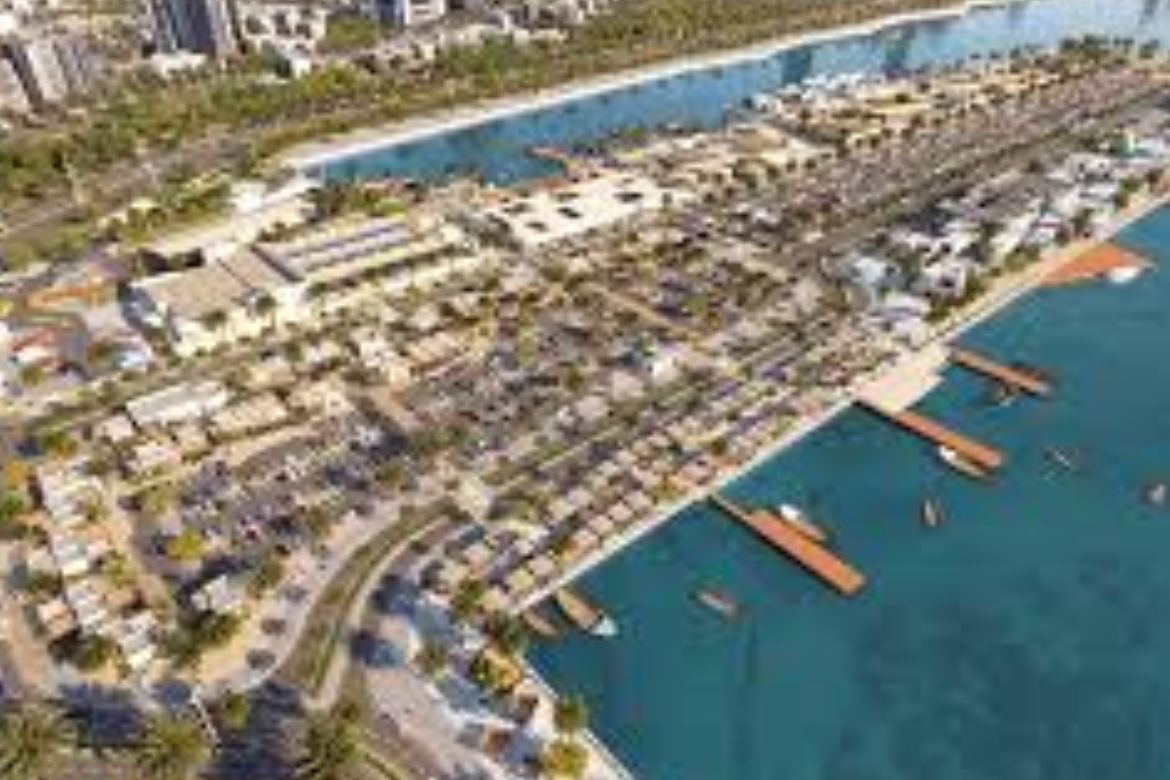
Developers released renderings in 2020 of a three-million-square-metre masterplan, much of it prime seafront land. At the time, Bill O’Regan, now Group Chief Executive of Modon Properties, said the vision was to create a place where people might arrive to buy fruit and vegetables but stay for hours. Crucially, he emphasised that preserving Mina’s vibrancy and heritage was non-negotiable.
Yet life in the old markets continues largely unchanged—for now. Workers still weave through narrow lanes on rusted bicycles. Shoppers bargain at fruit stalls. Long-standing shops, such as One to Ten Gifts, remain busy. It is familiar, everyday life—but tinged with uncertainty.
The contrast between the Mina long-time residents recognise—of karak cafés like Come and Eat, where taxi drivers rest, plant souqs, and docked dhows—and the version encountered by newcomers, complete with gelato and artisanal pizza, is stark.
Mohammad Ali, who has worked in the Iranian market for 27 years, views the changes with cautious optimism. Originally from Iran, he says the market has evolved from a largely Iranian space into a multicultural one. Despite declining footfall due to the rise of hypermarkets, he believes loyalty built over decades keeps customers returning.
Across the road from the Iranian souq lies the sandy plot where Mina Plaza Towers once stood. Today, Arabian red foxes—native to the area—roam quietly alongside colonies of cats, an unexpected reminder that regeneration also reshapes ecosystems.
New businesses are now staking their future on Mina’s revival. Mina Creamery, founded by Anant Singh and Emirati co-owner Rihab Al Gurg, offers flavours inspired by global influences and local markets. Many of the ingredients come from stalls just across the street—a deliberate connection to the district’s trading roots. When the shop opened, the founders celebrated by giving away free ice cream for a week.
Nearby, Saturday Skateshop has relocated to MiZa, drawn by the promise of open space and community. Owner Jonathan Dixon believes the area is fast becoming one of Abu Dhabi’s most vibrant creative hubs, where children, teenagers, and older skaters share the same streets.
Further south, Therapie, a newly opened community space focused on healing and conversation, reflects a different side of Mina’s renewal. Founder Maissa Al Khafajy says the district’s old warehouses, once crumbling and forgotten, carried stories that made MiZa the right place for her vision.
Still, the road ahead is not without tension. Long-time vendors face relocation to new markets, where shop sizes may be smaller and footfall uncertain. While some, like date seller Omer Alnaim, welcome the move, others worry about livelihoods built over decades.
As Mina Zayed stands at this crossroads, its future remains unresolved. The regeneration promises a heritage-style souq, cultural spaces, and new economic life. But whether it can truly replace the meaning of the markets that once defined daily life—while preserving the soul of the port—remains an open question.
For now, Mina Zayed exists in two worlds at once: one rooted in memory, the other reaching for reinvention.
