

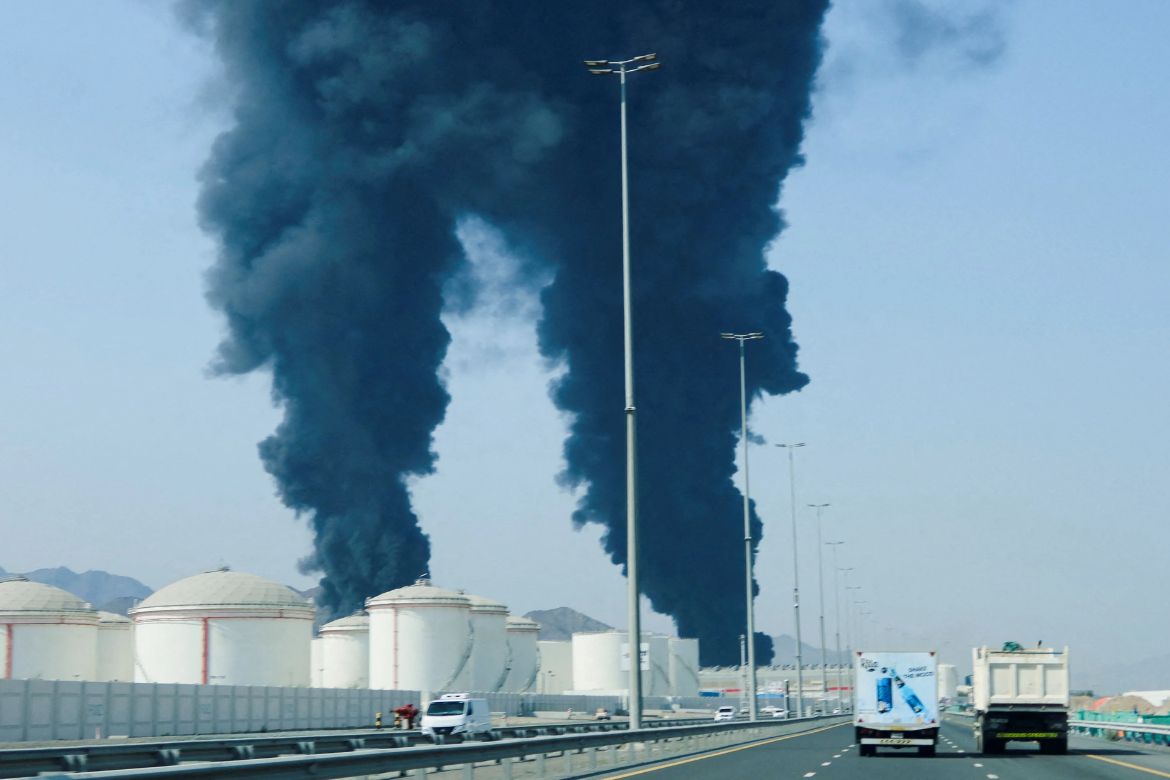
Iran’s latest missile and drone assault on the United Arab Emirates has intensified tensions across the Gulf, marking a dangerous escalation in the ongoing conflict. The attacks targeted key areas, including Fujairah, raising concerns over civilian safety and infrastructure.
Global Leaders React Strongly
International condemnation was swift and decisive.
Emmanuel Macron called the strikes “unjustified and unacceptable,” reaffirming France’s support for Gulf allies. Mark Carney expressed solidarity with the UAE leadership, while Hamish Falconer warned against further escalation and stressed the urgency of diplomacy.
India strongly criticised the strikes after three Indian nationals were injured. Calling the incident “unacceptable,” India urged an immediate end to hostilities and emphasised the need to protect civilians and ensure free navigation through the Strait of Hormuz.
The UAE’s advanced air defence network—developed by Edge Group—successfully intercepted the majority of incoming threats, reportedly neutralising over 85% of drones. Despite this, casualties and damage were reported, underlining the seriousness of the attack.
Strategic Stakes: Strait of Hormuz
According to the Institute for the Study of War, the strikes may be part of a broader Iranian effort to assert control over the Strait of Hormuz—a vital global energy corridor. Any disruption here could significantly impact international trade and oil supply.
Despite the escalation, Abbas Araghchi stated that “there is no military solution to a political crisis,” signalling that diplomatic options remain open.
Regional Support for UAE
Support for the UAE has been widespread across the region. Saudi Arabia, Qatar, Bahrain, Jordan and Syria all condemned the attacks, calling them violations of sovereignty and threats to regional stability.
With the United States and its allies considering action at the United Nations, the crisis is rapidly evolving. Rising oil prices, shipping risks, and geopolitical tensions suggest the Gulf is entering a critical and uncertain phase.
