

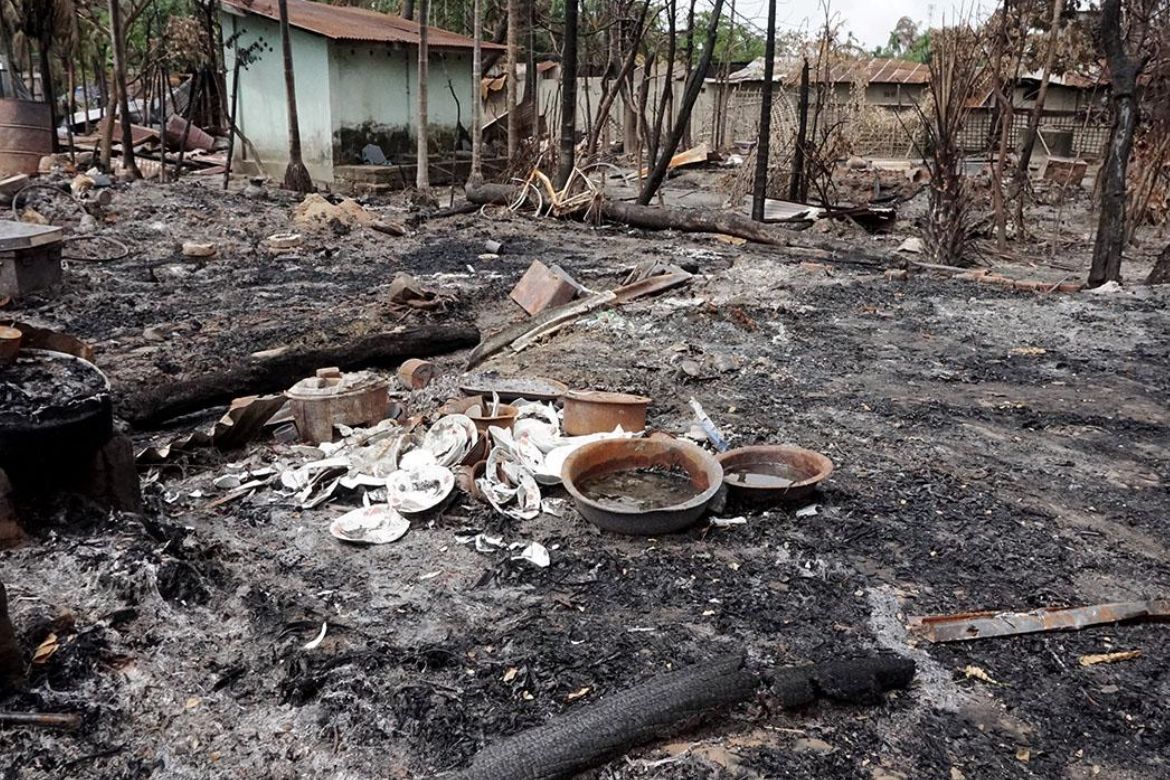
Myanmar’s military committed genocide against the Rohingya Muslim minority during its 2017 military operations in northern Rakhine State, the United Nations’ highest court has ruled in a landmark judgment.
The International Court of Justice (ICJ) found, by nine votes to six, that Myanmar had violated its obligations under the 1948 Convention on the Prevention and Punishment of the Crime of Genocide.
Reading the court’s conclusions, ICJ President Yuji Iwasawa said the evidence established that Myanmar’s security forces had acted with genocidal intent against the Rohingya population.
The long-awaited judgment marks a historic development in international law, representing the first ruling to establish a state’s responsibility for genocide under the 1948 convention.
The court also found that Myanmar had failed to investigate and punish suspected perpetrators, provide remedies to victims and preserve evidence relating to the atrocities.
ICJ Finds Genocidal Intent Behind 2017 Military Operations
In its judgment, the court concluded that Myanmar’s military operations were not simply security measures but involved acts intended to destroy a substantial part of the Rohingya population.
President Iwasawa said the violations were of “exceptional gravity” and occurred against a background of longstanding hostility towards the Rohingya as a community.
The judges found that the military campaign involved widespread killings, sexual violence and extreme brutality against civilians, including children.
The court also determined that the circumstances surrounding the 2017 operations had created an atmosphere conducive to violence against the minority population.
Taking the evidence collectively, the judges concluded that Myanmar’s security forces had acted with genocidal intent.
The ruling further identified the destruction of evidence, including the burning and disposal of bodies, as part of the serious violations associated with the military operations.
Around 10,000 Rohingya Killed During Military Operations
The ICJ’s findings highlighted the devastating human cost of the 2017 military crackdown.
According to the court, around 10,000 Rohingya were violently killed during the clearance operations.
The military campaign involved attacks on civilians, widespread sexual violence and extreme acts of brutality against children. Security forces also attacked Rohingya attempting to escape across the border into Bangladesh.
The judges found that violence was directed at men, women and children, with evidence of killings in multiple villages and attacks on infants.
The court also examined allegations that the military attempted to prevent future generations of Rohingya from being born by separating men and women and committing acts of violence against members of the community.
These findings formed an important part of the court’s assessment of the intention to destroy a substantial part of the Rohingya group.
Anti-Rohingya Hate Speech Contributed to Violence
The court also examined the role of anti-Rohingya propaganda and hate speech in creating conditions that enabled the atrocities.
Judges found that the campaign included language portraying the Rohingya as subhuman and as a threat to Myanmar’s wider population.
This messaging contributed to a climate in which violence against the minority group became increasingly accepted and facilitated.
The court said the longstanding hostility towards the Rohingya, combined with the circumstances surrounding the military operations, supported its conclusion that the campaign was driven by genocidal intent.
The findings underline how dehumanising rhetoric and organised discrimination can contribute to conditions in which mass atrocities become possible.
The Gambia’s Legal Battle Against Myanmar
The case was brought by The Gambia in November 2019, accusing Myanmar of violating the Genocide Convention through its treatment of the Rohingya.
Supported by the Organisation of Islamic Cooperation, The Gambia argued that Myanmar was responsible for genocidal acts committed during the 2017 military offensive.
The proceedings were particularly significant because The Gambia was not directly affected by the atrocities and none of its citizens were among the victims.
The case established an important precedent concerning the ability of a country to bring legal proceedings against another state over alleged violations of obligations owed to the international community under the Genocide Convention.
In January 2020, the ICJ issued provisional measures requiring Myanmar to prevent genocidal acts, preserve evidence and report on its compliance.
The latest judgment represents the culmination of a legal battle that continued for seven years.
Court Calls for Safe Return and Restitution for Rohingya
Beyond establishing Myanmar’s responsibility, the ICJ addressed the consequences of the atrocities and the rights of affected Rohingya communities.
The court called for a safe, voluntary and dignified return of Rohingya displaced as a result of Myanmar’s actions.
It also addressed the need to restore property that had been damaged or lost and facilitate efforts to locate people who disappeared during the military operations.
The judges stressed that Rohingya returning to Myanmar must be able to live without discrimination or persecution.
These measures are particularly important for the hundreds of thousands of refugees who continue to live outside Myanmar, many of them in Bangladesh.
However, implementing the court’s findings remains a significant challenge, given Myanmar’s continued rejection of genocide allegations and its previous failure to comply fully with international legal obligations.
Myanmar Rejects Genocide Allegations
Myanmar has consistently denied committing genocide against the Rohingya.
The country’s authorities have maintained that the 2017 military operations were legitimate security responses to attacks by armed groups, including the Arakan Rohingya Salvation Army.
However, the ICJ rejected the argument that the military operations could be justified as ordinary counterterrorism measures, finding that the evidence demonstrated genocidal intent.
The court also highlighted Myanmar’s failure to investigate suspected perpetrators and provide remedies to victims.
Although ICJ judgments are final and legally binding, the court has limited direct enforcement powers. Their implementation depends largely on the willingness of states and the wider international community to uphold international law.
Ruling Could Have Wider Implications for International Justice
The judgment extends beyond Myanmar and the Rohingya crisis.
It reinforces the principle that states can be held accountable for violations of international treaties, particularly the Genocide Convention.
The proceedings also attracted international attention because of their potential implications for other genocide-related cases, including South Africa’s case against Israel concerning the war in Gaza.
The case provides further clarity on how the ICJ evaluates evidence of genocidal intent and how countries can pursue legal action against other states over alleged violations of international obligations.
Genocide remains one of the most difficult crimes to establish in international law because it requires proof of the specific intention to destroy, in whole or in part, a protected national, ethnic, racial or religious group.
International courts have previously recognised genocide in cases involving Rwanda, Srebrenica in Bosnia and atrocities committed under Cambodia’s Khmer Rouge regime.
International Community Faces Challenge of Enforcing the Verdict
The judgment has renewed attention on the international community’s responsibility to protect vulnerable populations and ensure accountability for mass atrocities.
The United Kingdom’s Foreign Secretary Ed Miliband reaffirmed Britain’s support for the ICJ and the international legal order, condemning the treatment of the Rohingya by Myanmar’s military authorities.
Nevertheless, the practical impact of the verdict will depend on whether Myanmar complies with the court’s orders and whether international pressure translates into meaningful action.
For Rohingya survivors, justice means more than recognition of the atrocities. It includes accountability for those responsible, compensation for victims, restoration of lost property, protection from discrimination and the possibility of returning home safely.
The ICJ has delivered a historic legal judgment. The next challenge is ensuring that its findings lead to real justice for a community that has endured years of violence, displacement and uncertainty.
