

A Century-Old Mystery Reopened
For more than 100 years, historians and archaeologists have debated whether the attendants buried around the tombs of Egypt’s earliest rulers died naturally or were sacrificed as part of royal burial rituals.
Now, modern forensic science has provided powerful new evidence that supports a chilling possibility.
Researchers examining ancient skulls from Abydos, one of Egypt’s most important royal cemeteries, have discovered signs of fatal head injuries in nearly 39 per cent of the individuals studied, suggesting that many royal household members were deliberately killed following the deaths of their kings.
The Theory of the ‘Father of Egyptian Archaeology’
The graves were first excavated in the 1920s by renowned British Egyptologist Flinders Petrie, often referred to as the “father of Egyptian archaeology.” While exploring the burial complexes, Petrie was struck by the unusually large number of graves clustered around royal tombs.
He suspected the individuals were victims of “retainer sacrifice”, a practice in which servants, officials and attendants were killed to continue serving their ruler in the afterlife. However, Petrie found no obvious evidence of fatal injuries and could not prove his theory.
Modern Forensics Solves an Ancient Cold Case
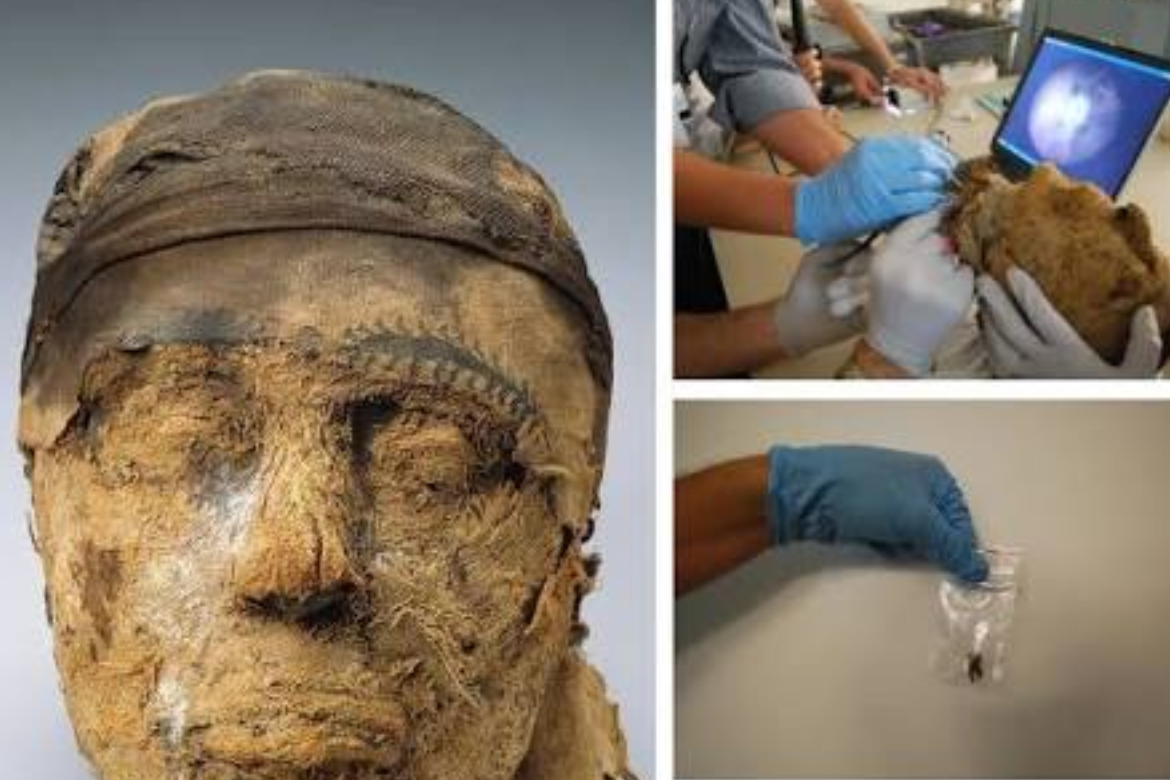
Nearly a century later, Dr Roselyn Campbell of Purdue University revisited the evidence using modern forensic techniques. She located 46 skulls originally collected by Petrie and preserved in the Duckworth Collection at Cambridge University.
Her analysis found that 18 of the 46 skulls showed significant cranial trauma likely sustained at or near the time of death. Many contained linear fractures capable of causing rapid unconsciousness, severe internal bleeding and death.
“Advances in forensic science allow us to recognise them as perimortem injuries,” Dr Campbell said. Researchers also identified evidence of sharp-force trauma, including a chopping wound near the eye of one individual.
Who Were the Victims?
The burial complexes at Abydos date back to around 3000 BC and were built for the first kings of a unified Egypt. Surrounding the royal tombs were rows of smaller graves containing household staff, artisans and government officials.
According to Dr Campbell, many of the graves contained simple coffins, pottery, copper tools and small ivory figurines. Some grave markers bore names and official titles, indicating that the deceased were mostly lower- and mid-level officials rather than members of the royal family.
How Were They Killed?
Despite the discovery, researchers still do not know exactly how the sacrifices were carried out.
The fractures found on the skulls do not match the damage typically caused by a mace, a weapon commonly depicted in ancient Egyptian royal imagery. Instead, the injuries suggest blows from a flat, wide object or another method of blunt-force trauma.
Researchers also believe some victims may have been killed through methods that left no visible marks on the skeleton, such as asphyxiation, meaning the true number of sacrifice victims could be even higher.
A Display of Power and Belief
Retainer sacrifice has been documented in several ancient civilizations and was often linked to beliefs about the afterlife. Those sacrificed were thought to continue serving their ruler beyond death. At the same time, such practices demonstrated the ruler’s authority and power over society.
“Some retainers might have volunteered to die to achieve eternal life or honour, others may have been chosen or even forced,” Dr Campbell explained.
Rewriting Ancient Egyptian History
Published in Frontiers in Environmental Archaeology, the study provides some of the strongest evidence yet that organized human sacrifice formed part of royal burial traditions during Egypt’s First Dynasty.
By combining archaeology with modern forensic science, researchers have finally solved a mystery that has puzzled experts for generations, revealing a darker side of life and death in one of the world’s oldest civilizations.
