

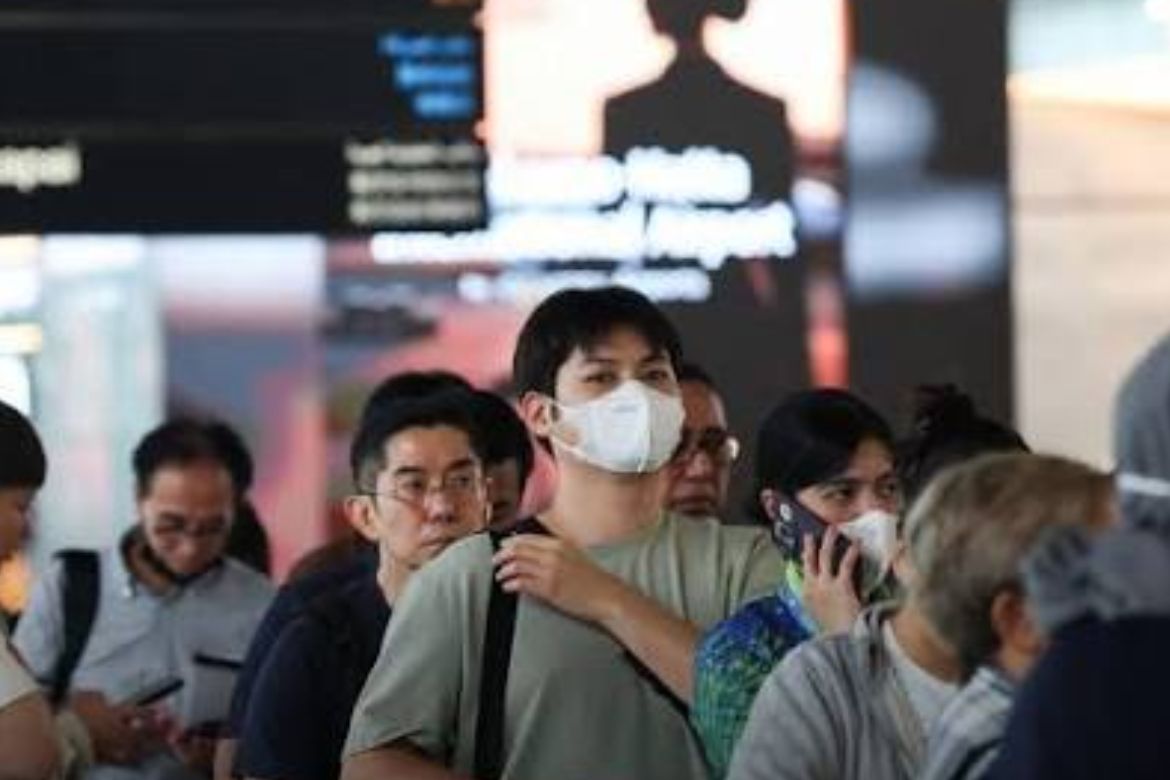
UAE travellers heading to Jakarta are facing major disruptions after volcanic ash from Indonesia’s Mount Anak Krakatau forced the closure of eight airports across the country, including Jakarta’s main aviation hubs. The eruption has led to widespread flight cancellations, delays and diversions, impacting both domestic and international services.
Emirates Cancels Dubai-Jakarta Flights
Emirates announced the cancellation of four services between Dubai and Jakarta, including EK356/07, EK357/07, EK358/07 and EK359/07. The same flights were also cancelled a day earlier as volcanic ash spread across the Indonesian capital’s airspace.
The Dubai-based carrier said passengers connecting through Dubai to Jakarta would not be accepted for travel until further notice.
“Customers connecting through Dubai to Jakarta will not be accepted for travel at their point of origin until further notice. Customers are advised to check flight status regularly, review the latest operational updates on emirates.com, and check their email for any notifications about changes or cancellations to their flights before travelling to the airport.”
Travellers affected by the cancellations have been urged to contact Emirates or their travel agents for rebooking options.
Etihad Also Hit by Disruptions
Abu Dhabi’s Etihad Airways has also been affected by the volcanic activity, with flights between Abu Dhabi and Jakarta facing delays and schedule changes following the temporary closure of Jakarta’s airports. The airline has advised passengers to check their flight status before travelling as operations remain subject to change.
Why Are Indonesian Airports Closed?
The disruption stems from increased volcanic activity at Anak Krakatau, located in the Sunda Strait between Java and Sumatra. The volcano began a prolonged eruption late last week, sending massive ash plumes into the atmosphere and across western Indonesia. Authorities detected volcanic ash over Jakarta and surrounding areas, prompting immediate restrictions on air traffic for safety reasons.
Volcanic ash poses a serious threat to aviation because it can damage aircraft engines, interfere with navigation systems and reduce visibility for pilots. As a precaution, Indonesia’s aviation authorities suspended operations at multiple airports.
Eight Airports Affected
Among the airports forced to halt operations are:
- Soekarno-Hatta International Airport, Jakarta
- Halim Perdanakusuma Airport, Jakarta
- Pondok Cabe Airfield, Jakarta region
- Radin Inten II International Airport, Lampung
- Husein Sastranegara Airport, Bandung
- Budiarto Airport, Curug
- Taufik Kiemas Airport, Pesisir Barat
- Atung Bungsu Airport, Pagar Alam
The closures have disrupted more than 1,500 flights and affected approximately 170,000 passengers across Indonesia and international routes.
More Than 170,000 Passengers Impacted
Indonesia’s Transport Ministry said the airport shutdowns have caused widespread travel chaos, with thousands of passengers stranded as airlines work to rearrange schedules. Transport Minister Dudy Purwagandhi said authorities are closely monitoring weather conditions and volcanic activity before deciding when airports can safely reopen.
“We cannot ascertain when this will end due to the dynamic weather,” the minister said, warning that further disruptions remain possible as long as ash continues to affect airspace.
Ash Reaches Dangerous Heights
Meteorological authorities reported that ash from the eruption reached approximately 6,000 metres on the Java side of the volcano and up to 15,000 metres on the Sumatra side. Some ash clouds were detected as high as 50,000 feet, creating unsafe conditions for commercial aviation.
Indonesia’s volcano monitoring agency said the most recent eruption occurred on Sunday evening and warned that the possibility of additional eruptions remains high.
Schools Move Online as Health Concerns Rise
The impact of the eruption extends beyond air travel. Authorities have advised residents in affected areas to wear masks when outdoors to avoid inhaling volcanic ash. Schools in Jakarta, Lampung and several surrounding provinces have temporarily shifted to remote learning as a precautionary measure.
Images from the affected regions showed streets, vehicles and buildings covered in ash, while stranded passengers queued for assistance at airport terminals.
A Volcano With a Deadly History
Indonesia sits on the Pacific Ring of Fire, one of the world’s most active seismic and volcanic zones. Anak Krakatau, meaning “Child of Krakatau,” emerged from the remains of the legendary Krakatoa volcano, whose catastrophic 1883 eruption triggered massive tsunamis and killed more than 36,000 people.
As authorities continue monitoring volcanic activity, UAE travellers are being urged to check airline updates regularly and prepare for further delays as the situation develops.
