

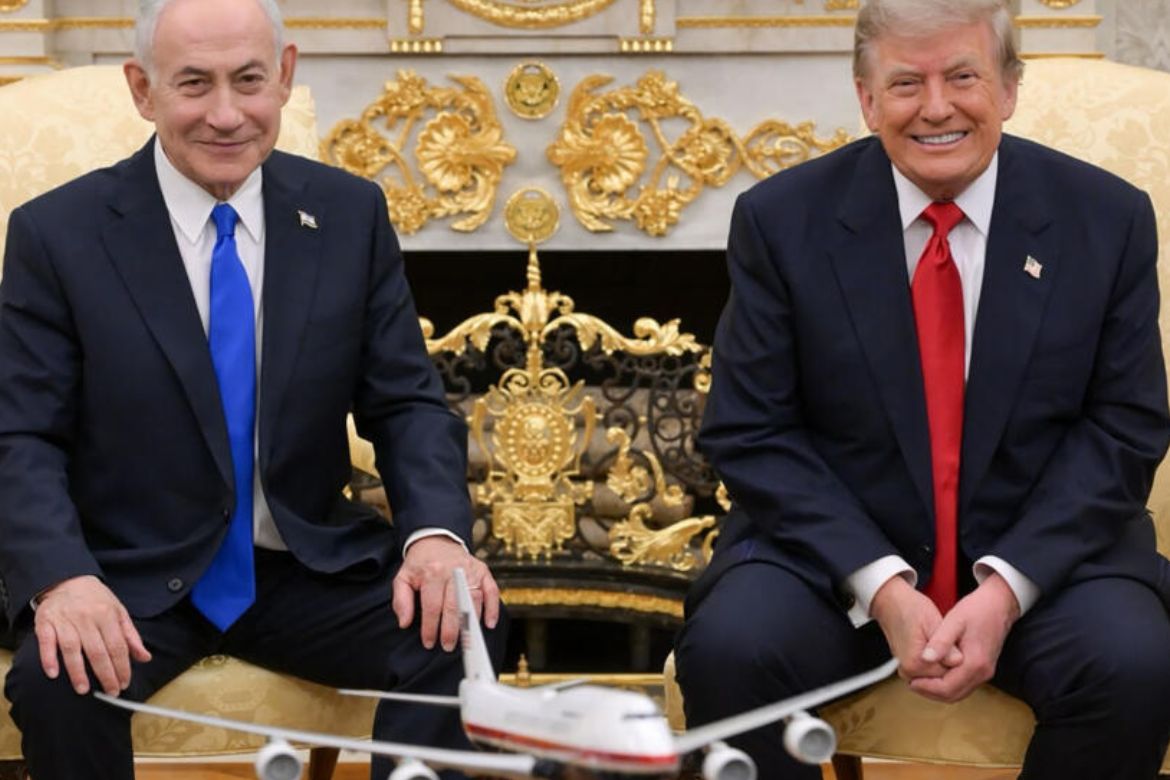
As regional tensions intensify, US President Trump has thrown his full support behind Israeli Prime Minister Benjamin Netanyahu, pledging to stand firm against Iran and warning that Washington could “finish the job” if Tehran refuses to change course. The endorsement comes at a pivotal moment for Israel’s upcoming elections and amid a rapidly evolving security situation across the Gulf.
Trump’s Strongest Endorsement Yet
In a lengthy statement, Trump described Netanyahu as a “great warrior Prime Minister” and a crucial partner in countering Iran’s ambitions. He warned that if Tehran continues its current trajectory, the United States may take further action.
“Unless they change their ways rapidly, we will soon finish the job.”
Trump also suggested that Netanyahu’s leadership remains essential to maintaining pressure on Iran and preserving the strategic partnership between Washington and Jerusalem.
Netanyahu Responds: ‘Together We Will Complete the Mission’
The Israeli Prime Minister quickly welcomed the endorsement, thanking Trump for his unwavering support.
“Together we will complete the mission.”
Netanyahu praised Trump’s leadership and reiterated their shared determination to prevent Iran from acquiring nuclear capabilities and threatening regional stability.
Iran Pushes Back Against US Threats
Iranian Foreign Minister Abbas Araghchi responded defiantly, insisting Tehran remains prepared to defend itself while leaving the door open for diplomacy.
Iran also maintained that its proposed seven-day framework for reopening the Strait of Hormuz and restarting negotiations with Washington remains available, signalling that diplomatic channels have not yet been exhausted.
Key Regional Developments
Iran Keeps Hormuz Proposal Alive
Tehran says its seven-day plan to reopen the Strait of Hormuz and return to negotiations with the United States remains on the table, raising hopes of avoiding further disruption to global shipping and energy markets.
Egypt Backs Saudi Arabia
Egypt’s National Defence Council has reaffirmed full support for Saudi Arabia’s security and sovereignty amid growing regional tensions and Houthi attacks.
Najran Attack Leaves Six Injured
A projectile launched from Yemen struck a residential area in Saudi Arabia’s Najran region, injuring six civilians and damaging homes and vehicles.
Saudi Helicopter Crash Kills Two Officers
Saudi authorities confirmed that two officers were killed in a helicopter crash as the kingdom continues to strengthen security preparedness.
Iran Gets New Defence Minister
Iran’s parliament approved Mehrdad Akhlaghi Ketabchi as the country’s new Defence Minister following the death of his predecessor during the conflict.
Riyadh Airport Reopens
Saudi Arabia’s King Khalid International Airport has resumed operations, although several international airlines continue to face scheduling disruptions due to regional security concerns.
Gulf Nations Step Up Diplomacy
While military rhetoric intensifies, Gulf leaders are also accelerating diplomatic efforts.
- Iraq has called for a new Gulf security framework involving GCC nations and Iran.
- GCC countries have urged Russia to pressure Tehran into halting attacks in the region.
- UAE, Saudi Arabia, Qatar and Oman have held high-level discussions focused on de-escalation and regional stability.
Why This Matters
With Trump openly backing Netanyahu, Iran refusing to back down, and Gulf nations balancing security measures with diplomacy, the Middle East is entering a critical phase. The coming weeks could determine whether the region moves toward renewed negotiations or a deeper confrontation with global consequences for energy markets, shipping routes and international security.
The alliance between Washington and Jerusalem appears stronger than ever, but so do the risks. As election politics, military posturing and diplomatic manoeuvring converge, the world will be watching whether leaders choose escalation or engagement.
