

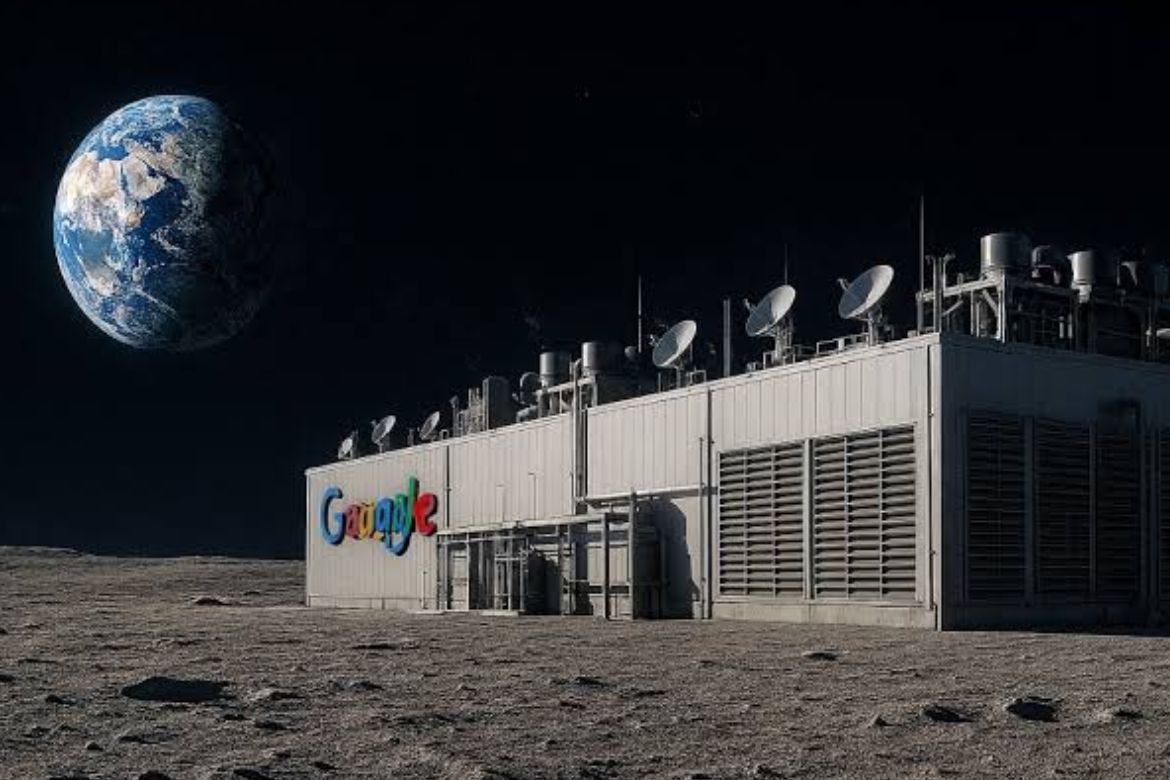
As communities and governments worldwide push back against the growing footprint of terrestrial data centres, Google is looking beyond Earth for the future of artificial intelligence. Through its ambitious Project Suncatcher, the company has launched AI hardware into orbit to explore whether space could eventually host the massive computing infrastructure needed to power the next generation of AI.
A Giant Leap Towards Space-Based Computing
The Alphabet-owned technology giant successfully launched its prototype mission aboard SpaceX’s Transporter-18 rideshare mission, carrying specialised AI processors into low-Earth orbit. The objective is straightforward yet groundbreaking: determine whether advanced AI chips can survive and operate effectively in the extreme conditions of space.
Google says the experiment is the first step in understanding whether orbital infrastructure could one day support large-scale machine-learning operations while relying primarily on solar energy harvested in space.
Why Google Wants to Move AI Beyond Earth
The modern AI boom has fuelled an unprecedented demand for data centres, facilities that require enormous amounts of electricity and cooling resources. As environmental concerns and public opposition grow, technology companies are increasingly searching for alternative solutions.
Space presents an attractive possibility.
According to Google’s researchers, satellites operating in low-Earth orbit can receive near-continuous sunlight and potentially generate up to eight times more solar power than equivalent systems on Earth. If successful, future networks of interconnected satellites could process AI workloads directly in orbit.
The vision is bold: data centres powered by uninterrupted solar energy without placing additional strain on Earth’s power grids or local infrastructure.
Elon Musk and Nvidia Share the Vision
The concept of orbital computing is gaining momentum across the technology sector.
Earlier this year, Elon Musk suggested that AI infrastructure could eventually be deployed at massive scales in space, arguing that orbital environments offer virtually unlimited room for expansion. Meanwhile, Nvidia unveiled hardware initiatives designed to support future orbital data centres, highlighting growing industry interest in the concept.
What was once considered science fiction is increasingly becoming a serious area of research.
Experts Warn the Biggest Challenges Are Yet to Come
Despite the excitement surrounding Google’s launch, experts caution that building operational data centres in space remains an enormous undertaking.
Space Cooling Is Far More Difficult Than It Sounds
Many assume space naturally keeps electronics cool, but the opposite is often true. Without air or water, excess heat generated by powerful computers can only be removed through radiation, requiring vast cooling structures and highly specialised engineering solutions.
Radiation Threatens Reliability
Orbital environments expose computer hardware to constant radiation, which can interfere with sensitive electronics, corrupt data, and damage processors over time. Google’s current mission is specifically designed to study these risks.
Upgrading Hardware Isn’t Simple
Unlike terrestrial facilities where components can be replaced regularly, updating AI chips in orbit would require costly and complex space missions. Given the rapid pace of AI hardware development, this presents a major logistical hurdle.
The Economics Still Don’t Add Up
Industry analysts note that launching enough hardware into space to create meaningful computing capacity would require dramatic reductions in launch costs. Current economics remain one of the largest barriers to making orbital data centres commercially viable.
A Historic First Step, Not a Finished Solution
Google has been careful to describe Project Suncatcher as a long-term research initiative rather than a commercial product. The company acknowledges that significant technical and scientific questions remain unanswered.
Still, the successful launch marks an important milestone in the evolution of AI infrastructure and demonstrates how seriously technology giants are exploring alternatives to traditional data centres.
The future of artificial intelligence may no longer be confined to Earth.
As data centres face mounting criticism for their environmental footprint and growing energy requirements, Google’s orbital experiment signals the beginning of a new technological frontier. Whether space-based computing becomes the next great leap in innovation or remains an ambitious moonshot will depend on humanity’s ability to overcome some of the toughest engineering challenges ever attempted.
For now, one thing is clear: the race to power AI’s future has officially left the planet.
