

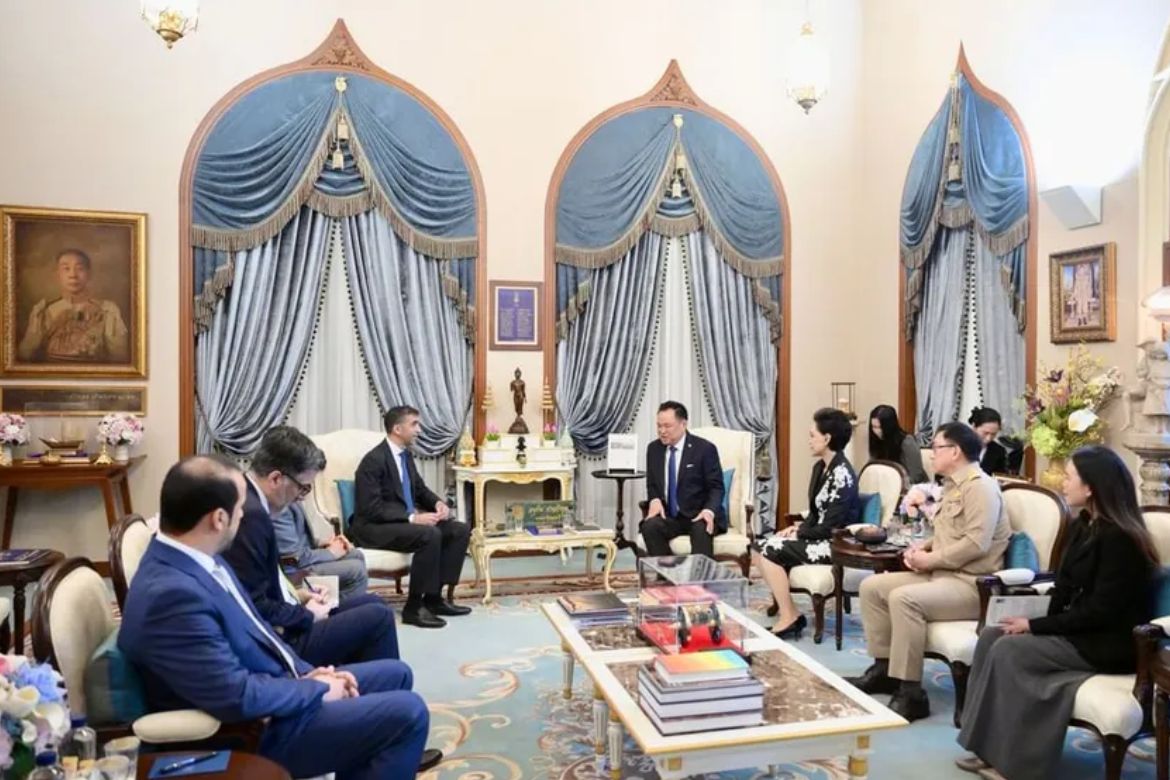
The United Arab Emirates and the Kingdom of Thailand have successfully concluded negotiations on a landmark Comprehensive Economic Partnership Agreement (CEPA), paving the way for stronger economic ties between the Middle East and Southeast Asia. The agreement is expected to reduce trade barriers, improve market access, and create new opportunities for businesses, investors, and entrepreneurs in both countries.
A Strategic Milestone in UAE–Thailand Relations
The conclusion of CEPA negotiations was announced in Bangkok during high-level discussions between Dr. Thani bin Ahmed Al Zeyoudi, UAE Minister of Foreign Trade, and Thai leaders including Anutin Charnvirakul and Suphajee Suthumpun. Both sides reaffirmed their commitment to expanding bilateral trade, investment cooperation, and private-sector partnerships.
Negotiations for the agreement began in 2023, reflecting a shared vision to build stronger economic bridges between the two regions. The countries also launched a joint business council to facilitate deeper commercial engagement and investment collaboration.
Trade Growth Signals Strong Potential
The CEPA comes at a time when trade between the UAE and Thailand is growing at an unprecedented pace.
Bilateral non-oil trade reached $12.3 billion in 2025, representing growth of over 65% compared to 2024.
Trade surged further to $10.2 billion during the first half of 2026, marking a 75.4% year-on-year increase.
The UAE’s key exports to Thailand include gold, aluminium products, and industrial goods.
These figures underline the growing integration of the two economies and the immense potential that the CEPA is expected to unlock.
Priority Sectors to Benefit
The agreement is expected to boost cooperation across several high-growth sectors, including:
Advanced Manufacturing
Creating opportunities for industrial collaboration and technology-driven growth.
Logistics and Supply Chains
Enhancing connectivity between Southeast Asia, the Middle East, Africa, and Europe.
Food Security
Supporting sustainable food supply chains and agricultural investments.
Digital Trade
Accelerating digital economy partnerships and technology exchange.
Renewable Energy
Strengthening collaboration in clean energy and sustainability initiatives.
Precious Metals
Building on the strong trade relationship already established through gold exports.
Leaders Highlight Long-Term Economic Opportunities
“The conclusion of negotiations on the UAE-Thailand CEPA embodies our shared commitment to building stronger economic bridges between Southeast Asia and the Middle East,” said Dr. Thani bin Ahmed Al Zeyoudi. He noted that Thailand’s diversified economy offers significant opportunities for companies and investors seeking access to high-growth markets.
Thai leaders also emphasized that the agreement will strengthen private-sector cooperation, encourage two-way investment, and enhance competitiveness in regional and international markets.
Part of the UAE’s Global Trade Strategy
The UAE has signed 38 CEPAs as part of its broader strategy to expand international trade partnerships, diversify its non-oil economy, and increase non-oil foreign trade to Dh4 trillion ($1.1 trillion) by 2031. The UAE-Thailand agreement further strengthens the country’s position as a global hub connecting markets across Asia, Africa, and Europe.
The successful conclusion of the UAE-Thailand CEPA negotiations highlights a growing shift in global trade dynamics, where strategic partnerships are becoming increasingly important for economic resilience and diversification.
With trade between the two countries already expanding at record levels, the agreement is expected to unlock new investment flows, create opportunities for businesses across multiple sectors, and reinforce the UAE’s role as a gateway between East and West.
As both nations move towards final signing and implementation, the CEPA is poised to become one of the most significant economic agreements connecting the Gulf region and Southeast Asia in recent years.
