

Healthcare professionals across the Gulf could benefit from growing employment opportunities as Aster DM Healthcare plans to recruit between 1,300 and 2,500 additional employees annually while expanding its regional healthcare network.
The group, which currently employs approximately 18,500 people across the region, expects to add between 1,000 and 2,000 employees every year through new hospital developments alone. A further 300 to 500 positions are expected to be created through the expansion of its clinics and pharmacies.
Alisha Moopen, Managing Director and Group Chief Executive Officer of Aster DM Healthcare, said the group expects to remain one of the region’s largest employers of skilled healthcare professionals.
Each new hospital typically creates between 1,000 and 1,500 jobs, primarily for doctors, nurses and other healthcare specialists. Aster generally adds one or two hospitals annually across the region.
The group also plans to expand its network by opening five to 10 clinics and approximately 30 to 40 pharmacies every year.
Speaking to Khaleej Times, Moopen said the company expects its recruitment momentum to continue as it increases its market share across the countries where it operates.
“We continue to automate whatever we need to, but healthcare is still very high-touch and requires that human intervention,” she said.
New Dubai hospital to strengthen specialist healthcare services
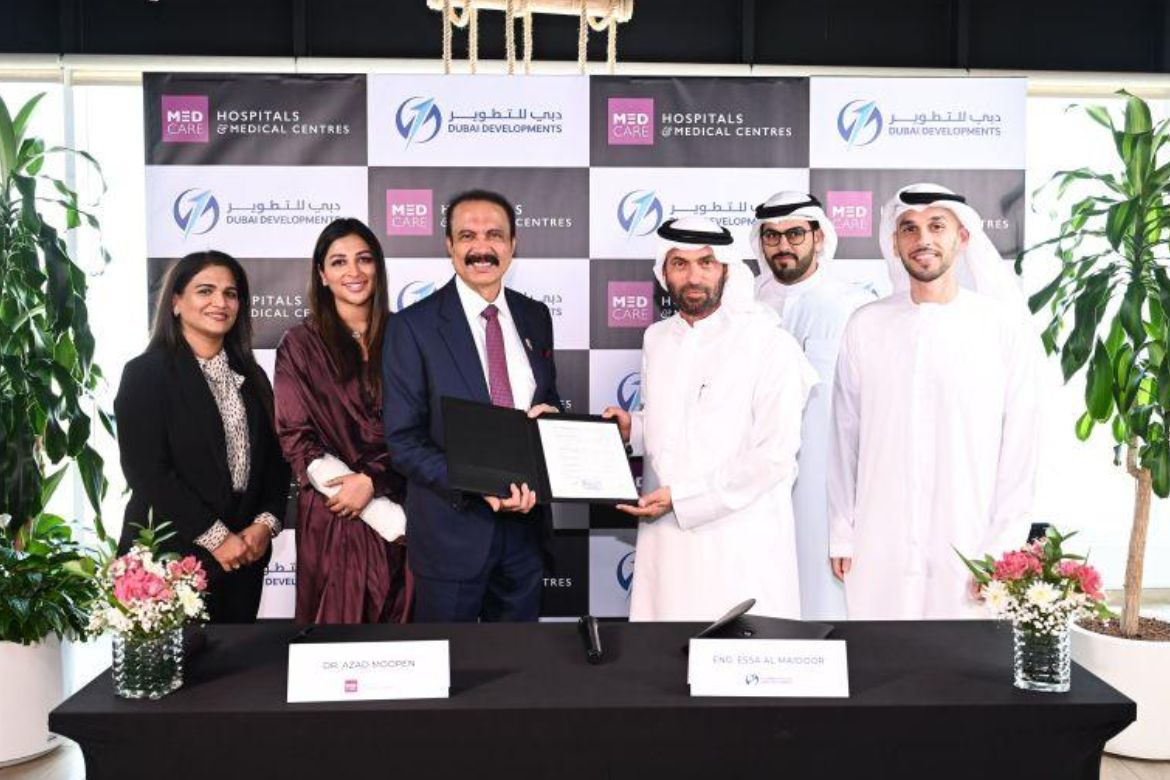
A major part of Aster’s latest expansion strategy is the development of Medcare Royal Hills Hospital, a 144-bed, multi-specialty tertiary-care facility in Dubai.
The Dh350 million construction project has been awarded to engineering firm Menasco. The hospital is expected to begin operations by 2029 and will become Medcare’s seventh hospital and Aster’s 12th hospital in the UAE.
The facility is expected to strengthen Medcare’s specialist treatment capabilities, particularly in oncology and radiation therapy.
Moopen said radiation therapy had been a missing component in Medcare’s existing healthcare offering.
“The RT services we don’t have within Medcare anywhere in the group right now,” she said.
She highlighted the rising incidence of cancer and the importance of providing patients with more comprehensive treatment options within the healthcare network.
The hospital building is valued at Dh350 million, while the overall investment, including medical equipment, is expected to approach Dh500 million.
The project reflects Aster’s strategy of strengthening specialised medical services and expanding access to advanced healthcare facilities in Dubai.
Aster commits more than Dh1 billion to UAE expansion
The Royal Hills Hospital development forms part of Aster DM Healthcare’s commitment to invest more than Dh1 billion in the UAE over the next five years.
According to Moopen, the Royal Hills Hospital project and the planned 150-bed expansion of Aster Qusais Hospital together account for approximately 60 to 65 per cent of the investment commitment.
Combined, the two developments are expected to add nearly 300 beds to the group’s healthcare capacity.
However, Moopen clarified that the investment budget is not a fixed figure and could change depending on market conditions and business opportunities.
“That Dh1 billion that I mentioned in the beginning of the year, it’s not a static amount,” she said.
She also noted that Aster’s market share had increased despite the political unrest affecting the wider region.
The group is following a flexible expansion strategy that combines the construction of new facilities with selective acquisitions.
Last month, Aster added 110 beds to its network through the acquisition of IMH Hospital.
Moopen explained that acquisitions in the UAE can be challenging because the market is relatively young and the number of suitable healthcare assets available for acquisition is limited.
As a result, the company continues to pursue both new hospital developments and carefully selected acquisitions.
Saudi Arabia expansion adds to regional growth
Beyond the UAE, Aster is strengthening its presence in other Gulf markets, with Saudi Arabia emerging as an important growth destination.
A few months ago, the group acquired a 100-bed healthcare facility in Dammam and plans to double its capacity to 200 beds.
The expansion is part of Aster’s wider regional strategy to increase healthcare capacity and reach more patients across the Gulf.
Although the group continues to explore opportunities in different markets, Moopen reaffirmed that the UAE remains its core market.
The developments in Saudi Arabia and the UAE highlight the growing importance of private healthcare investment across the region.
IPO remains an option as Aster prepares for further growth
Aster DM Healthcare is also keeping the possibility of an initial public offering (IPO) open as it evaluates its future financial strategy.
Moopen said the company is preparing for a potential listing and closely monitoring market conditions, although no specific timeline has been announced.
“We are watching the market closely. We are preparing ourselves for the IPO,” she said.
The final decision will depend on broader economic conditions and the company’s internal readiness.
Meanwhile, Aster expects to finance its expansion through a combination of equity and long-term debt.
The approach is intended to support the group’s investment plans while providing flexibility for future growth opportunities.
AI and robotics to support healthcare professionals
As healthcare providers increasingly adopt artificial intelligence and robotic technologies, Aster is continuing to invest in digital innovation, particularly in surgical applications.
However, Moopen does not expect these technologies to directly reduce the group’s workforce requirements.
Instead, she believes AI will help make healthcare more personalised, connected and accessible.
The company’s approach focuses on combining technology with human expertise rather than replacing healthcare professionals with automated systems.
Addressing the possibility of robots independently delivering medical care in the future, Moopen said the industry was still far from reaching that stage.
“We’re still far away from a point where robots are leading care,” she said.
She emphasised that patients and their families need human involvement in medical decisions, particularly when those decisions involve considerations beyond technical or clinical procedures.
The company’s position reflects the importance of maintaining a balance between technological innovation and the human side of healthcare.
What Aster’s expansion means for UAE and GCC job seekers
Aster’s recruitment projections could create significant opportunities for professionals looking to build careers in the UAE and wider Gulf healthcare sector.
With new hospitals, clinics and pharmacies planned across the region, demand is expected to extend beyond doctors and nurses to include a wide range of healthcare and support professionals.
Potential employment areas include:
- Specialist doctors and general practitioners
- Registered nurses and nursing specialists
- Radiologists and radiation therapy professionals
- Laboratory technicians and medical technologists
- Pharmacists and pharmacy assistants
- Allied healthcare professionals
- Hospital administrators and operations managers
- Healthcare IT and technology professionals
- Medical equipment and technical support personnel
- Patient services and healthcare support staff
However, the projected workforce expansion does not mean that all these positions are currently open for applications. Actual vacancies will depend on individual project timelines, operational requirements and regulatory approvals.
Candidates interested in working with Aster should monitor the group’s official recruitment channels and apply through verified platforms.
Gulf healthcare sector prepares for another phase of growth
Aster DM Healthcare’s expansion plans reflect the growing investment in healthcare infrastructure across the Gulf.
From new hospitals and specialist treatment facilities to clinics, pharmacies and technology-driven medical services, the region’s healthcare industry continues to evolve.
For job seekers, the planned recruitment of up to 2,500 additional employees annually could represent an important opportunity to explore careers in one of the Gulf’s expanding sectors.
As Aster strengthens its presence in the UAE and Saudi Arabia, its next phase of growth will depend not only on infrastructure investment but also on attracting and retaining skilled healthcare professionals.
With more hospitals, additional beds and an expanding healthcare network on the horizon, Aster’s growth strategy places skilled people at the centre of its regional ambitions.
