

The credibility of Sudan’s domestic efforts to investigate human rights violations has come under renewed international scrutiny after a United Nations human rights expert raised concerns about the transparency and impartiality of a government-appointed investigative committee.
Radhouane Nouicer, the UN-designated expert on human rights in Sudan, has questioned whether authorities are applying the same level of scrutiny to all parties involved in the country’s brutal civil war. According to Mr Nouicer, the committee’s documented cases appear heavily concentrated on violations allegedly committed by the Rapid Support Forces (RSF), while significantly fewer cases involve members of the Sudanese Armed Forces (SAF).
Speaking to Sky News Arabia, Mr Nouicer noted that although tens of thousands of violations have reportedly been documented, only a small fraction concern the SAF. The imbalance, he argued, raises legitimate questions about the committee’s fairness and effectiveness in delivering justice to all victims.
Justice Cannot Be Selective
The ongoing conflict between the SAF, led by Gen Abdel Fattah Al Burhan, and the RSF, commanded by Gen Mohamed Dagalo, has generated widespread allegations of war crimes, crimes against humanity, and serious human rights abuses. Since the war erupted in April 2023, both sides have faced accusations of targeting civilians, destroying infrastructure, obstructing humanitarian aid, and violating international law.
For accountability mechanisms to gain public trust, investigations must be independent, transparent, and willing to follow evidence wherever it leads. Human rights observers have long argued that focusing on one side of the conflict while overlooking allegations against another risks undermining the entire pursuit of justice.
In a conflict that has devastated millions of lives, victims deserve accountability based on facts, not political considerations.
Growing Concerns Over Detentions and Disappearances
Mr Nouicer also highlighted troubling reports of arbitrary arrests, enforced disappearances, and torture. Many detainees are allegedly being held simply for suspected collaboration with opposing forces, while families remain unaware of the whereabouts of their loved ones.
The rise in enforced disappearances represents one of the darkest dimensions of Sudan’s conflict. Beyond the immediate suffering of those detained, families are left in uncertainty, unable to determine whether relatives are alive, injured, or deceased.
Wars Are Changing, And So Are Their Consequences
Another alarming trend identified by the UN expert is the growing use of drones and air strikes. According to Mr Nouicer, more than 1,000 deaths have been linked to aircraft and drone attacks since the beginning of 2026.
Recent findings from the UN Independent International Fact-Finding Mission for the Sudan further intensified concerns by reporting that foreign-supplied drones were used in operations that harmed civilians and civilian infrastructure. The report also pointed to external supply networks that continue to fuel the conflict.
As military technology becomes more sophisticated, civilians increasingly find themselves trapped between rival forces with devastating consequences.
A Humanitarian Crisis Without End
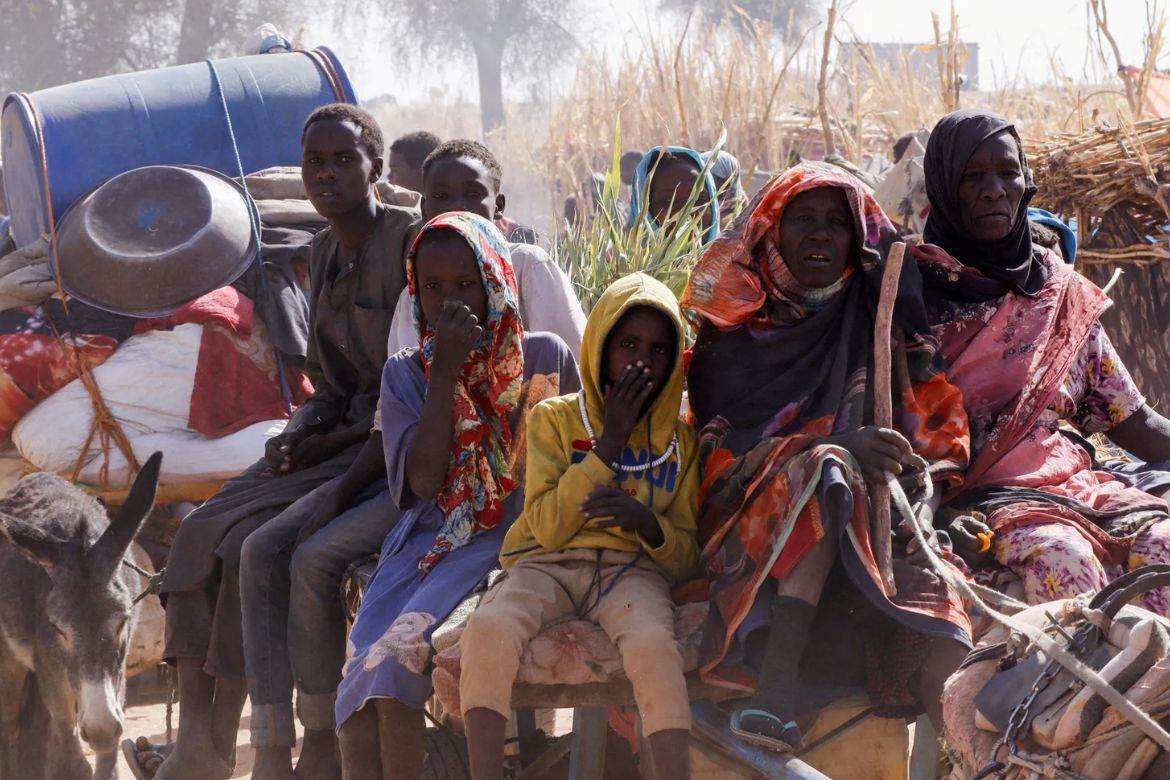
Nearly three and a half years into the conflict, Sudan remains engulfed in one of the world’s worst humanitarian emergencies. Tens of thousands have been killed, millions displaced, and entire communities pushed to the brink of survival. Healthcare systems, schools, and public services have collapsed across large parts of the country.
Despite repeated diplomatic efforts by regional and international actors, a lasting ceasefire remains elusive. Meanwhile, allegations ranging from attacks on civilians to the use of prohibited weapons continue to attract global attention and calls for stronger accountability measures.
Sudan’s road to peace cannot be built on selective accountability. Whether violations are committed by the RSF, the SAF, or any other armed actor, the standards of justice must remain the same. A credible investigation is not one that produces the highest number of cases, but one that demonstrates independence, transparency, and equal treatment under the law.
For the millions of Sudanese citizens who have endured displacement, loss, and unimaginable suffering, accountability must not only be done, it must be seen to be done. Until then, questions over the credibility of Sudan’s investigative processes are likely to persist both at home and on the international stage.
